What Are the Different Cat Eye Colors? 7 Iris Colors, Their Causes, and Health Observation Points
Cat eye colors are captivating, but besides admiring them, owners should also pay attention to sudden color changes, cloudiness, increased discharge, or abnormal pupils. Cat eye colors are related to melanin, breed, and age, with common colors including yellow, green, blue, and amber. This article covers 7 types of cat eye colors and important health observations.
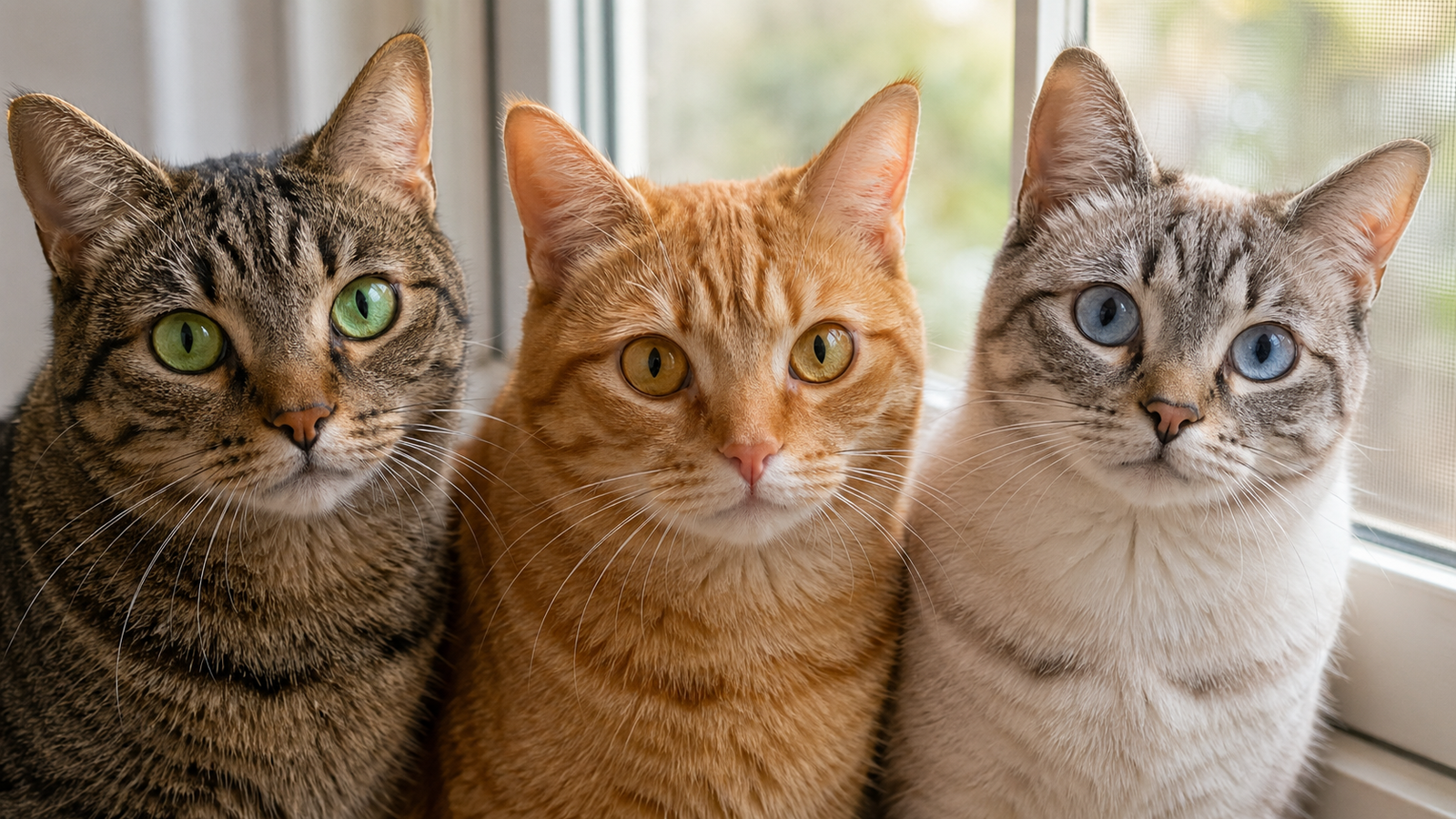
Cat eye colors are captivating, but besides admiring them, owners should also pay attention to sudden color changes, cloudiness, increased discharge, or abnormal pupils.
Cat eye colors are related to melanin, breed, and age, with common colors including yellow, green, blue, and amber. This article covers 7 types of cat eye colors and important health observations.
Key takeaways
- A cat's eye color is determined by the amount and activity of melanocytes in the iris. Less melanin results in blue-green hues, while more melanin leads to darker shades like yellow, brown, or copper.
- Most kittens are born with blue eyes because the melanin in their irises hasn't fully developed. Their eye color typically stabilizes around 3 months of age.
- Amber is the most common feline eye color, while 'heterochromia' (two different colored eyes) or 'sectoral heterochromia' (two colors within the same iris) is the rarest.
- Excessive yellowish-green or rusty discharge, redness and bloodshot whites, frequent blinking, light sensitivity, abnormal pupil size, or cloudy eyeballs are all warning signs of eye problems.
Why Are Cat Eye Colors So Varied?
It all comes down to the amount and activity of "melanocytes" in the iris of a cat's eyes. Simply put:
- Less Melanin: When light passes through and refracts, it produces blue light, making the eye color lean towards blue and green hues.
- More Melanin: Light is absorbed, resulting in eye colors leaning towards deeper shades like yellow, brown, and copper.
Most kittens are born with blue eyes because the melanin in their irises hasn't fully developed yet. Around 3 months of age, their eye color gradually settles.
What we use for this
CatGarden’s own products, shipped from Taiwan Pro L-Lysine SupplementFrom CA$26.30 per boxFree shipping on multi-packs
Cat Eye Color Rarity Ranking
1. Amber/Yellow
- Rarity: ⭐
- Description: This is the most common and classic cat eye color, ranging from warm amber to bright citrus yellow. They are especially mesmerizing in sunlight.
- Common Breeds: Mixed breeds, British Shorthair, American Shorthair.
2. Hazel
- Rarity: ⭐⭐
- Description: An elegant hue between yellow and green, like a faint layer of green painted over a golden base, offering rich depth.
- Common Breeds: Mixed breeds, Abyssinian, Scottish Fold.
3. Blue
- Rarity: ⭐⭐
- Description: As if holding a starry sea, clear blue eyes are captivating. This color is often linked to specific genes, making it more common in colorpoint cats or white cats.
- Common Breeds: Siamese, Ragdoll, Himalayan, pure white cats.
4. Green
- Rarity: ⭐⭐⭐
- Description: Like forest sprites, green eyes are full of mystery. From fresh light green to deep dark green, every green-eyed cat possesses an extraordinary aura.
- Common Breeds: Russian Blue, Egyptian Mau, Havana Brown.
5. Orange/Copper
- Rarity: ⭐⭐⭐⭐
- Description: These are the deepest shades of cat eye colors, like molten metal, full of power and splendor, and incredibly striking.
- Common Breeds: British Shorthair, Persian, Maine Coon, Japanese Bobtail.
6. Odd-eyed/Heterochromia
- Rarity: ⭐⭐⭐⭐
- Description: Eyes of different colors, the most common combination being "one blue and one yellow/green." This genetic beauty often occurs in white cats, appearing mysterious and enchanting.
- Common Breeds: Turkish Van, Turkish Angora, Oriental Shorthair, Persian (white).
7. Dichroic
- Rarity: ⭐⭐⭐⭐⭐
- Description: The ultimate rare, dreamlike eyes! This refers to "two colors within the same eye," which could be split like a fan or have a ring of a different color around the pupil. It's a random masterpiece of genetics, extremely rare.
- Common Breeds: No specific breed; it's a random surprise.
Beauty Needs Health: Daily Care for Cat Eyes
While admiring your cat's beautiful eyes, it's even more important to pay attention to their eye health! Be vigilant if you notice any of the following in your cat's eyes:
- Excessive eye discharge (yellow-green or rusty colored)
- Redness, swelling, or bloodshot whites of the eyes
- Frequent blinking, light sensitivity, or excessive tearing
- Abnormal pupil size or cloudy surface of the eyeball
Besides watching for abnormal symptoms, daily care can help maintain bright eyes. Especially for cats prone to conjunctivitis and tear stains caused by feline herpesvirus, supplementing with "lysine" daily is a great supportive measure. CatGarden's "Pro-L-Lysine Supplement" helps cats strengthen their immune defenses and maintain eye health and comfort.
What stunning iris color does your feline master have? Share it with us in the comments below!
Frequently Asked Questions FAQ
When Should I Seek Veterinary Care?
If your cat shows signs of lethargy, decreased appetite, frequent vomiting, abnormal breathing, signs of pain, or worsening symptoms, consult a veterinarian as soon as possible.
Can the Article Content Replace Veterinary Diagnosis?
No. The article serves as a reference for daily care, but actual diagnosis and treatment should be determined by a veterinarian based on examination results.
References
CatGarden | A luxury cat-only hotel in Banqiao, offering boarding and grooming services.
Further Reading
- New Cat Owner's Guide to Health Care | Vaccinations, Check-ups, Spaying/Neutering, and Senior Care
- Signs of Cat Illness | 7 Major Warnings and Observation Points
- Cat Heart Disease Diet | 3 Dietary Pitfalls and Daily Prevention Tips
→ Learn about CatGarden - The Brand Closest to Cats
FAQ
When does a kitten's eye color stabilize?
Most kittens are born with blue eyes because the melanin in their irises hasn't fully developed. Their eye color typically stabilizes around 3 months of age.
What's the difference between odd-eyed and bi-eyed cats?
Odd-eyed refers to having two different colored eyes (commonly one blue and one yellow/green). Bi-eyed (or sectoral heterochromia) means having two colors within the same iris, which is a very rare genetic occurrence.
How can I tell if my cat's eyes have health issues?
Look out for excessive yellowish-green or rusty discharge, redness and bloodshot whites, frequent blinking or tearing, light sensitivity, abnormal pupil size, or a cloudy surface of the eyeball.
What nutrients can cats prone to conjunctivitis or tear stains benefit from?
For cats prone to conjunctivitis and tear stains caused by Feline Herpesvirus, supplementing with lysine can help maintain eye health and provide a defense.
CatGarden offers curated supplies, cat boarding, and grooming
Book services or shop online.