Does Your Cat Need Segmented Bathing? Consider Oiliness, Skin Sensitivity, and Coat Conditioning Order
Does your cat need segmented bathing? Consider oiliness, skin sensitivity, and coat conditioning order. What is segmented bathing? Cats don't necessarily need it every time. Segmented bathing refers to breaking down a cat's bath into steps for different purposes, such as degreasing first, then cleaning, and finally conditioning.
Key Takeaways
- Segmented bathing breaks down a cat's bath into steps for degreasing, cleaning, and conditioning. It's common for long-haired cats, those with heavy oiliness, or complex coat conditions, but not every cat needs it every time.
- Most indoor cats without noticeable greasiness, tangles, odor, or dandruff only need a suitable shampoo and thorough rinsing for basic cleaning. Over-cleaning can lead to dry, itchy, flaky skin.
- The back, tail base, chin, and chest are prone to oil buildup. If the fur feels sticky, clumps together, or the comb feels oily, more intensive cleaning might be needed. Simply dusty paws, belly, or tail usually don't require full-body degreasing.
- Cat skin differs from human skin; avoid human shampoos, body washes, or dog products. For typical indoor cats, opt for hypoallergenic, cat-specific shampoos with mild scents.
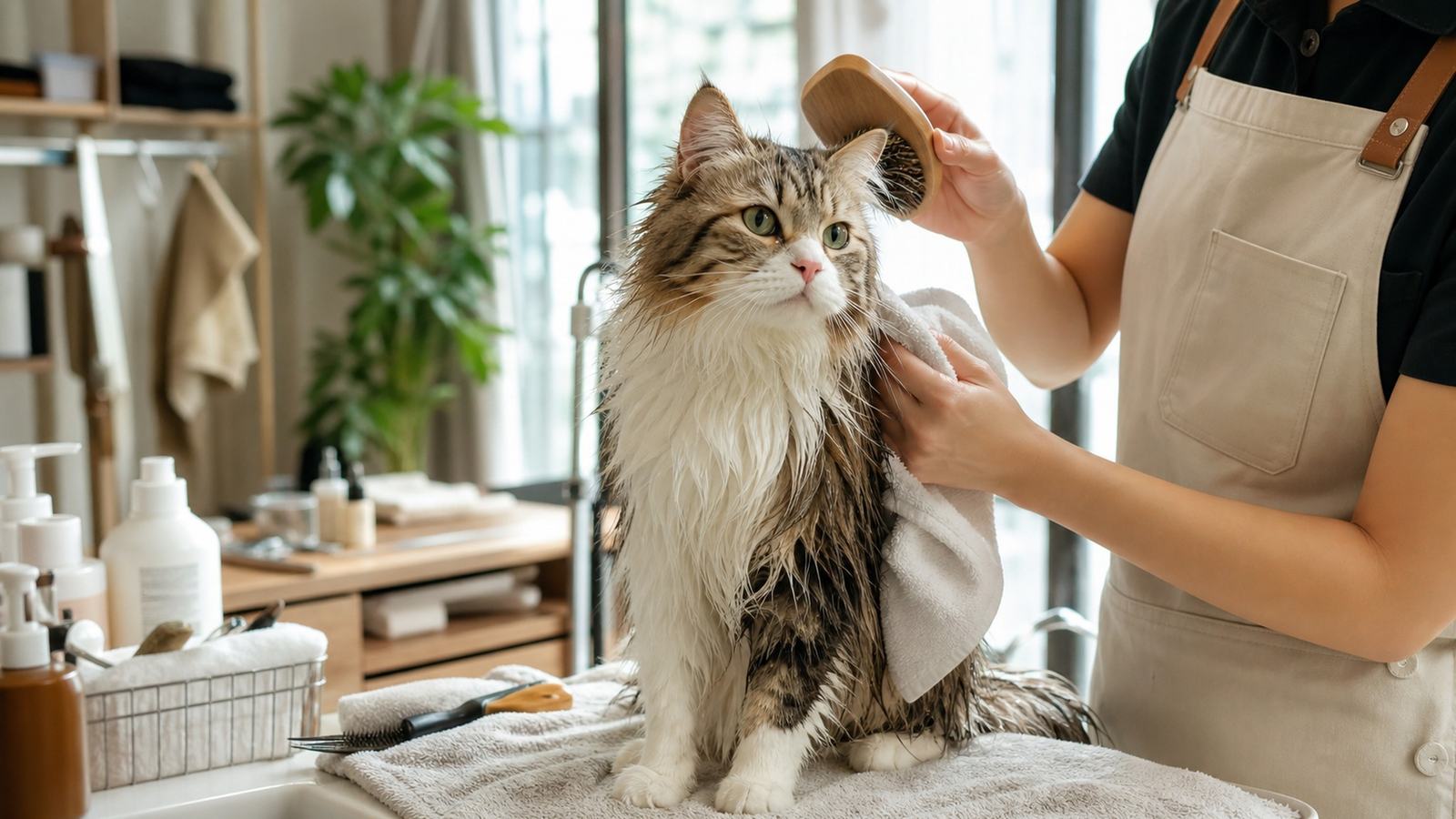
- The recommended bathing order is brushing, wetting, cleaning, conditioning, and drying. Brush before bathing to prevent tangles from tightening when wet. Rinsing requires more patience than scrubbing. Ensure thorough drying, especially of the abdomen, chest, and between the toes.
Does Your Cat Need Segmented Bathing? Consider Oiliness, Skin Sensitivity, and Coat Conditioning Order
What is Segmented Bathing? Cats Don't Necessarily Need It Every Time
Segmented bathing refers to breaking down a cat's bath into steps for different purposes, such as degreasing first, then cleaning, and finally conditioning, rather than using a single product for everything. This approach is common for long-haired cats, cats with heavier oiliness, or those with more complex coat conditions. However, not every cat needs a full segmented bath every time.
Most domestic cats spend their time indoors. If they don't have noticeable greasiness, tangles, odor, or dandruff, a suitable shampoo and thorough rinsing are sufficient for basic cleaning. Over-cleaning can actually lead to dry skin, making the cat more prone to scratching and flaking. The key to segmented bathing isn't more steps, but rather assessing what the cat needs at that moment.
What we use for this
CatGarden’s own products, shipped from Taiwan Quick-Dry Pet TowelFrom CA$49.35 per pieceFree shipping on multi-packs
First, Distinguish Between Oiliness, Dirt, Dandruff, or Shampoo Residue
Before bathing, you can feel your cat's back, tail base, chin, and chest. These areas tend to accumulate oil. If the fur feels sticky, clumps together, or the comb feels oily when you brush, you might need to intensify the cleaning. If it's just dusty paws, belly, or tail, full-body degreasing is usually not necessary.
Dandruff and shampoo residue can also be mistaken for "not being clean enough." If white flakes, redness, or itching appear soon after bathing, it could be due to sensitive skin, insufficient rinsing, or an unsuitable shampoo. Taiwan's summers are hot and humid, and the rainy season can be muggy, making cats' skin conditions more noticeable. It's advisable to observe environmental humidity, drying effectiveness, and whether the products used are gentle.
How to Choose Between Hypoallergenic Shampoos, Degreasing Agents, and Conditioning Products
For typical indoor cats, prioritize hypoallergenic, cat-specific shampoos with mild scents. A cat's skin differs from human skin, so avoid using human shampoos, body washes, or dog products. If your cat has previously experienced redness or itching after bathing, avoid products with irritating fragrances and overly strong cleaning agents.
Degreasing agents are suitable for areas with particularly noticeable oiliness but don't necessarily need to be used all over every time. For long-haired cats or those prone to dryness and tangles, you can use conditioning products as needed to help the fur flow smoothly and reduce pulling during grooming. When choosing products, the focus should be on "cat-safe, easy to rinse, and meeting the current need," rather than accumulating many bottles.
How to Arrange the Bathing Order: Brushing, Wetting, Cleaning, Conditioning, Drying
Always brush your cat before bathing, especially in areas like the armpits, belly, inner thighs, and tail base. Tangled fur tightens when wet and can be painful for the cat during washing. If there are severe tangles, it's not recommended to force washing; address the tangles first or consult a groomer experienced with cats.
During the actual bath, slowly wet the body with lukewarm water, avoiding the ears and eyes, then use shampoo as needed. Rinsing requires more patience than scrubbing, as residual shampoo is often the cause of skin discomfort. If you use a conditioning product, ensure it's completely rinsed out. Finally, towel dry the fur and thoroughly blow-dry, paying special attention to the abdomen, chest, and between the toes.
A Simple Order to Remember
- Brushing: First, ensure there are no severe tangles.
- Wetting: Use lukewarm water and a steady hand.
- Cleaning: Choose a suitable shampoo based on oiliness.
- Conditioning: Consider only for long or dry fur.
- Drying: Ensure the undercoat and skin are completely dry.
When to Consider Booking a Cat Grooming Session or Consulting a Veterinarian
If your cat is extremely fearful of water, struggles intensely, or has previously experienced panting or hiding for a long time after a bath, it's best not to force it at home. Professional cat groomers can help manage the environment, minimize pulling, and better assess tangles, oiliness, and drying effectiveness. For owners living in small city apartments, with limited bathroom space, or without suitable drying equipment, booking a cat groomer is a more reliable option.
If your cat has red, swollen skin, wounds, bald patches, abnormal dandruff, ear discharge, or continues to scratch after bathing, consult a veterinarian first. These issues may not be due to dirt but could be related to skin diseases, allergies, or parasites. Shampoo is for daily cleaning only and cannot replace diagnosis and treatment.
FAQ
How often should I bathe my cat?
Indoor cats don't need frequent bathing. Adjust the frequency based on their fur condition, oiliness, season, and living environment. If there's no odor, greasiness, or dirt, regular brushing is more important than frequent bathing.
Can I use human shampoo on my cat?
It's not recommended. The cleaning power, fragrances, and pH balance of human products may not be suitable for cats, potentially causing dryness or irritation. It's best to choose cat-specific shampoos.
My cat still smells oily after bathing, should I wash them again?
Not necessarily. It could be due to un-emulsified oils, insufficient rinsing, or incomplete drying causing a stale odor. If the cleaning is consistently ineffective, ask a cat groomer to assess if segmented bathing is needed.
Is conditioning suitable for cats with sensitive skin?
It depends on the product and the skin condition. If your cat has redness, itching, or wounds, it's safer to consult a veterinarian first. If the fur is just dry, choose gentle, easy-to-rinse conditioning products.
Ending CTA
If you're unsure whether your cat has excessive oiliness, sensitive skin, or just wasn't dried properly after a bath, CatGarden can help assess the most suitable bathing and grooming approach. If you want to avoid the chaos of bathing at home, you can also book a cat grooming session, where groomers familiar with cats can handle brushing, cleaning, and drying. You can also choose suitable shampoos, brushes, and conditioning products based on your cat's coat condition for more peace of mind during grooming.
Further Reading
- Cat Smells Again After Bathing: Check Drying, Sebum, and Shampoo Residue
- Can Cats Be Bathed and Have Their Teeth Cleaned Simultaneously? Consider Shampoos, Dental Products, and Ingestion Risks Separately
- How to Choose Anti-Itch Shampoo for Cats? Consider Herbal Ingredients, Fragrance, and Post-Bath Skin Reactions
Frequently Asked Questions
How often should I bathe my cat?
Indoor cats don't need frequent bathing. Adjust the frequency based on their fur condition, oiliness, season, and living environment. If there's no odor, greasiness, or dirt, regular brushing is more important than frequent bathing.
Can I use human shampoo on my cat?
It's not recommended. The cleaning power, fragrances, and pH balance of human products may not be suitable for cats, potentially causing dryness or irritation. It's best to choose cat-specific shampoos.
My cat still smells oily after bathing, should I wash them again?
Not necessarily. It could be due to un-emulsified oils, insufficient rinsing, or incomplete drying causing a stale odor. If the cleaning is consistently ineffective, ask a cat groomer to assess if segmented bathing is needed.
Is conditioning suitable for cats with sensitive skin?
It depends on the product and the skin condition. If your cat has redness, itching, or wounds, it's safer to consult a veterinarian first. If the fur is just dry, choose gentle, easy-to-rinse conditioning products.
When to consider booking a cat grooming session or consulting a veterinarian?
If your cat is extremely fearful of water, struggles intensely, or pants and hides after a bath, book a grooming session. If your cat has red, swollen skin, wounds, bald patches, abnormal dandruff, ear discharge, or continues to scratch, consult a veterinarian first.
CatGarden offers curated supplies, cat boarding, and grooming
Book services or shop online.