How to Read Cat Food Ingredients: A Vet's 3-Step Guide to Understanding Nutrition and Avoiding Bad Food!

Feeling overwhelmed by the sheer variety of cat food options at the pet store? "Grain-free," "high-protein," "natural"... what do these marketing terms really mean? As devoted cat parents, our greatest wish is for our feline companions to eat healthily.

CatGarden Editorial TeamPublished 2025/02/17Updated 2026/10/06
Nutritional Diet Guide
How to Read Cat Food Ingredients: A Vet's 3-Step Guide to Understanding Nutrition and Avoiding Bad Food!

Every time you stand in front of the dazzling array of cat food shelves at the pet store, do you feel overwhelmed? "Grain-free," "high-protein," "natural"... what do these marketing terms actually mean?

As devoted cat parents, our greatest wish is for our feline companions to eat healthily. But buying expensive cat food doesn't necessarily mean it's the best. The real secret lies hidden in the dense "ingredient list" on the back of the packaging! Today, we'll guide you step-by-step on how to crack the code of the ingredient list, turning you into a food selection expert in three easy steps!

Key takeaways

  • Cats are 'obligate carnivores.' Dry food should have at least 35% crude protein, with clearly labeled animal-based protein sources (e.g., chicken, salmon).
  • The crude fat content in cat dry food should be between 15% and 20%, preferably from animal fats rich in Omega-3 and Omega-6 (e.g., chicken fat, fish oil).
  • Carbohydrate content in cat food can be calculated by subtracting the percentages of protein, fat, fiber, moisture, and ash from 100% (estimate ash at 8% if not specified). A lower calculated value is better.
  • When reviewing cat food ingredients, avoid products with meat by-products of unknown origin, large amounts of grain fillers listed early in the ingredients, and chemical preservatives like BHA, BHT, and artificial additives.

Step 1: Understand Your Cat's "Obligate Carnivore" Nature

Before diving into the ingredient list, you must grasp one core concept: cats are "obligate carnivores." This means their entire digestive system is naturally designed to digest and absorb "animal protein." Plant-based protein is not only difficult for cats to absorb but can also burden their digestive system.

Keep this principle in mind, and you'll have a clear direction when examining the ingredient list!

Step 2: Decode the "3 Key Numbers" on the Ingredient List

The nutritional quality of cat food is primarily determined by these three indicators. Grab your cat food packaging and follow along with us!

1. Protein: The Most Crucial Nutrient for Cats

This is the primary indicator for assessing the quality of cat food! Protein is the foundation for building a cat's muscles, organs, and fur.

  • Check the Content: For dry food, the "crude protein" content should ideally be at least 35% or higher. A higher percentage usually indicates a greater meat content.
  • Check the Source: The source must be animal-based protein! Look for clearly labeled ingredients like "chicken," "dehydrated chicken," "salmon," or "tuna." If the first few ingredients are plant-based proteins like "soy protein" or "corn protein," discard the food immediately.

2. Fat: The Source of Energy and Healthy Fur

Fat provides cats with their daily energy needs and maintains a lustrous coat.

  • Check the Content: For dry food, the "crude fat" content should be between 15% and 20%. Too high can lead to obesity, while too low may result in insufficient energy and dry fur.
  • Check the Source: Similar to protein, animal-based fats are preferred, such as "chicken fat" or "fish oil." These are rich in Omega-3 and Omega-6 fatty acids, which cats cannot synthesize on their own and are beneficial for cardiovascular and skin health.

3. Carbohydrates: The "Hidden Number" That Should Be Lower

Cats have very low carbohydrate requirements. Excessive carbohydrates (primarily from grains and legumes) are one of the main culprits behind feline obesity and increased risk of diabetes. However, ingredient lists usually don't directly state carbohydrate content. You can use this simple formula to estimate: Total Percentage - (Protein% + Fat% + Fiber% + Moisture% + Ash%) = Carbohydrate% (If Ash is not listed, you can estimate it at 8%).

Conclusion: The lower the calculated carbohydrate content, the better!

Step 3: Identify "Pitfalls" in the Ingredient Order

Meeting the numbers isn't enough; the "quality" and "order" of ingredients are even more important!

  • Avoid "By-products": These ingredients have unclear sources and may include animal parts like heads, feet, or organs, leading to unstable nutritional value.
  • Avoid "Excessive Grains": If corn, wheat, or soy are among the first few ingredients, it means the food uses a large amount of cheap grains as filler. Avoid these as much as possible.
  • Avoid "Artificial Additives": Reject any artificial colors, artificial flavors, or chemical preservatives (like BHA, BHT).

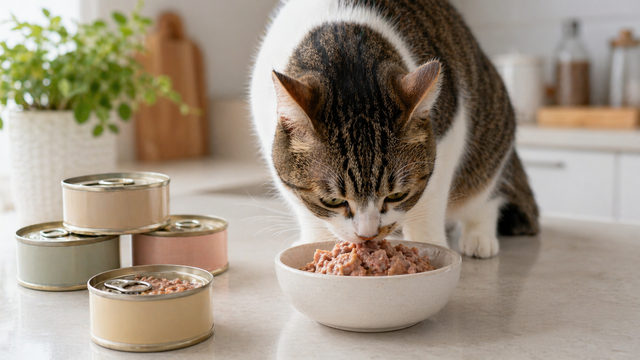
A Perfect Example: Understanding Premium Food Standards with [CatGarden's Luxury Functional Canned Food]

After discussing all this, let's look at an example of a top-quality product. Let's analyze CatGarden's Luxury Functional Canned Food:

  • Protein: The very first ingredient is "Tuna," a clear, high-quality source of animal protein that perfectly aligns with a cat's natural needs.
  • Fat: Comes from the natural, high-quality fats inherent in the fish, providing essential fatty acids.
  • Carbohydrates: As a high-meat-content "meal-replacement can," it contains virtually no unnecessary carbs, placing zero burden on a cat's body.
  • Ingredient Quality: Contains no grains, no by-products, and no artificial additives. The ingredients are pure and extremely friendly to cats with sensitive stomachs.
  • High Moisture Content: As a meal-replacement can, it also helps cats supplement their daily water intake while eating.

Through this analysis, you can clearly understand why CatGarden Luxury Functional Canned Food is a premium food that pet owners can trust.

Conclusion:

From today onwards, don't be fooled by fancy packaging and advertising slogans! Learning to read ingredient lists is one of the most important skills for a devoted cat parent. Remember the golden rule: "high animal protein, moderate healthy fats, low carbohydrates, and no artificial flavors or colors." With this knowledge, you can make the healthiest and most responsible choice for your beloved cat!

Frequently Asked Questions

Should I switch my cat's diet all at once?

Sudden, complete changes are not recommended. Cats have sensitive digestive systems, so dietary changes should be gradual, observing their appetite, stool, vomiting, and overall energy levels.

How can I tell if my cat's current diet is suitable?

Observe their body condition, coat quality, bowel movements, water intake, appetite, and energy levels. If they consistently have soft stools, vomit, are picky eaters, or experience abnormal weight changes, consult a veterinarian.

Can a cat be fed only one type of food long-term?

It's not advisable to feed only one type of food long-term just because the cat likes it. You still need to ensure complete nutrition, adequate calories, quality protein sources, and sufficient water intake.

References

CatGarden | A luxury cat-only hotel in Banqiao, offering boarding and grooming services.

Further Reading

CatGarden offers curated supplies, cat boarding, and grooming

Book services or shop online.
Back

Blog

How to Read Cat Food Ingredients: A Vet's 3-Step Guide to Understanding Nutrition and Avoiding Bad Food!

CatGarden Editorial TeamPublished 2025/02/17Updated 2026/10/06
Nutritional Diet Guide
How to Read Cat Food Ingredients: A Vet's 3-Step Guide to Understanding Nutrition and Avoiding Bad Food!

Every time you stand in front of the dazzling array of cat food shelves at the pet store, do you feel overwhelmed? "Grain-free," "high-protein," "natural"... what do these marketing terms actually mean?

As devoted cat parents, our greatest wish is for our feline companions to eat healthily. But buying expensive cat food doesn't necessarily mean it's the best. The real secret lies hidden in the dense "ingredient list" on the back of the packaging! Today, we'll guide you step-by-step on how to crack the code of the ingredient list, turning you into a food selection expert in three easy steps!

Key takeaways

  • Cats are 'obligate carnivores.' Dry food should have at least 35% crude protein, with clearly labeled animal-based protein sources (e.g., chicken, salmon).
  • The crude fat content in cat dry food should be between 15% and 20%, preferably from animal fats rich in Omega-3 and Omega-6 (e.g., chicken fat, fish oil).
  • Carbohydrate content in cat food can be calculated by subtracting the percentages of protein, fat, fiber, moisture, and ash from 100% (estimate ash at 8% if not specified). A lower calculated value is better.
  • When reviewing cat food ingredients, avoid products with meat by-products of unknown origin, large amounts of grain fillers listed early in the ingredients, and chemical preservatives like BHA, BHT, and artificial additives.

Step 1: Understand Your Cat's "Obligate Carnivore" Nature

Before diving into the ingredient list, you must grasp one core concept: cats are "obligate carnivores." This means their entire digestive system is naturally designed to digest and absorb "animal protein." Plant-based protein is not only difficult for cats to absorb but can also burden their digestive system.

Keep this principle in mind, and you'll have a clear direction when examining the ingredient list!

Step 2: Decode the "3 Key Numbers" on the Ingredient List

The nutritional quality of cat food is primarily determined by these three indicators. Grab your cat food packaging and follow along with us!

1. Protein: The Most Crucial Nutrient for Cats

This is the primary indicator for assessing the quality of cat food! Protein is the foundation for building a cat's muscles, organs, and fur.

  • Check the Content: For dry food, the "crude protein" content should ideally be at least 35% or higher. A higher percentage usually indicates a greater meat content.
  • Check the Source: The source must be animal-based protein! Look for clearly labeled ingredients like "chicken," "dehydrated chicken," "salmon," or "tuna." If the first few ingredients are plant-based proteins like "soy protein" or "corn protein," discard the food immediately.

2. Fat: The Source of Energy and Healthy Fur

Fat provides cats with their daily energy needs and maintains a lustrous coat.

  • Check the Content: For dry food, the "crude fat" content should be between 15% and 20%. Too high can lead to obesity, while too low may result in insufficient energy and dry fur.
  • Check the Source: Similar to protein, animal-based fats are preferred, such as "chicken fat" or "fish oil." These are rich in Omega-3 and Omega-6 fatty acids, which cats cannot synthesize on their own and are beneficial for cardiovascular and skin health.

3. Carbohydrates: The "Hidden Number" That Should Be Lower

Cats have very low carbohydrate requirements. Excessive carbohydrates (primarily from grains and legumes) are one of the main culprits behind feline obesity and increased risk of diabetes. However, ingredient lists usually don't directly state carbohydrate content. You can use this simple formula to estimate: Total Percentage - (Protein% + Fat% + Fiber% + Moisture% + Ash%) = Carbohydrate% (If Ash is not listed, you can estimate it at 8%).

Conclusion: The lower the calculated carbohydrate content, the better!

Step 3: Identify "Pitfalls" in the Ingredient Order

Meeting the numbers isn't enough; the "quality" and "order" of ingredients are even more important!

  • Avoid "By-products": These ingredients have unclear sources and may include animal parts like heads, feet, or organs, leading to unstable nutritional value.
  • Avoid "Excessive Grains": If corn, wheat, or soy are among the first few ingredients, it means the food uses a large amount of cheap grains as filler. Avoid these as much as possible.
  • Avoid "Artificial Additives": Reject any artificial colors, artificial flavors, or chemical preservatives (like BHA, BHT).

A Perfect Example: Understanding Premium Food Standards with [CatGarden's Luxury Functional Canned Food]

After discussing all this, let's look at an example of a top-quality product. Let's analyze CatGarden's Luxury Functional Canned Food:

  • Protein: The very first ingredient is "Tuna," a clear, high-quality source of animal protein that perfectly aligns with a cat's natural needs.
  • Fat: Comes from the natural, high-quality fats inherent in the fish, providing essential fatty acids.
  • Carbohydrates: As a high-meat-content "meal-replacement can," it contains virtually no unnecessary carbs, placing zero burden on a cat's body.
  • Ingredient Quality: Contains no grains, no by-products, and no artificial additives. The ingredients are pure and extremely friendly to cats with sensitive stomachs.
  • High Moisture Content: As a meal-replacement can, it also helps cats supplement their daily water intake while eating.

Through this analysis, you can clearly understand why CatGarden Luxury Functional Canned Food is a premium food that pet owners can trust.

Conclusion:

From today onwards, don't be fooled by fancy packaging and advertising slogans! Learning to read ingredient lists is one of the most important skills for a devoted cat parent. Remember the golden rule: "high animal protein, moderate healthy fats, low carbohydrates, and no artificial flavors or colors." With this knowledge, you can make the healthiest and most responsible choice for your beloved cat!

Frequently Asked Questions

Should I switch my cat's diet all at once?

Sudden, complete changes are not recommended. Cats have sensitive digestive systems, so dietary changes should be gradual, observing their appetite, stool, vomiting, and overall energy levels.

How can I tell if my cat's current diet is suitable?

Observe their body condition, coat quality, bowel movements, water intake, appetite, and energy levels. If they consistently have soft stools, vomit, are picky eaters, or experience abnormal weight changes, consult a veterinarian.

Can a cat be fed only one type of food long-term?

It's not advisable to feed only one type of food long-term just because the cat likes it. You still need to ensure complete nutrition, adequate calories, quality protein sources, and sufficient water intake.

References

CatGarden | A luxury cat-only hotel in Banqiao, offering boarding and grooming services.

Further Reading

One email a month of cat-care tips

Hand-picked care, behavior and grooming tips once a month. Subscribe and we will send you our three most-read articles right away.

Keep reading