Taking Your Cat Outdoors? 5 Key Preparations for Leash Training and Assessing Suitability

Leash training requires a systematic preparation process, and not all cats are suited for going outside. CatGarden observed during the care of boarding cats from diverse backgrounds that outgoing, curious cats adapt significantly better to outdoor training, while sensitive or easily stressed cats may experience chronic stress even after training.
CatGarden Editorial TeamPublished 2024/12/01Updated 2026/10/06
Outdoor & Boarding Planning
Taking Your Cat Outdoors? 5 Key Preparations for Leash Training and Assessing Suitability

Leash training requires a systematic preparation process, and not all cats are suited for going outside. CatGarden observed during the care of boarding cats from diverse backgrounds that outgoing, curious cats adapt significantly better to outdoor training, while sensitive or easily stressed cats may experience chronic stress even after training. Here are 5 key preparation points to help you assess if your cat is suitable for leash walks, along with a complete guide from indoor training to the first outing.

Key takeaways

  • Assess your cat's personality before leash training. Bold and curious cats tend to adapt better. It's not recommended for extremely timid, easily startled cats, or those with joint health issues to be forced outdoors.
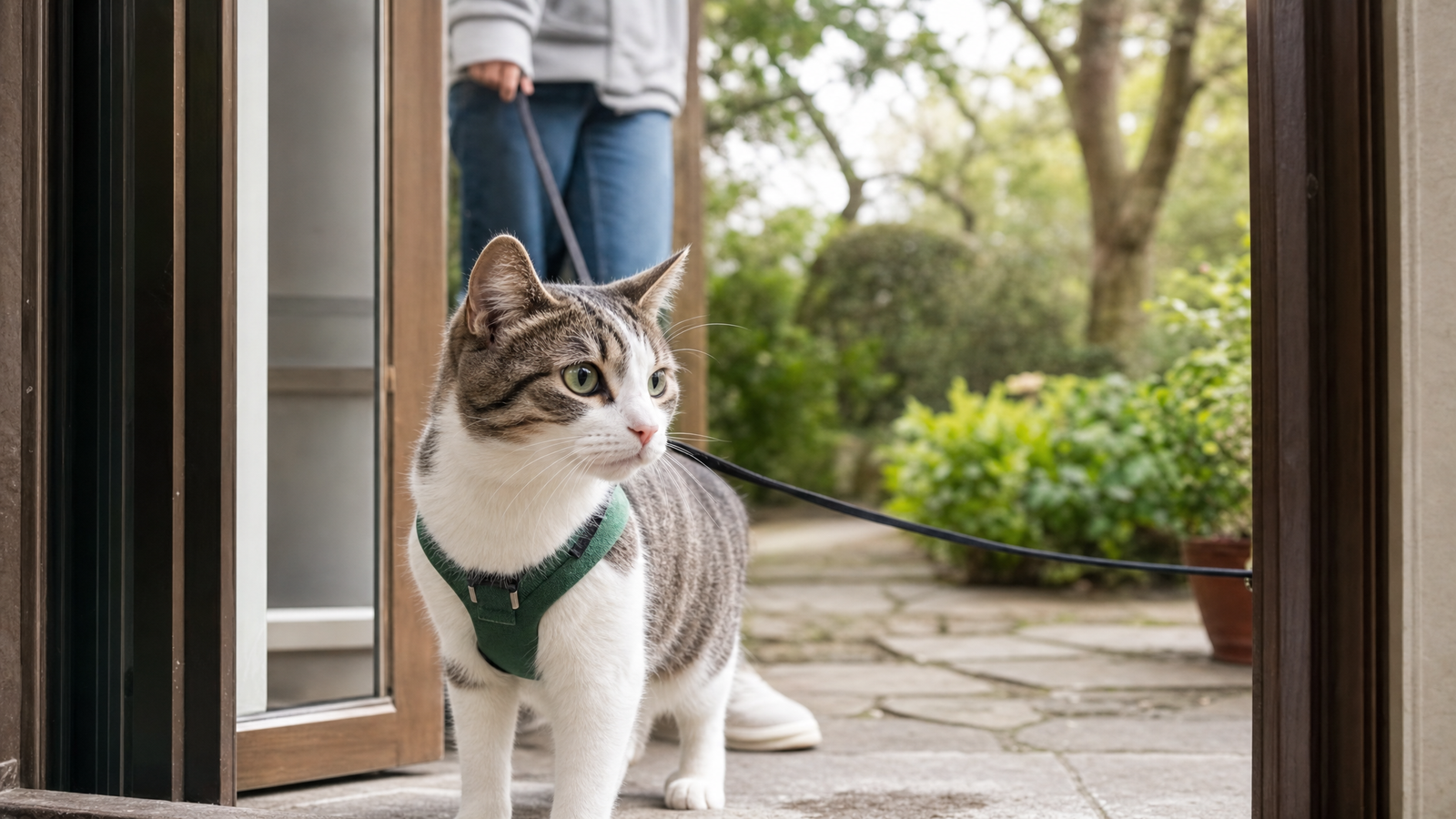
  • Use a well-fitting H-style or vest-style cat harness with a leash (never just a collar). Have a hard-shell carrier or pet backpack available for the cat to hide in.
  • Complete internal and external parasite prevention before going out. Outdoor stress can trigger Feline Herpesvirus-1 (FHV-1) flare-ups. Consider lysine supplements during training to support immunity and respiratory health.
  • For the first outing, choose a familiar and quiet environment like your balcony, a quiet courtyard, or a secluded corner of a park with minimal foot and vehicle traffic. Opt for quiet times like early morning or dusk. Avoid dog-heavy pet parks.

Step 1: Is My Cat Suited for Leash Walks? Personality Assessment is Key

Before starting any training, honestly assess your feline companion's personality.

  • Potential Candidates for Leash Walking: Bold, curious, unafraid of strangers or noises, enjoys greeting guests, loves watching scenery from the window.
  • Likely "Homebody" Cats: Extremely timid, easily startled or nervous, aggressive, elderly, or have health issues like joint problems.

Important Concept: Leash walking is meant to enrich your cat's life, not for the owner's enjoyment. If your cat is naturally timid, forcing them outdoors will only cause immense psychological trauma. Enriching their indoor environment would be a better choice.

Step 2: Starting from Scratch with "Harness and Leash" Indoor Training

This is the most crucial part of the entire leash-walking plan and requires immense patience!

  • Familiarize with Equipment: Place a "H-style" or "vest-style" cat harness near your cat's sleeping area or food bowl to let them get used to its scent.
  • Attempt Fitting: When your cat is relaxed, put the harness on them, immediately reward with treats or praise, and then take it off. Repeat this several times daily, gradually increasing the duration.
  • Attach the Leash: Once your cat can move comfortably in the harness, attach the leash and let them drag it around the house, getting accustomed to its presence.
  • Simulate Walks: Gently pull the leash to guide your cat around the house, helping them understand that the leash isn't a restraint but a signal of connection with you. Remain patient throughout the entire process; never pull forcefully!

Step 3: "Must-Haves" and "Mind & Body Prep" Before Going Out

Once indoor training is complete, we also need to prepare these items:

  • Appropriate Gear: A well-fitting cat harness (never just a collar!), a leash, and a hard-sided carrier or pet backpack that allows your cat to hide anytime.
  • Health Protection: Regular Deworming: The outdoors is full of various parasites. Ensure your cat has received timely internal and external deworming before going out.
  • Support Immune Function: Going outdoors can be stressful for cats, potentially leading to decreased immunity and triggering latent Feline Herpesvirus-1 (FHV-1) flare-ups, causing symptoms like sneezing and watery eyes. It is recommended to supplement your cat with CatGarden Pro-L-Lysine Supplement during the leash training preparation period. It helps inhibit viral replication, stabilize respiratory health, and strengthen your cat's immune defenses, giving them more resilience to face external challenges.

Step 4: First Expedition! Choosing the Location and Time

The first outdoor experience is crucial. Be sure to choose an environment that maximizes the chances of success.

  • Best Locations: Your own balcony, a quiet courtyard, or a secluded corner of a park with minimal people and traffic. Avoid dog parks, as too many dogs can cause extreme panic in cats.
  • Best Times: Early morning or late evening, when the environment is quieter, reducing sensory stimulation for your cat.

Step 5: Be a Competent "Bodyguard," Not a "Tour Guide"

Remember, the cat is the star of the leash walk, not you.

  • Let the Cat Lead: Abandon the idea of "taking the cat for a walk." Your role is to be a bodyguard ensuring the cat's safety. Let your cat decide whether to sniff a leaf or hide in the bushes to observe.
  • Stay Alert at All Times: Constantly watch for sudden appearances of dogs, children, or vehicles. Before danger approaches, immediately pick up your cat or guide them back into their carrier.

Key Health Observation Points Summarized

Successful leash walking is 90% preparation and 10% luck. The focus is never on "how far they walked," but rather "how safe the experience was and how happy the cat was." With patient training and thorough preparation, you too can share a wonderful outdoor exploration time with your feline companion. But always remember, if your cat truly dislikes it, letting them stay safely at home as a happy king or queen is equally blissful!

Frequently Asked Questions

What should new cat owners pay attention to first?

It's recommended to first stabilize their diet, litter box, water, sleeping space, and daily observations. Avoid changing too many environmental factors at once; allow your cat time to build a sense of security.

Does cat care need to be adjusted by age?

Yes. Kittens, adult cats, and senior cats have different needs regarding diet, activity levels, medical check-ups, and environmental safety. Care should be adjusted according to age.

When should professional help be sought?

If behavioral problems worsen, health symptoms recur, or there are abnormalities in appetite or elimination, it is recommended to consult a veterinarian, behaviorist, or professional caregiver.

CatGarden|Luxury Villa-Style Cattery in Banqiao, offering boarding and grooming services.

Further Reading

CatGarden offers curated supplies, cat boarding, and grooming

Book services or shop online.

Back

Blog

Taking Your Cat Outdoors? 5 Key Preparations for Leash Training and Assessing Suitability

CatGarden Editorial TeamPublished 2024/12/01Updated 2026/10/06
Outdoor & Boarding Planning
Taking Your Cat Outdoors? 5 Key Preparations for Leash Training and Assessing Suitability

Leash training requires a systematic preparation process, and not all cats are suited for going outside. CatGarden observed during the care of boarding cats from diverse backgrounds that outgoing, curious cats adapt significantly better to outdoor training, while sensitive or easily stressed cats may experience chronic stress even after training. Here are 5 key preparation points to help you assess if your cat is suitable for leash walks, along with a complete guide from indoor training to the first outing.

Key takeaways

  • Assess your cat's personality before leash training. Bold and curious cats tend to adapt better. It's not recommended for extremely timid, easily startled cats, or those with joint health issues to be forced outdoors.
  • Use a well-fitting H-style or vest-style cat harness with a leash (never just a collar). Have a hard-shell carrier or pet backpack available for the cat to hide in.
  • Complete internal and external parasite prevention before going out. Outdoor stress can trigger Feline Herpesvirus-1 (FHV-1) flare-ups. Consider lysine supplements during training to support immunity and respiratory health.
  • For the first outing, choose a familiar and quiet environment like your balcony, a quiet courtyard, or a secluded corner of a park with minimal foot and vehicle traffic. Opt for quiet times like early morning or dusk. Avoid dog-heavy pet parks.

Step 1: Is My Cat Suited for Leash Walks? Personality Assessment is Key

Before starting any training, honestly assess your feline companion's personality.

  • Potential Candidates for Leash Walking: Bold, curious, unafraid of strangers or noises, enjoys greeting guests, loves watching scenery from the window.
  • Likely "Homebody" Cats: Extremely timid, easily startled or nervous, aggressive, elderly, or have health issues like joint problems.

Important Concept: Leash walking is meant to enrich your cat's life, not for the owner's enjoyment. If your cat is naturally timid, forcing them outdoors will only cause immense psychological trauma. Enriching their indoor environment would be a better choice.

Step 2: Starting from Scratch with "Harness and Leash" Indoor Training

This is the most crucial part of the entire leash-walking plan and requires immense patience!

  • Familiarize with Equipment: Place a "H-style" or "vest-style" cat harness near your cat's sleeping area or food bowl to let them get used to its scent.
  • Attempt Fitting: When your cat is relaxed, put the harness on them, immediately reward with treats or praise, and then take it off. Repeat this several times daily, gradually increasing the duration.
  • Attach the Leash: Once your cat can move comfortably in the harness, attach the leash and let them drag it around the house, getting accustomed to its presence.
  • Simulate Walks: Gently pull the leash to guide your cat around the house, helping them understand that the leash isn't a restraint but a signal of connection with you. Remain patient throughout the entire process; never pull forcefully!

Step 3: "Must-Haves" and "Mind & Body Prep" Before Going Out

Once indoor training is complete, we also need to prepare these items:

  • Appropriate Gear: A well-fitting cat harness (never just a collar!), a leash, and a hard-sided carrier or pet backpack that allows your cat to hide anytime.
  • Health Protection: Regular Deworming: The outdoors is full of various parasites. Ensure your cat has received timely internal and external deworming before going out.
  • Support Immune Function: Going outdoors can be stressful for cats, potentially leading to decreased immunity and triggering latent Feline Herpesvirus-1 (FHV-1) flare-ups, causing symptoms like sneezing and watery eyes. It is recommended to supplement your cat with CatGarden Pro-L-Lysine Supplement during the leash training preparation period. It helps inhibit viral replication, stabilize respiratory health, and strengthen your cat's immune defenses, giving them more resilience to face external challenges.

Step 4: First Expedition! Choosing the Location and Time

The first outdoor experience is crucial. Be sure to choose an environment that maximizes the chances of success.

  • Best Locations: Your own balcony, a quiet courtyard, or a secluded corner of a park with minimal people and traffic. Avoid dog parks, as too many dogs can cause extreme panic in cats.
  • Best Times: Early morning or late evening, when the environment is quieter, reducing sensory stimulation for your cat.

Step 5: Be a Competent "Bodyguard," Not a "Tour Guide"

Remember, the cat is the star of the leash walk, not you.

  • Let the Cat Lead: Abandon the idea of "taking the cat for a walk." Your role is to be a bodyguard ensuring the cat's safety. Let your cat decide whether to sniff a leaf or hide in the bushes to observe.
  • Stay Alert at All Times: Constantly watch for sudden appearances of dogs, children, or vehicles. Before danger approaches, immediately pick up your cat or guide them back into their carrier.

Key Health Observation Points Summarized

Successful leash walking is 90% preparation and 10% luck. The focus is never on "how far they walked," but rather "how safe the experience was and how happy the cat was." With patient training and thorough preparation, you too can share a wonderful outdoor exploration time with your feline companion. But always remember, if your cat truly dislikes it, letting them stay safely at home as a happy king or queen is equally blissful!

Frequently Asked Questions

What should new cat owners pay attention to first?

It's recommended to first stabilize their diet, litter box, water, sleeping space, and daily observations. Avoid changing too many environmental factors at once; allow your cat time to build a sense of security.

Does cat care need to be adjusted by age?

Yes. Kittens, adult cats, and senior cats have different needs regarding diet, activity levels, medical check-ups, and environmental safety. Care should be adjusted according to age.

When should professional help be sought?

If behavioral problems worsen, health symptoms recur, or there are abnormalities in appetite or elimination, it is recommended to consult a veterinarian, behaviorist, or professional caregiver.

CatGarden|Luxury Villa-Style Cattery in Banqiao, offering boarding and grooming services.

Further Reading

One email a month of cat-care tips

Hand-picked care, behavior and grooming tips once a month. Subscribe and we will send you our three most-read articles right away.

Keep reading