Blog
Can Cats Eat Mangoes? Portion Sizes, Risks, and How to Feed Them Safely This Summer
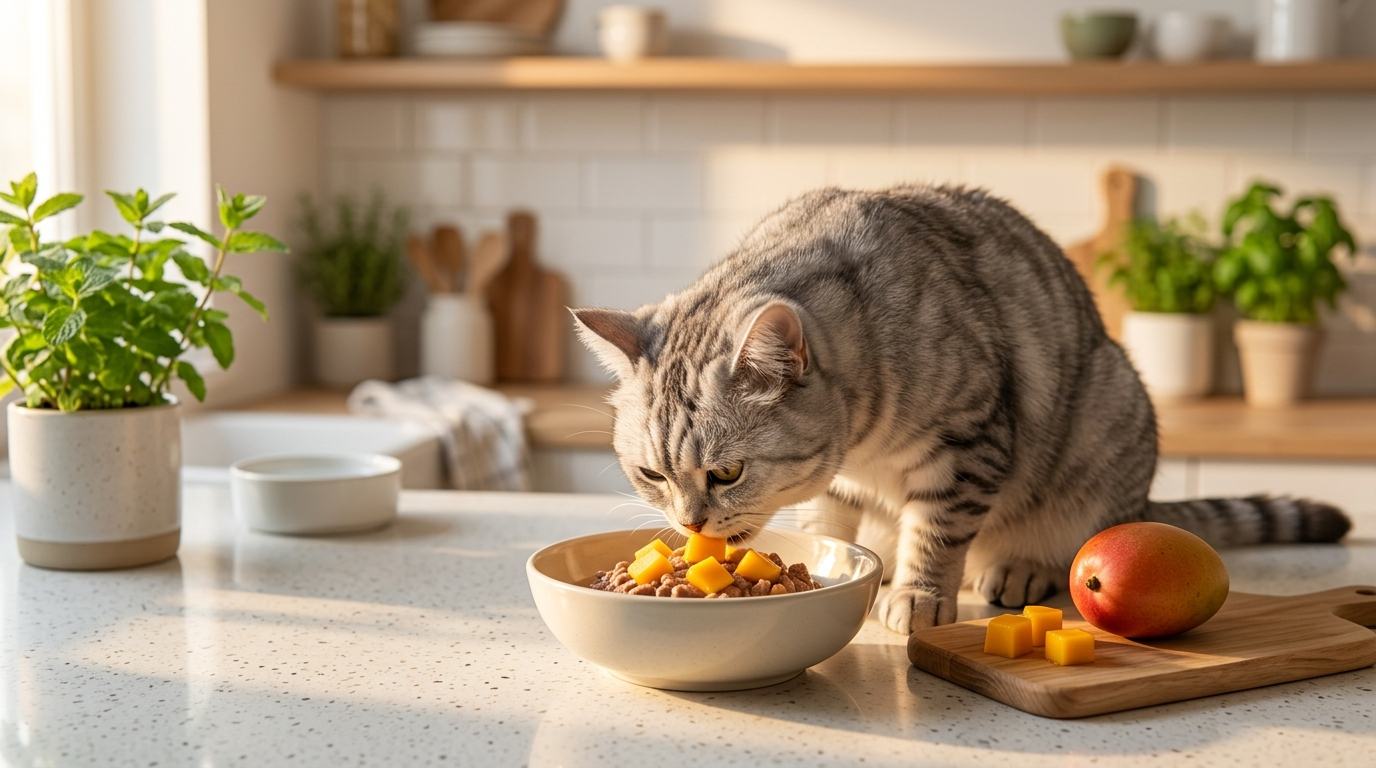
Cats can eat small amounts of ripe mango flesh after the peel and pit have been removed, but it should only be an occasional treat, not a staple food. Cats are obligate carnivores and do not require the sugar or fiber found in fruits. Feeding too much mango can lead to diarrhea and excess calorie intake.
Therefore, the correct answer to "Can cats eat mangoes?" is: Yes, but in very small quantities, peeled and pitted, cut into small pieces, and some cats (diabetic, those with kidney disease, or sensitive stomachs) should avoid it entirely.
Key Takeaways
- Ripe mango flesh is non-toxic to cats. A safe single portion for an adult cat is about 1-2 small pieces (no more than one teaspoon total, approximately 5 grams), given 1-2 times per week at most.
- Never give cats the peel, pit (stone), or unripe green mangoes. The peel is difficult to digest, and the pit poses choking and intestinal blockage risks.
- Mangoes are high in sugar (about 14 grams per 100 grams). Cats with diabetes, those who are overweight, or cats with chronic kidney disease should avoid them completely.
- Cats lack sweet taste receptors, so most cats are not interested in mangoes. It's normal if they don't eat it; don't force them.
- If your cat experiences soft stools, vomiting, or decreased appetite within 24 hours of the first feeding, it means they are not suited for it, and you should not offer it again.
Why Cats "Don't Need" Mangoes
When owners cut mangoes in the summer, cats might sniff around, leading owners to believe they love them. However, cats' taste buds are naturally unable to detect sweetness. Their curiosity is usually driven by scent or a desire for interaction, not a craving for fruit.
Cats are obligate carnivores, meaning their nutritional needs are primarily met by animal protein and fat. The sugars and fiber in fruits can be an "extra burden" on a cat's digestive system:
- Cats have fewer enzymes to break down carbohydrates, so consuming too much sugar can lead to gas and soft stools.
- The fiber content in mangoes can be too high for a cat's small digestive tract, easily causing diarrhea if given in large amounts.
In other words, mangoes for cats are like "human snacks" – optional and to be enjoyed in moderation. For their true nutritional needs, rely on high-quality wet food or kibble, such as the protein-rich staple foods we recommend like Luxury Functional Cans.
Safe Portion Sizes for Cats Eating Mangoes
Portion size is the most crucial aspect. When we care for boarding cats at our clinic, if owners occasionally allow a little fruit, our principle is always "less is more."
Recommended Portions (Adult Cats)
| Item | Recommendation |
|---|---|
| Single Serving | 1-2 small pieces, no more than one teaspoon total (approx. 5 grams) |
| Frequency | 1-2 times per week at most |
| Form | Peeled, pitted, and cut into pieces the size of rice grains to small fingernails |
| Kittens/Senior Cats | Recommended to give less or none, as their digestive systems are more sensitive |
Mangoes should constitute no more than 10% of a cat's total daily calorie intake (a general rule for treats). For a 4kg adult cat, the daily treat calorie limit is only a "few small pieces," so avoid adding other treats.
Situations Where You Should "Completely Avoid" Feeding Mangoes
- Diabetic Cats: Mangoes cause a rapid spike in blood sugar; skip them entirely.
- Cats with Chronic Kidney Disease: Their diet requires strict management. Avoid adding new foods without veterinary consultation. You can learn more about dietary principles for cats with kidney disease in our article Why Do Cats Get Kidney Disease?.
- Overweight Cats or Cats on a Weight Loss Program: Sugar equals excess calories.
- Cats with Sensitive Stomachs or Prone to Diarrhea: They are already prone to digestive upset; don't take the risk.
Parts of the Mango Cats Absolutely Cannot Eat
"Can eat" refers only to the ripe flesh. All other parts must be avoided:
Mango Peel
Mango peel is fibrous and difficult to digest. It may also contain pesticide residues or wax. Some people experience skin reactions (due to urushiol compounds) when touching mango peels. While the risk for cats is primarily gastrointestinal upset if ingested, it's unnecessary to take this chance.
Mango Pit (Stone)
This is the most dangerous part. Mango pits are large and hard. If a cat chews and swallows one:
- It can cause choking if lodged in the throat.
- It can cause foreign body obstruction in the intestines, potentially requiring surgery in severe cases.
Remember to store the pit safely after cutting the mango, away from countertops or trash cans accessible to your cat.
Green Mangoes (Unripe)
These are highly acidic and even harder to digest, easily irritating the stomach. They are also not recommended.
For a comprehensive list of toxic or dangerous foods for cats, we recommend bookmarking our guide: What Can't Cats Eat? Common Household Dangers and Signs of Poisoning. Always check this list before feeding any human food to your cat.
How to Feed Mangoes Correctly: Three Steps
If your cat shows genuine interest and you want to let them try a tiny piece, follow these steps:
1. Choose a ripe, soft mango. Peel and pit it, then cut it into small pieces, about the size of rice grains to a small fingernail.
2. Give only one small piece the first time. Then, observe your cat for 24 hours. Watch for vomiting, soft stools, or a decrease in appetite.
3. If there are no issues, continue to feed it in moderation: "no more than one teaspoon per serving, 1-2 times per week." Don't increase the amount just because they like it.
A quick reminder: Avoid processed mango products like dried mango, mango smoothies, or mango yogurt. Dried mango has concentrated sugar, and smoothies/yogurts often contain milk (which most adult cats are lactose intolerant of) and added sugars, none of which are suitable for cats.
What to Do If Your Cat Gets Diarrhea or Vomits After Eating Mango
The chance of problems from a small taste is low, but every cat's constitution is different. If your cat experiences the following after eating mango:
- Mild, single episode of soft stool with normal energy and appetite: Stop feeding mango and observe. They will usually recover within a day. Refer to What to Do If Your Cat Has Diarrhea to assess the severity. For cats with sensitive stomachs, consider keeping Specialty Probiotics on hand for regular adjustment.
- Repeated vomiting, watery diarrhea, noticeable lethargy, complete loss of appetite: Do not attempt home treatment; seek veterinary care immediately.
- Bloody stool: You can refer to Is Blood in Cat Stool Normal If They Seem Fine?, but if the bleeding is significant or accompanied by other symptoms, take them to the vet immediately.
If symptoms persist for more than 24 hours or clearly worsen, consult a veterinarian without delay.
Summer Fruit Feeding: Don't Forget Cats Are More Afraid of Heat
It's thoughtful to want to give your cat refreshing fruit in the summer to cool them down, but remember: fruit won't cool them down; what cats truly need is a cool environment and plenty of water.
Cats' ability to dissipate heat is much lower than we imagine. They rely on sweating through their paw pads and panting, which are inefficient. Instead of offering fruit, focus on preventing heatstroke:
- Keep indoor spaces well-ventilated, use air conditioning or fans, and prevent cats from staying in hot, stuffy areas.
- Place multiple clean water bowls around the house to encourage drinking.
If you notice your cat panting with its tongue out, it's not because they're hungry but likely because they're overheated. Be sure to read Is Cat Panting with Tongue Out Due to Heat or Danger? and What to Do for Cat Heatstroke: First Aid and Emergency Care. Heatstroke is a life-threatening emergency.
If you're going to be away for an extended period in the summer and cannot provide air-conditioned care at home, consider boarding your cat at a facility with a temperature-controlled environment. Our Boarding Services maintain a constant temperature and record each cat's food intake and elimination.
Frequently Asked Questions
Can Cats Get Poisoned by Eating Mangoes?
Ripe mango flesh itself is not toxic to cats, unlike onions or grapes which can cause poisoning. The real risks are excessive sugar intake, gastrointestinal upset, and intestinal obstruction from accidentally swallowing the pit. Feeding small amounts of peeled and pitted flesh is generally safe.
Can Cats Eat Dried Mango or Mango Smoothies?
Not recommended. Dried mango has even more concentrated sugar, and smoothies/yogurts often contain milk and added sugars, which can burden a cat's digestive system and blood sugar levels. If you're going to offer mango, stick to small pieces of fresh, ripe flesh.
Is It Normal for My Cat to Not Eat Mango at All?
Yes, it's very normal. Cats cannot taste sweetness and are generally uninterested in fruits. If your cat doesn't eat it, it means their body doesn't need it, so don't force it. Ensuring they eat their main diet well is the priority.
Can Kittens Eat Mangoes?
Not recommended. Kittens have more delicate digestive systems and are more prone to diarrhea from sugar and fiber. They also have a higher risk of choking on hard pieces or the pit. Kittens under one year old should focus on kitten-specific staple foods.
How Many Times a Week Can I Give Mango?
At most 1-2 times a week, with each serving not exceeding one teaspoon (approx. 5 grams). Mango is just an occasional treat. When combined with other treats, the total daily calorie intake from treats should be kept within 10% of their daily caloric needs.
---
*This article was written by the Mao Hou Yuan editorial team. The portion sizes and observation indicators mentioned are general care recommendations. For individual cats with chronic illnesses or special conditions, please follow your veterinarian's instructions.*
每月一封,精選養貓照護、住宿美容小知識與新品,不塞爆你的信箱。
Keep reading
Can Cats Eat Eggs? Correct Feeding Portions and Precautions for Yolks, Whites, and Boiled Eggs
Cats can eat eggs, but they must be fully cooked, unseasoned, and given in small amounts as an occasional treat. This guide explains how to separate yolks and whites, how much boiled egg to feed, and the real risks of raw eggs.
Why Do Cats Get Kidney Disease? Understanding Early Signs, Dietary Prevention, and the Importance of Hydration
Cat kidney disease is common, linked to their evolution from desert dwellers, naturally low water intake, and high kidney workload. Early symptoms are often subtle, with increased drinking and urination, and weight loss being key warning signs. Early hydration and dietary management can effectively slow progression.
Can Cats Eat Shrimp? The Correct Way to Feed Raw, Cooked, and Shells, Plus Precautions
Cats can eat unseasoned cooked shrimp in moderation as a treat, but raw shrimp, shells, and seasoned shrimp should be avoided. This article explains the appropriate portion sizes, risks, and correct feeding methods.
