Blog
Do Cats Need to Fast Before Grooming? Understanding Feeding, Nail Trimming, and Car Sickness Vomiting Risks on Grooming Day
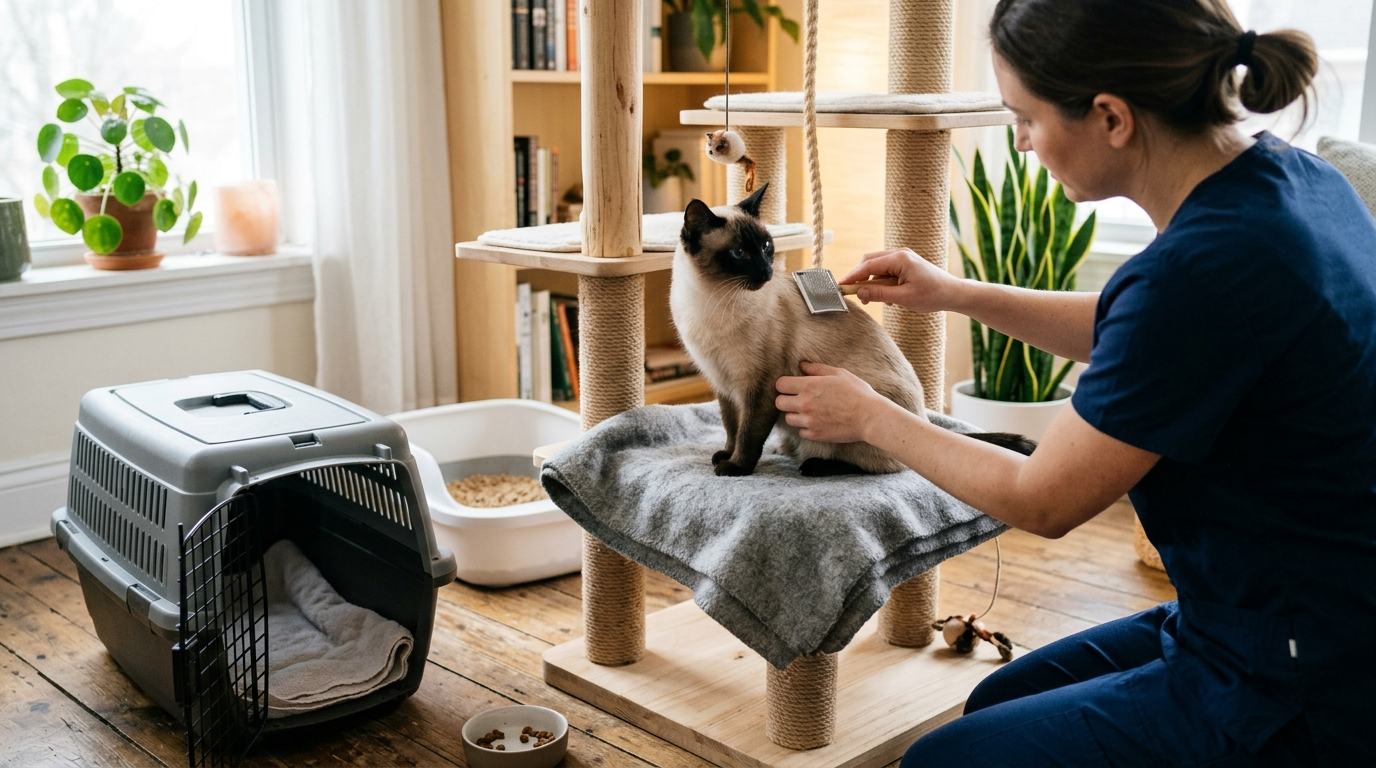
Cats do not need to fast overnight before grooming like they would for surgery. However, we recommend owners avoid feeding a full meal 2-3 hours before bringing their cat in. The reason is simple: the entire process of bathing, drying, and traveling is stressful for cats. When their stomachs are too full, they are more prone to vomiting during restraint or drying.
This article won't discuss how to choose a groomer or calculate prices. Instead, it focuses on clarifying the "feeding schedule on grooming day"—including whether fasting is necessary, when to feed, whether fasting is needed for nail trimming, and how to avoid the most common issue: car sickness and vomiting.
Key Takeaways
- Cats do not need to fast strictly before grooming. However, 2-3 hours before drop-off, avoid feeding a full meal; offer about half of their usual portion.
- Vomiting during bathing and drying is usually not due to illness but a combination of stress, a full stomach, and motion.
- Nail trimming, ear cleaning, and other dry grooming services do not require fasting. Feeding precautions are mainly for full grooming sessions involving "bathing + drying."
- For cats prone to car sickness, allow 1.5-2 hours for digestion before travel. Cover their carrier with a towel to reduce visual stimulation.
- If your cat shows persistent dry heaving, significant lethargy, or refuses to eat or drink for over a day on grooming day, seek veterinary attention rather than waiting for the next appointment.
Do Cats Need to Fast Before Grooming? First, Understand "What Kind of Grooming"
Many owners hear "fasting" and think of overnight fasting before surgery. Grooming doesn't require that level of restriction. The key is to know what type of grooming you're opting for:
Dry Basic Grooming: No Need to Fast
If you're just getting nail trims, ear cleaning, anal gland expression, or partial hair trims, these processes don't involve getting the cat wet or prolonged drying. Their posture changes are minimal, so normal feeding is fine. The only consideration is to avoid abdominal restraint right after a full meal when their belly is distended, to prevent pressure on the stomach.
Wet Full Grooming: Bathing + Drying is the Key
The real need for feeding consideration is for full bathing sessions. During bathing, the cat is restrained, gets wet, and is turned over. During drying, they spend time in an environment with wind and noise. These are continuous stimuli for the digestive system. If there's too much in their stomach at this time, they are very likely to vomit midway. This is uncomfortable for the cat and will soil their coat, requiring a re-wash.
If you're still deciding how often to send your cat for grooming or the frequency of nail trims and ear cleaning, check out our guide on How Often Should Cats Be Bathed? Timing for Nail Trims, Ear Cleaning, and Grooming Appointments. Then, come back to plan your feeding schedule for the day.
Feeding Schedule on Grooming Day: Our Recommendations
At our facility, our golden rule for owners is: Finish the last meal 2-3 hours before drop-off, and reduce the portion size by half.
When to Feed and How Much
- If your appointment is at 10 AM: Feed once before 7 AM, with about half the usual portion. Only provide water afterward.
- If your appointment is in the afternoon: The meal before noon can be normal. Avoid a last-minute meal right before leaving for the groomer.
- Do not withhold water throughout the process. Cats don't drink as much as dogs, and the risk of dehydration is more concerning than vomiting from a full stomach.
Why Half Portion, Not Complete Fasting?
Complete fasting for more than half a day can lead to hypoglycemia or bile reflux (vomiting yellow fluid) in some cats, especially thin cats, kittens, or those with liver issues. Our approach is to "eat a little to line the stomach, but not to fullness," ensuring there's something in the stomach without causing reflux during movement. This is much safer than extreme fasting.
Cats with Sensitive Stomachs
If your cat normally has soft stools or vomits from dietary changes or eating too quickly, they need an even longer gap between meals on grooming day. You can also help stabilize their gut health with specialized probiotics daily to improve their tolerance to stress events like travel. Long-haired cats are also prone to hairballs; fasting before going out, combined with nervousness, can increase dry heaving. Regularly supplementing with specialized hairball control powder can also help.
Do I Need to Fast Before Nail Trimming? Clearing Up Common Misconceptions
Nail trimming does not require fasting. This is one of the most frequently asked questions. Nail trims and paw pad hair trimming are dry grooming procedures that take only a few minutes and are unrelated to the digestive system. Whether the cat has eaten or not has no impact.
What truly affects the smoothness of a nail trim is the cat's level of nervousness, not whether they've fasted. Overly hungry cats can become more agitated. When we trim nails at our facility, we observe the cat's posture. If they can maintain a relaxed "loaf" or side-lying position, it indicates they are relatively calm, and the process is quicker. If they become tense, their pupils dilate, and their ears flatten back, we will proceed in stages rather than forcing it.
If you plan to trim nails at home and only send your cat for bathing, we recommend establishing positive associations with nail handling using clicker training or treats (refer to How to Start Clicker Training for Cats). This will make your cat less resistant to having their paws touched when they go for grooming.
How to Prevent Car Sickness and Vomiting During Cat Grooming
Many owners assume their cat vomits during grooming because of the "bath itself." However, in many cases, the cat is already experiencing car sickness during the travel, and the reaction occurs at the grooming facility.
Three Common Causes of Car Sickness
1. Traveling immediately after a full meal: The stomach is still digesting when motion begins, making vomiting highly likely.
2. Seeing moving scenery outside the window: Visual input conflicts with inner ear sensations, worsening discomfort.
3. Excessive panting and drooling due to stress: This is often stress-related and not purely car sickness.
Our Recommended Practices
- Allow 1.5-2 hours for digestion before traveling. This works best when combined with the "half portion feeding" principle.
- Cover the travel carrier with a breathable towel to block visual stimuli. This significantly calms the cat. You can also use a familiar scent from home. For more detailed scent-based calming techniques, refer to What to Do When Your Cat is Nervous About Vet Visits; these are fully applicable to grooming travel.
- Avoid sudden braking and loud noises in the car. Try to take a smooth route.
- Upon arrival, let the cat rest quietly in the carrier for a few minutes before starting. Don't rush to take them out for washing immediately.
If your cat consistently becomes overly anxious, trembles, or pants excessively when placed in a carrier or car, it's not just a grooming day issue. It's recommended to address their lack of security in daily routines by focusing on their daily schedule and scents.
Don't Rush a Big Meal After the Bath Either
After grooming is finished and you return home, many owners feel sympathetic and immediately serve a large meal. This is not recommended.
Cats have just gone through a series of stressors, and their digestive systems haven't fully recovered. Eating a large amount at this point can still lead to vomiting. Our advice is:
- Let the cat hide and drink some water upon returning home. Offer a normal portion meal about 1 hour later.
- Observe for shivering. Brief shivering after a bath is usually due to nervousness or incomplete drying. For distinguishing normal from abnormal shivering, see Is It Normal for Cats to Shiver After a Bath?.
- If you want to reward them, a small amount of premium catnip or a small portion of wet food is safer than a large bowl.
When to Seek Veterinary Care, Not Wait for the Next Grooming Appointment
On grooming day or the day after, if your cat exhibits the following symptoms, do not dismiss them as "just tired":
- Persistent dry heaving or vomiting 2-3 times, especially if it includes yellow fluid or blood streaks.
- Refusal to eat or drink for over a day, showing no interest in food.
- Significant lethargy, hiding, or unsteady walking.
- Rapid breathing or open-mouth panting that doesn't subside.
Cats are masters at hiding discomfort. Sudden behavioral changes are often early signs of illness. This is detailed in Sudden Aggression or Hiding in Cats. If symptoms persist or worsen significantly, seek veterinary care promptly. Do not delay.
---
By managing feeding times correctly and preparing the travel carrier, cat grooming can be a smooth experience. If you're planning a bath or shave for your cat, feel free to book an appointment. When booking, let us know their feeding schedule and if they are prone to car sickness, and we will adjust the process accordingly.
Frequently Asked Questions
Do cats absolutely need to fast before grooming?
Strict fasting is not necessary. It's recommended to finish their last meal 2-3 hours before drop-off with a reduced portion size. Ensure normal water access throughout. This helps prevent vomiting during bathing and drying due to a full stomach and motion.
Do I need to fast for just nail trims or ear cleaning?
No. Nail trims and ear cleaning are dry basic grooming procedures that are short and do not involve prolonged restraint or drying. They are unrelated to feeding, so normal eating is fine.
Is vomiting during grooming a sign of illness?
Most often, it's car sickness vomiting caused by stress, a full stomach, and motion, not necessarily illness. However, if your cat continues to dry heave, vomits yellow fluid, or refuses to eat or drink for over a day after returning home, veterinary examination is recommended.
Should I withhold water on grooming day?
No, do not withhold water. The risk of dehydration in cats is more concerning than vomiting from a full stomach. Maintain access to clean drinking water throughout. Only control food portion size and feeding times.
Can I feed my cat a large meal immediately after grooming?
It's not recommended. A stressed digestive system may not be ready for a large meal right away and could lead to vomiting. It's advisable to let your cat rest for about 1 hour upon returning home before offering a normal portion meal.
---
*CatGarden Editorial Team*
What we use for this
CatGarden’s own products, shipped from Taiwan


照護、行為、住宿美容的實用小知識,每月精選一封寄給你。訂閱後馬上收到我們最多人看的三篇文章。
Keep reading
Is Your Cat Sleeping Farther Away From You Because It Dislikes You? Consider Trust, Temperature, and Territory First
If your cat is sleeping farther away from you, it's usually not because it dislikes you, but rather because it's seeking a cooler spot due to the heat or it already feels secure around you. Assess temperature, trust, and territory to understand the reason.
Cat "Mother Hen" Squat vs. Normal Sitting: How to Tell the Difference by Limb Position, Breathing, and Relaxation Level
A cat's "mother hen" squat is usually a sign of relaxation and warmth, so don't panic every time you see it. However, if their limbs are tense, breathing is rapid, and their gaze is vacant, they might be curled up in pain. Learn to distinguish between these states using three key clues: limb position, breathing, and eye expression.
Cat Boarding Checklist: What Vaccinations Are Needed Before Check-In? Health Certificates, Flea Prevention, and Packing List
Before boarding your cat, vaccinations and flea prevention are paramount. Most cat hotels require the FVRCP vaccine to be current, along with external parasite treatment. Be sure to pack your cat's usual food, litter, and a familiar blanket. This guide provides a comprehensive pre-boarding checklist.
