Blog
What is a Tabby Cat? A Complete Illustrated Guide to Tabby Patterns (Mackerel, Classic, Spotted, Ticked)
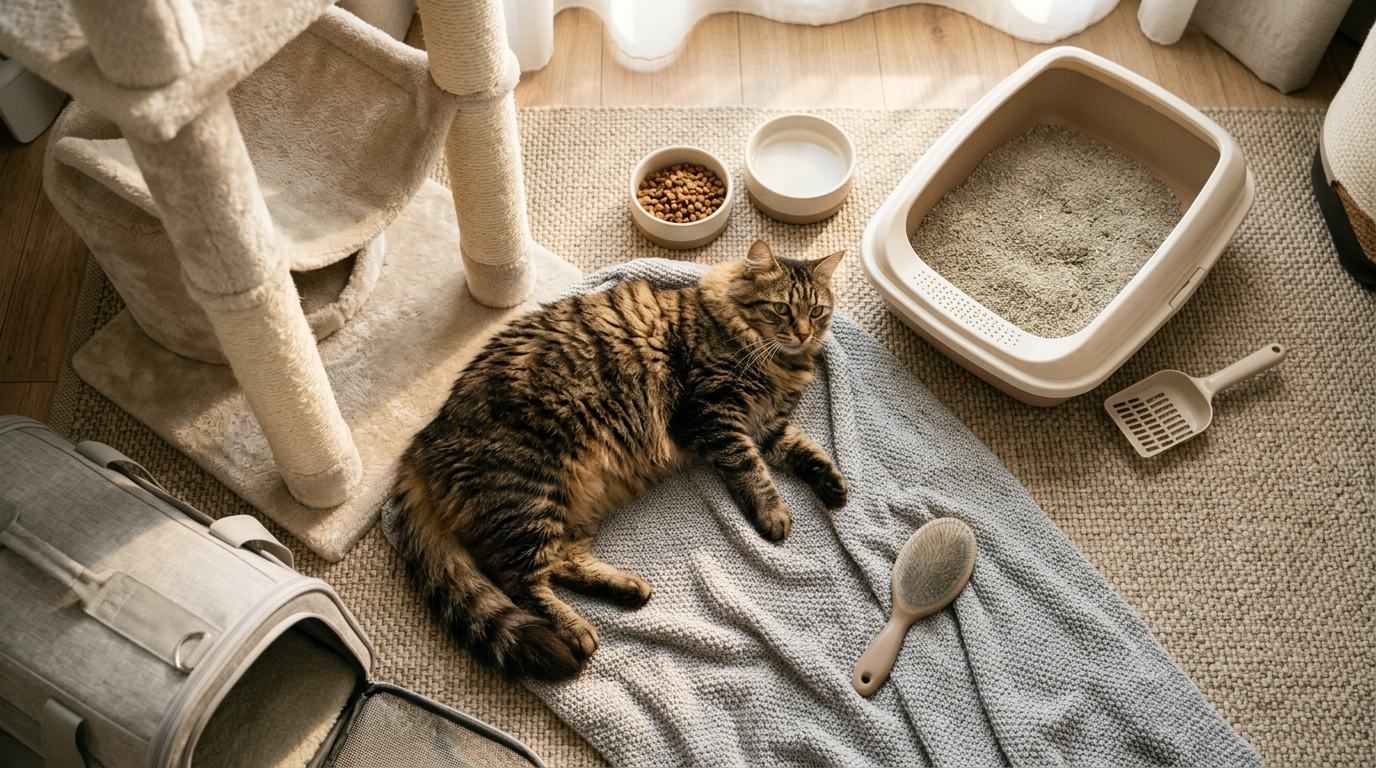
A tabby cat is not a breed, but a coat pattern. They are mainly divided into four major categories: Mackerel, Classic, Spotted, and Ticked, with the difference lying in the arrangement of stripes on their bodies. Almost all tabby cats have a distinct "M" marking on their forehead.
After interacting with thousands of cats at our center, the most common question we get from owners is, "What kind of cat is mine?" Many people think tabby is a breed, but it's actually a "pattern system" that spans across countless breeds and mixed-breed cats. Understanding the types of tabby cats will allow you to identify your cat's pattern type at a glance.
Key Takeaways
- A tabby cat is not a breed, but a coat pattern type that can appear on many cats, including American Shorthairs, Maine Coons, and Taiwanese mixed breeds.
- There are 4 basic tabby coat patterns: Mackerel (striped), Classic (swirled), Spotted (dappled), and Ticked (no distinct stripes, banded hairs).
- Almost all tabby cats have an "M" marking on their forehead, which is the quickest way to identify them.
- The "Li Hua cat" commonly seen in Taiwan mostly belongs to the Mackerel tabby pattern. Orange cats and tortoiseshell cats often have tabby markings underneath.
- Coat pattern only affects appearance and has no direct causal relationship with personality, health, or ease of care.
What is a Tabby Cat? Debunking the Myth That "Tabby Isn't a Breed"
Many owners believe that a tabby cat is a specific breed. In reality, it refers to the pattern of markings on their coat. This pattern originates from the cat's wild ancestors and serves as natural camouflage, which is why it can be seen on so many breeds – American Shorthairs, Maine Coons, Abyssinians, as well as the most common mixed-breed and domestic cats on the streets of Taiwan.
In other words, "tabby" is like "calico," "tortoiseshell," or "bicolor" – it describes the coat color, not the lineage. For a more comprehensive understanding of the relationship between tabby cats and local cats, you can read our related article: What is a Li Hua Cat? Understanding Personality, Origins, and Differences from Tabby Cats.
The First Step to Identifying a Tabby: Look for the "M" on the Forehead
Almost all tabby cats have an "M"-shaped marking on their forehead, which is the quickest identification point. Regardless of the specific pattern, if you see this "M," you can generally confirm that the cat carries the tabby gene. In addition to this, tabby cats usually have "eyeliner" around their eyes, fine lines on their cheeks, and ring-shaped bands on their tails.
Types of Tabby Cats: A Complete Illustrated Guide to the Four Tabby Patterns
The following four are the universally recognized basic types of tabby cat patterns. In reality, many cats will be "mixed types," but by grasping the main characteristics, you can categorize them.
1. Mackerel Tabby – The Classic "Fishbone Stripes"
This is the most common type of tabby, and the most typical pattern for Taiwanese Li Hua cats. Its characteristic feature is thin, parallel vertical stripes on the sides of the body, extending down from the spine, much like the ribs of a fish, hence the English name "Mackerel."
Identification Points:
- Stripes are thin, dense, and run mostly vertically.
- Often a distinct dark main line runs down the spine.
- Clear boundaries between stripes, not blurred together.
At our center, cats with this pattern are most often mistaken by owners for "Li Hua cats." For a clearer understanding of the differences, the article on What is a Li Hua Cat provides a more detailed comparison.
2. Classic Tabby – The "Marbled Swirls" on the Flanks
Also known as "Blotched Tabby," the Classic Tabby is characterized by bold, swirling patterns on the sides of the body. Many cats will have a circular pattern on their flanks resembling a bullseye or target, making it highly distinctive.
Identification Points:
- Patterns are thick, wide, and swirled or marbled.
- Often has target-like circular patterns on the flanks.
- Appears "thicker and grander" overall compared to Mackerel tabby.
The silver classic tabby in American Shorthairs is a representative of this type and is considered the "standard tabby face" by many.
3. Spotted Tabby – Covered in "Little Leopard Spots"
Spotted tabbies have scattered spots on their bodies rather than continuous stripes, resembling miniature leopards or ocelots. Some spotted patterns are actually broken stripes of the Mackerel tabby.
Identification Points:
- Body is covered in round or oval spots.
- Spots vary in size and are distributed discontinuously.
- Bengal cats are the most famous example of spotted tabbies.
4. Ticked Tabby – Looks Solid at First Glance, but Each Hair is Banded
This is the type most easily mistaken for a "solid-colored cat." Ticked tabbies appear to have no distinct stripes on their bodies. However, upon closer inspection, each hair has alternating bands of light and dark color (agouti), giving the overall coat a fine, sandy texture. Usually, only the face, limbs, and tail tip retain faint stripes.
Identification Points:
- Body appears solid-colored, but upon close inspection, hair tips have banded colors.
- Forehead still has the "M" marking, and the face has fine lines.
- Abyssinian cats are the most typical example of ticked tabbies.
> When grooming these cats at our center, brushing against the fur makes it easiest to see the layered texture of "multiple colors on one hair."
Are There More Than These Four Tabby Types? Common Extended Patterns
In addition to the four basic types, tabby patterns can "overlap" with other coat colors to create various variations:
- Orange/Ginger Tabby: Commonly known as orange cats, almost all orange cats have tabby markings.
- Cream Tabby: A lighter version of orange, with a soft coat color. For information on the temperament and care of this pattern, see Cream Tabby Cat Personality and Characteristics: A Complete Guide.
- Torbie (Tortoiseshell Tabby): A combination of tortoiseshell coloring with tabby markings.
- Silver Tabby: White or light gray base coat with silver-gray stripes, very striking.
Does a Tabby Cat's Coat Pattern Affect Its Personality?
This is a question owners ask very frequently. The answer is: the coat pattern itself does not determine personality. Personality is more influenced by breed, genetics, environment, and socialization, and has no direct causal link to whether the cat has Mackerel or Classic stripes. However, because tabby patterns are common in active and playful mixed-breed and domestic cats, many people have the impression that "tabby cats are smart and mischievous."
If you have a Taiwanese domestic tabby, you can refer to the Complete Guide to Li Hua Cat Personality for insights into their intelligence and affectionate nature. If you want to know why cats love to lie on you, you can read Why Do Cats Like to Lie on You and Sleep Close to You.
Practical Tips for Caring for Tabby Cats
In terms of care, tabby cats have no special differences from cats of other coat patterns. However, short-haired tabbies (especially Mackerel tabby mixed breeds) may shed a significant amount during shedding season.
- Grooming Frequency: During shedding season, it is recommended to brush 3-4 times a week, and 1-2 times a week normally. For information on shedding cycles, refer to When is Cat Shedding Season.
- Digestive Health: For cats prone to swallowing large amounts of hair, consider using Pro Hairball Control Powder as needed to aid in hairball expulsion, and pay close attention to their stool.
- Summer Heat Management: Tabby cats are also susceptible to heat. If you notice them panting with their mouths open, be alert. See Is Cat Panting with Tongue Out Due to Heat or Danger? for details.
If your tabby cat has a dense coat and sheds heavily, requiring professional bathing or de-shedding, you are welcome to book a grooming appointment. We will adjust the process and drying time according to their coat quality.
Frequently Asked Questions
Is a tabby cat a breed?
No. Tabby refers to a coat pattern, not a breed. It can appear on American Shorthairs, Maine Coons, Abyssinians, as well as Taiwanese mixed-breed and domestic cats.
How can I quickly tell if my cat is a tabby?
Look at the forehead. Almost all tabby cats have a distinct "M" marking on their forehead. Combined with the stripes, spots, or banded hairs on their body, you can confirm and categorize them into one of the four main patterns.
How do I distinguish between Mackerel and Classic tabby?
Mackerel tabby has thin, vertical stripes (like fishbones), while Classic tabby has thick, swirling patterns, often with target-like circles on the flanks, giving a bolder overall appearance.
Why do some tabby cats appear to have no stripes?
Those are likely Ticked tabbies. Each hair has alternating bands of light and dark color, making the body appear solid. Only faint stripes remain on the face, legs, and tail tip. Abyssinian cats are a prime example.
Are Taiwanese Li Hua cats considered tabby cats?
Yes. Taiwanese Li Hua cats are mostly Mackerel tabbies and are a local manifestation of the tabby coat pattern. For detailed differences, please see our series article "What is a Li Hua Cat."
---
*This article was written by the Mao Hou Yuan editorial team. Health advice in this article is for reference only. If your cat exhibits persistent panting, loss of appetite, or abnormal symptoms, please seek veterinary attention promptly.*
One email a month: hand-picked cat care tips and new arrivals. No spam.
Keep reading
What is a "Pear Blossom Cat"? Understanding the Origin of the Name, Coat Characteristics, and Its Relationship with the "Li Hua Cat"
"Pear Blossom Cat" is mostly a common misspelling of "Li Hua Cat" (狸花貓), and both refer to the same type of common local tabby cat in Taiwan. This article clarifies the origin of the name, coat identification, and the difference from tabby cats.
Complete Guide to Tabby Cats: Patterns, Personalities, and Care Essentials
Tabby is actually a coat pattern, not a breed, and most tabbies are friendly and stable. This article will help you understand the different tabby patterns, the differences between orange and silver tabbies, and essential care tips.
What is a Chinese Li Hua Cat? Personality, Origins & How It Differs from Tabby Cats
The Chinese Li Hua cat is a native cat breed originating from China, known for its intelligence, independence, and loyalty. This guide clarifies the correct naming conventions, how to identify them by appearance, their personality traits, and exactly how they differ from tabby cats.
