Are Tortoiseshell Cats Really Affectionate? A Complete Analysis of Their Coat Origins, Male-to-Female Ratio, Lifespan, and the "Perfect Angel Cat" Legend
Tortoiseshell cats have a coat pattern of intermingled black (or chocolate) and orange fur. Because the gene for orange coloration is located on the X chromosome, over 99% of them are female. This article analyzes the origin of their coat pattern, differences from calico cats, personality myths, and key considerations for adoption.
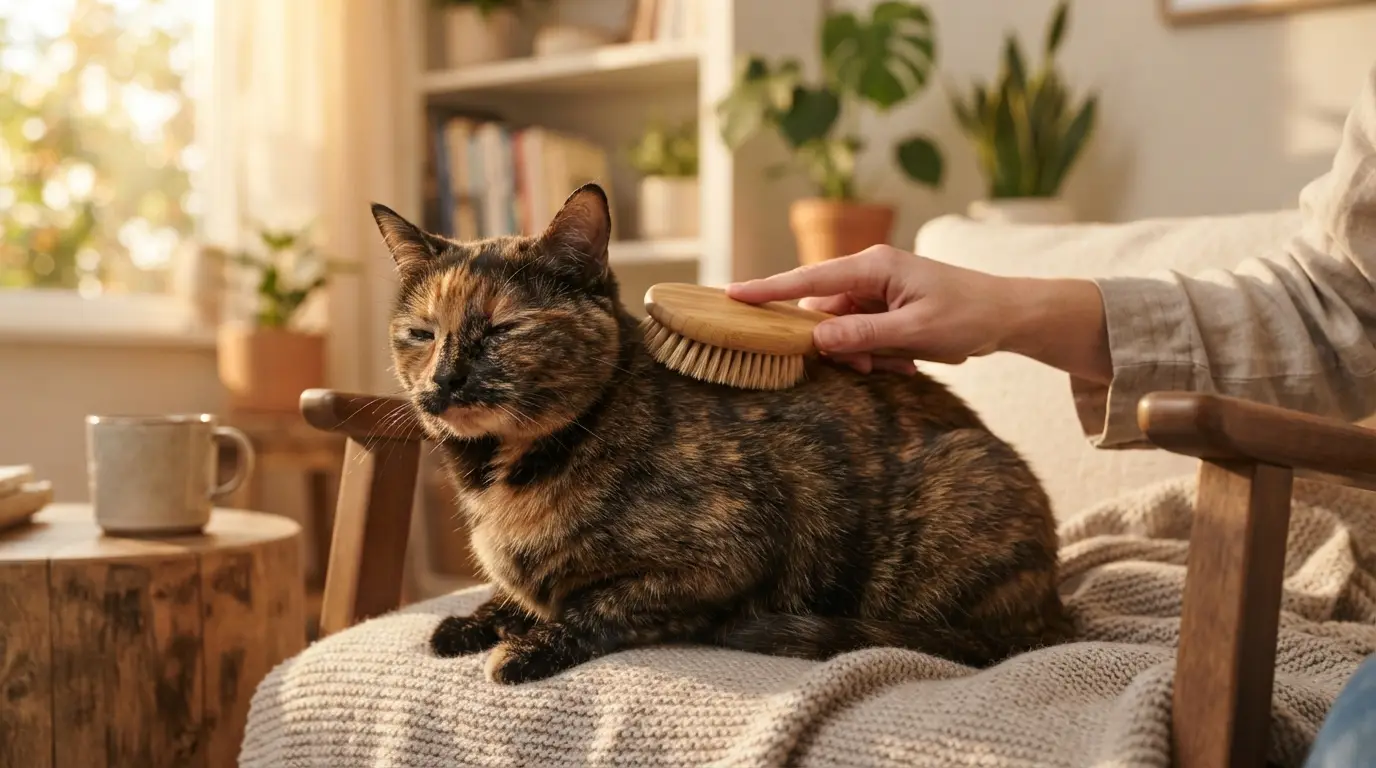
Tortoiseshell cats are not a breed, but rather a coat pattern characterized by "black (or chocolate, gray) and orange fur intermingled without large patches of white." Because the gene controlling orange fur is located on the X chromosome, tortoiseshell cats are almost exclusively female, with male torties occurring at a probability of about 1 in 3,000. As for the popular online notion that "tortoiseshell cats are particularly affectionate and are perfect angel cats," there is currently no scientific research to confirm that coat color determines personality. The factors that truly influence a cat's affection level are socialization experience, human-cat interaction during kittenhood, and the owner's relationship with the cat.
Key Takeaways
- Tortoiseshell cats have a "black + orange" mixed and intermingled coat pattern (tortoiseshell), not a breed. This pattern can appear in domestic shorthairs, American Shorthairs, Persians, and Maine Coons.
- Approximately 99.9% of tortoiseshell cats are female. Male torties require chromosomal abnormalities like XXY to occur, with an incidence rate of about 1 in 3,000, and most are infertile.
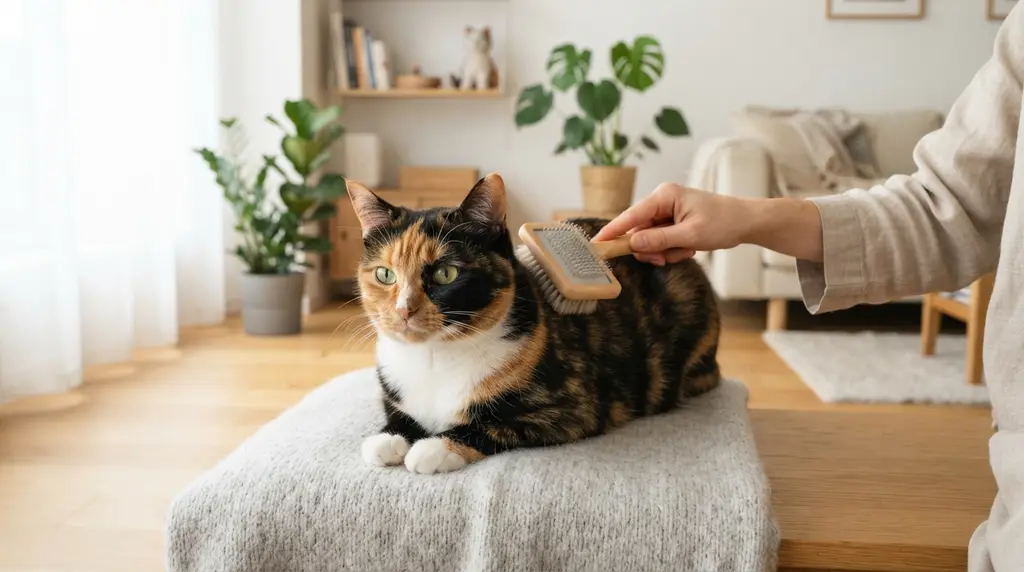
- The core difference between tortoiseshell cats and calico cats (three-colored cats) is the "proportion of white": Tortoiseshell cats have almost no large white areas, while calicos have distinct white patches.
- Coat color is unrelated to lifespan. The average lifespan of a tortoiseshell cat is the same as that of a typical domestic cat, around 12-18 years for indoor cats.
- Claims like "tortoiseshell cats are fierce" or "tortoiseshell cats are affectionate" lack consistent research support. A 2015 questionnaire study from UC Davis only showed that tortoiseshell/calico cats were slightly more reported by their owners for "mildly impatient behaviors," but the sample was based on subjective responses and insufficient to infer personality.
What is a Tortoiseshell Cat? First, Understand It's Not a Breed
When owners check in their cats at our facility, we most often hear them say, "Mine is a tortoiseshell cat," and then they get stuck at the breed field. In reality, "tortoiseshell" refers to the coat color, not the lineage.
The name "tortoiseshell" comes from the deep brown and orange-yellow intermingled texture reminiscent of a sea turtle's shell. Typical tortoiseshell cat coat characteristics include:
- Patches of black (or chocolate, blue-gray) and orange/cream colors interspersed, with blurry boundaries, like spilled paint.
- Very little or no white, with at most a small tuft on the chest or chin.
- Some individuals have asymmetrical distribution of orange and black, with one half of the face black and the other half orange. These are the "yin-yang tortoiseshells" popular online.
- If the orange and black also have tabby markings, they are called "torbies" (tortoiseshell-tabby), which are often mistaken for regular tabby cats.
Most tortoiseshell cats in Taiwan are mixed-breed domestic cats, commonly referred to as Chinese rural dogs. If you're interested in common local coat patterns in Taiwan, you might want to read our article on What is a Chinese Li Hua Cat? Understanding Their Personality, Origins, and Differences from Tabby Cats. That article breaks down the most common patterns found in Taiwanese street cats.
The Origin of Tortoiseshell Coat Color: Why Are They Almost All Female?
This is the most interesting and easily explainable aspect of tortoiseshell cats.
The Orange Gene Lives on the X Chromosome
In cat coat genetics, there's a crucial gene called the Orange gene (O gene), located on the X chromosome, with two states:
- Carrying O: This chromosome causes fur to grow as orange/cream.
- Carrying o: This chromosome causes fur to grow as black/chocolate/blue-gray.
Female cats have two X chromosomes (XX), so they can have one carrying O and one carrying o. Male cats have only one X chromosome (XY), so they are either entirely orange or entirely black, unable to carry both instructions simultaneously.
"X Chromosome Inactivation" Creates Random Patchwork
During early embryonic development in female cats, each cell randomly deactivates one of its X chromosomes (this phenomenon is called X-inactivation or Lyonization). Which X chromosome is deactivated is random, resulting in:
- Cells that deactivate the "o-carrying" chromosome → grow orange fur.
- Cells that deactivate the "O-carrying" chromosome → grow black fur.
These cells divide and migrate on the embryonic surface, eventually forming patches of color that interlock – this is the source of the mixed appearance seen in tortoiseshell cats. Because the deactivation is random, no two tortoiseshell cats in the world have exactly the same coat pattern, not even littermates. This is very useful at cat hotels: if a multi-cat household has two torties, we can almost always distinguish them by their coat patterns, making them much easier to identify than tabby cats.
So, How Do Male Tortoiseshell Cats Come About?
For a male cat to be tortoiseshell, he must possess two X chromosomes, meaning he has a XXY chromosomal abnormality (feline Klinefelter syndrome), occurring at a rate of about 1 in 3,000. These male cats are typically:
- Mostly infertile.
- Some individuals may have a higher predisposition to skeletal, metabolic, or behavioral abnormalities.
- A few cases are due to chimerism or somatic mutations, which are even rarer.
So, if you do have a male tortoiseshell cat, it is indeed a very rare individual. However, "rare" does not equate to "healthier" or "luckier." Regular health check-ups are recommended. The online notion of male torties being lucky charms should be taken with a grain of salt.
Tortoiseshell vs. Calico Cats: A Table to Clarify
This is a frequently searched question, and we are often asked about it in the grooming salon. The key is just one word: white.
| Feature | Tortoiseshell Cat (Tortoiseshell) | Calico Cat (Calico / Three-Colored Cat) |
|---|---|---|
| Color Composition | Black (or chocolate, blue-gray) + Orange/Cream | Black + Orange + Large Areas of White |
| Color Block Boundaries | Interspersed and blended together | Distinct boundaries, like color block mosaics |
| White Proportion | Almost none, or just a small tuft | Significant, often on the abdomen, limbs, and midline of the face |
| Sex | Approximately 99.9% Female | Approximately 99.9% Female |
| Genetic Principle | X chromosome inactivation | Same as above, plus the "white spotting gene" pushing the color blocks apart |
Simple mnemonic: No white base, colors mixed together is tortoiseshell; large white areas, colors in distinct blocks is calico.
There are also two common intermediate types:
- Tortoiseshell and White: White is only on the chest, abdomen, and paws. In Taiwan, these are sometimes called "calicos," but they are closer to tortoiseshells.
- Dilute Tortoiseshell: A softer version of blue-gray + cream, appearing more pinkish-gray, often mistaken for Ragdolls or British Shorthairs.
Are Tortoiseshell Cats Really Affectionate? First-Hand Observations from a Cat Hotel
Let's get straight to the point: Coat color does not determine personality. However, tortoiseshell cats have indeed fostered two completely opposite legends among owners and observers of street cats – one faction says, "Tortoiseshell cats are super affectionate and perfect angel cats," while another says, "Tortoiseshell cats have tortitude (tortoiseshell attitude) and a strong temper."
What Does Research Say?
A frequently cited study is a 2015 questionnaire from UC Davis, which found that tortoiseshell, calico, and some orange-and-white cats were slightly more reported by their owners for "mildly impatient behaviors." However, this study has two significant limitations:
1. The data comes from subjective owner responses, which are easily influenced by pre-existing impressions (hearing "torties have a lot of personality" might lead one to interpret behaviors in that way).
2. The statistical difference is very small and insufficient to predict the behavior of any individual cat.
The factors that have been repeatedly verified to influence a cat's friendliness are: whether they were socialized with humans during the critical 2-7 week period, positive interaction experiences as kittens, whether they were treated gently, and the environmental stress at the time.
What We Actually See at Our Facility
Based on the cats we host at CatGarden annually, the proportion of tortoiseshell cats is not low (given the prevalence of mixed breeds in Taiwan). Our actual observations are:
- Tortoiseshell cats often express their emotions more clearly. When happy, they purr so hard the whole carrier vibrates; when displeased, they directly flick their tails and growl, rarely being ambiguous. This might be the source of the "torties have a lot of personality" impression – they aren't fiercer, just less reserved.
- Affectionate torties are indeed very affectionate. Some regular guests will bury their heads in staff's hands the moment the door opens, and by the second day, they'll be waiting at the door for people. However, we've encountered plenty of equally affectionate orange and black cats.
- Reactions to environmental changes vary greatly among individuals, with no observable correlation to coat color. What truly predicts this is: whether they have boarding experience, whether they bring familiar scents (their own blanket, used litter), and whether they are naturally shy at home.
If you're planning your tortoiseshell cat's first boarding experience, the focus is never on the coat color, but on whether the room type and layout can reduce visual stress. We've thoroughly analyzed this in How to Choose a Private Room for Cat Boarding? Guide to Single-Cat Enclosures, Soundproofing, Ventilation, and Multi-Cat Room Options.
Where Does the "Perfect Angel Cat" Saying Come From?
This term is popular in Taiwanese online communities, mostly used to describe tortoiseshell cats that "don't bite, don't hiss, allow petting and holding, and are affectionate with everyone." It reflects the owner's pleasant surprise – having heard so much about "torties having a lot of personality," they are exceptionally moved when they encounter a super-affectionate individual.
In other words, an "angel tortie" is not a rare gene, but a well-socialized cat. This is what we consistently emphasize to adopters: if you want an affectionate cat, look at its current reaction to people, not its color.
Tortoiseshell Cat Lifespan and Health: Coat Color Does Not Affect Lifespan
- Average Lifespan: Same as typical domestic cats. For purely indoor cats with regular health check-ups and spaying/neutering, most live 12-18 years; living past 20 is not uncommon.
- Coat color itself is not associated with specific diseases. Unlike white cats, who have a higher risk of congenital deafness and sun-related skin issues due to lack of pigment (for this, refer to Can Cats Get Sunburned? Skin Cancer Risks and Summer Sun Protection for White and Light-Colored Cats), tortoiseshell cats do not have such inherent risks.
- The "breed background" needs attention, not the color. When the tortoiseshell pattern appears in Persians or Exotic Shorthairs, be mindful of polycystic kidney disease and respiratory issues. When it appears in mixed breeds, their overall constitution is usually quite robust.
- Male torties (XXY), due to chromosomal abnormalities, should have a comprehensive annual health check-up, including blood biochemistry and skeletal assessment.
As cats enter middle and old age, the common concerns for all cats apply: weight, dental health, kidneys, and thyroid. If you notice your cat is noticeably losing weight, don't attribute it simply to "getting old and naturally thin." Refer to Is It Normal for Senior Cats to Lose Weight? 5 Major Disease Warning Signs and Nutritional Care for Weight Gain in Older Cats for initial screening. If symptoms persist or worsen, seek veterinary attention promptly.
Before Adopting a Tortoiseshell Cat, Confirm These 5 Things
Animal shelters and rescue organizations in Taiwan have a large number of tortoiseshell cats waiting for homes. They are often undervalued in the adoption market (because they aren't "exotic" enough). If you are considering adopting a tortoiseshell cat, we recommend confirming the following in person:
1. Observe their initial reaction to strangers, don't just look at photos. Cats willing to approach proactively and purr when their chin is scratched usually have good socialization; cats that hide, freeze, or have dilated pupils need more patience and time, but they can still become affectionate.
2. Inquire about their age and spay/neuter status. Tortoiseshell cats are almost exclusively female, so consider the risks of heat cycles, false pregnancies, and uterine diseases for unspayed females.
3. Confirm basic medical records: FVRCP vaccination, deworming, and FIV/FeLV test results.
4. Ask the rescuer about their elimination habits: What type of litter do they prefer, and what kind of litter box and placement do they use? Abrupt litter changes are a common reason for new cats not using the litter box. For litter selection, refer to Cat Litter Recommendations: How to Choose the Right Type? Pros and Cons of Mineral, Tofu, and Wood Litters with Comparison.
5. Prepare a "separate room" for isolation and adaptation, for at least 7-14 days. Do not allow them to roam the entire house on the first day, especially if you already have other cats.
During the first week of a new cat's arrival, our advice is to minimize environmental variables: fixed food, fixed litter, few visitors, and minimal handling. If you haven't gathered the essentials yet, a bundle like New Cat Starter Kit that includes a litter box and basic supplies can save you the frantic shopping trips during the first week. Other items can be chosen from our shop later.
Two Common Situations for Nervous New Cats
- Hiding without eating or drinking: It's normal for appetite to be low for 1-3 days during the adaptation period. However, if the cat completely stops eating for over 24 hours or starts vomiting, seek veterinary attention.
- Frequent trips to the litter box with little urine output: This is a typical sign of stress-induced lower urinary tract issues, which can occur in female cats too. For related diagnostics and home stress-reduction methods, refer to What to Do About Feline Idiopathic Cystitis (FIC)? Common Causes, 5 Major Early Symptoms, and Home Stress Reduction for Seasonal Prevention. If the cat is constantly squatting but unable to urinate at all, seek immediate veterinary care as this is an emergency.
Daily Care Essentials for Tortoiseshell Cats
Tortoiseshell cats do not have unique care requirements, but here are two practical tips related to their coat color that we actually use in grooming:
- Dark fur can hide skin issues. Dandruff, scabs, or flea dirt on black patches can be difficult to spot. It's recommended to brush against the fur once a week, parting the hair to check the skin color, which is more accurate than feeling through the fur.
- Orange patches tend to show dirt and tear stains easily. Especially under the eyes and around the mouth, orange fur stained by tears or saliva can turn reddish-brown. Wiping daily with a warm, damp gauze can significantly improve this; don't wait until it clumps to address it.
- Matting in long-haired torties can be "hidden" by the coat pattern. The intermingled dark and light colors make tangles less obvious, and by the time they are noticed, it might be necessary to shave those areas. Long-haired tortoiseshell cats should be brushed daily or scheduled for regular professional grooming.
If you occasionally need to travel, just like any other cat, giving your tortoiseshell cat a "short trial stay" beforehand will be much smoother than a ten-day stay for the first time. Most of our regular guests establish their adaptation this way. If needed, you can book a trial stay at our Banqiao cat hotel for one to two nights.
Frequently Asked Questions
Are Tortoiseshell Cats Always Female?
Approximately 99.9% are female. Male tortoiseshell cats must have chromosomal abnormalities like XXY to occur, with a probability of about 1 in 3,000. Most are infertile, and annual comprehensive health check-ups are recommended.
How Do You Distinguish Between Tortoiseshell and Calico Cats?
Look at the white. Tortoiseshell cats have almost no large white areas, with black and orange colors mixed and interspersed. Calico cats have distinct white patches, with clear boundaries between the three colors. Both share the same genetic principle and are almost exclusively female.
Are Tortoiseshell Cats Really Fiercer?
There is no reliable evidence to support this. A few owner questionnaire studies show very small differences and are based on subjective reports. A cat's friendliness is primarily determined by socialization experiences between 2-7 weeks of age and subsequent interactions, unrelated to coat color.
How Long Do Tortoiseshell Cats Live?
The same as typical domestic cats. For purely indoor cats that receive regular health check-ups and are spayed/neutered, most tortoiseshell cats live 12-18 years, with many living past 20. Coat color itself does not affect lifespan.
Are Tortoiseshell Cats Suitable for First-Time Owners?
Yes, they are suitable. Tortoiseshell cats are often mixed breeds in Taiwan, generally robust, and have straightforward care needs. When choosing one, observe their reaction to people in person and check their medical records, which are far more important than their coat color.
This article was written by the CatGarden editorial team, integrating publicly available information on cat coat genetics with first-hand observations from our cat hotel and grooming services. The health information provided is for owner reference only. If your cat experiences decreased appetite, abnormal urination, lethargy, or other symptoms that persist or worsen, please seek veterinary attention promptly for professional assessment.
CatGarden offers curated supplies, cat boarding, and grooming
Book services or shop online.