Can Cats Eat Blueberries? Portion Guide, Common Allergic Reactions, and Proper Feeding Methods Explained
Blueberries are not toxic to cats. Small, washed, and halved blueberries can be given as an occasional treat. However, if the portion size, frequency, or initial feeding method is incorrect, the most common issues are soft stools and vomiting. This article clarifies portion sizes based on weight, allergic reactions, and proper feeding methods.
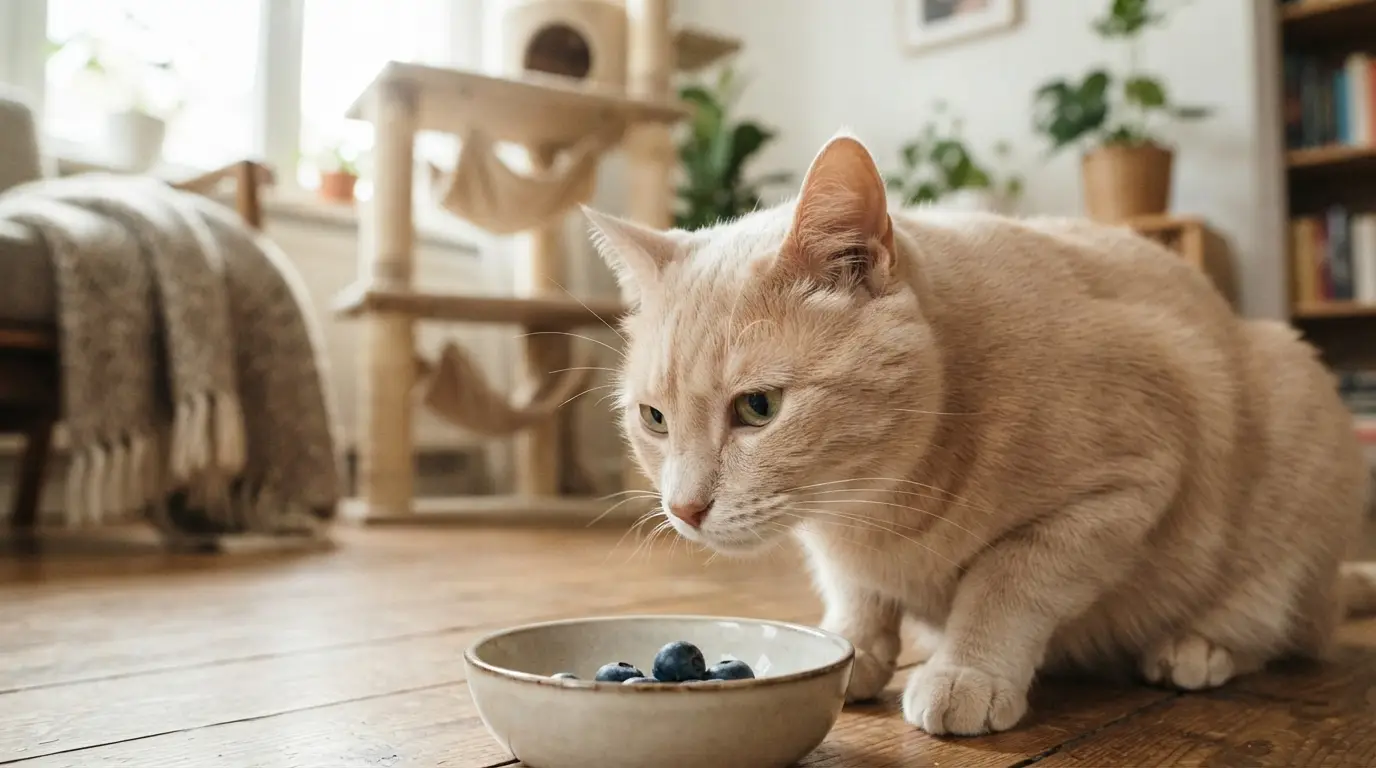
Can cats eat blueberries? Yes. Blueberries have no known toxicity to cats. When washed, de-stemmed, and halved, small amounts can be a relatively safe fruit treat—but they are by no means essential. For a 4kg adult cat, one blueberry (halved) given 2-3 times a week is the maximum, and the first time, you should only offer 1/4 of a blueberry.
When we board cats at CatGarden, we ask owners to fill out a "Treats Allowed List." In recent years, "blueberries" have appeared more and more frequently. In practice, the most common issues with blueberries aren't poisoning but rather soft stools caused by giving too much, and a few cats start scratching their chin and neck the day after eating them. This article covers portions, feeding methods, and warning signs so you can follow it directly.
Key Takeaways
- Blueberries have no known toxicity to cats and are not dangerous foods like grapes, onions, or chocolate. Small amounts are safe.
- Recommended portion: One blueberry (halved) for a 4kg adult cat, no more than 2-3 times a week. All treats and fruits combined should not exceed 10% of the cat's daily caloric intake.
- For the first feeding, offer only 1/4 of a blueberry, mashed, and observe for 48-72 hours for changes in stool and skin condition.
- The most common adverse reactions are soft stools or vomiting, usually occurring 4-24 hours after feeding. True food allergies in cats often manifest as itching of the head, neck, and chin, along with redness.
- Cats with diabetes, kidney disease, chronic gastrointestinal issues, and kittens under 4 months old should not be given blueberries.
Let's Get Real: Most Cats Aren't That Interested in Blueberries
Cats are obligate carnivores. Their sweet taste receptor gene (Tas1r2) is non-functional, meaning cats can barely taste sweetness. So, if your cat reacts to blueberries, it's usually not because they're "delicious" but because:
- They are round and roll, like a toy.
- The cold temperature from the refrigerator is novel.
- You are eating them, and they want to participate (social eating).
This also means: It's perfectly normal if your cat doesn't eat blueberries, and you don't need to train them to. At the shop, we've had owners specifically ask us to feed blueberries "for antioxidants," only for the cat to sniff it and walk away, or even kick it under the bed like a soccer ball.
Are Blueberries Beneficial for Cats? Don't Treat Them as a Supplement
The anthocyanins, vitamin C, and dietary fiber in blueberries do have antioxidant value and are why they are added to many pet foods and treats. However, it's crucial to understand the dosage difference:
- One blueberry is approximately 1.5-2 grams, with about 1 calorie and 0.2 grams of sugar.
- The amount of antioxidants provided by this quantity is negligible and far from a "health-boosting" dose.
- Cats can synthesize vitamin C internally, unlike humans who need it from their diet.
Therefore, the correct perspective is: Blueberries are "interactive small treats," not nutritional supplements. If your goal is gut or immune health, a targeted supplement (like specialized probiotics for sensitive stomachs) is far more precise and won't add unnecessary carbohydrates.
What we use for this
CatGarden’s own products, shipped from Taiwan Luxe Functional CansFrom US$3.79 per canFree shipping on multi-packs
Cat Blueberry Portion Guide: By Weight
Here are our practical recommendations for boarding clients, assuming a healthy adult cat with no chronic illnesses and a normal main diet:
| Cat Weight | Single Serving | Recommended Frequency | Notes |
|---|---|---|---|
| Kittens under 4 months | Not recommended | — | Digestive systems are not yet stable; prioritize their main food. |
| 2-3 kg | 1/2 blueberry (mashed) | 1-2 times per week | Small cats, senior cats should start with even less. |
| 3-4.5 kg | 1 blueberry (halved) | 2-3 times per week | Most common adult cat range. |
| 4.5-6 kg | 1-2 blueberries (halved) | 2-3 times per week | Reduce by half for overweight cats. |
| Over 6 kg | 2 blueberries (halved) | 2-3 times per week | No upper limit just because of larger size. |
Why Such Small Limits?
A 4kg adult cat needs approximately 180-220 calories per day. All treats combined should not exceed 10%, which is about 20 calories. Looking only at calories, one blueberry is just 1 calorie, so it seems like they could eat 20—but the real limitations are not calories, but:
1. Carbohydrates and Sugar: Cats have low carbohydrate tolerance. Consuming large amounts of fruit sugar at once can lead to bloating and soft stools.
2. Fiber: Eating too much of the insoluble fiber in blueberry skins can lead to consequences in the litter box the next day.
3. Stomach Capacity: Cats have small stomachs. If they fill up on treats, they won't eat their main food, potentially leading to insufficient protein intake long-term.
Therefore, "1-2 blueberries" is not being overly cautious; it's staying within a safe zone where problems are highly unlikely. If you want to give your cat a special treat, consider investing in high-meat content wet food, like Luxury Functional Cans, which are primarily meat-based and far more beneficial for your cat than a few blueberries.
These Cats Should Skip Blueberries Entirely
- Diabetic cats: Any extra sugar can affect blood glucose control.
- Cats with chronic kidney disease: Their diet is strictly managed by a veterinarian; do not add extra foods. If you're unsure about the risks, learn about Why Do Cats Get Kidney Disease? 4 Major Causes: Aging, Diet, Dehydration, and Genetics.
- Cats prone to soft stools or with a history of inflammatory bowel disease: Even one blueberry could cause diarrhea.
- Cats undergoing a diet change, recently spayed/neutered, or just finishing boarding: Their digestive systems are adjusting; avoid adding variables.
- Cats on a food elimination trial (to find allergens): Any new food will disrupt the trial results.
Proper Feeding Method: Our 5 Steps at the Shop
1. Always Wash, and Scrub
Blueberries have a natural waxy coating on their skin, and they are among the fruits where pesticide residues are frequently detected. Rinse under running water for 20-30 seconds, gently rubbing the surface with your fingertips. Do not just soak them. Remove the stems and any dry, hard parts of the blossom end.
2. Thaw to Room Temperature
Giving frozen blueberries or blueberries straight from the refrigerator can irritate a sensitive cat's stomach and cause vomiting. Let them reach room temperature (around 20-25°C) before serving.
3. Halve or Mash, Don't Serve Whole
Whole blueberries pose two problems for cats: First, there's a risk of choking (especially for cats that eat quickly). Second, cats rarely chew and often swallow them whole, only to pass them undigested in the litter box, meaning they got no benefit. We use a knife to cut them in half, or mash them with a fork for smaller cats.
4. Do Not Add Anything
No sugar, no yogurt, no condensed milk, no cereal. Serve plain and alone, or at most, mix with a tiny bit of wet food.
5. For the First Time, Only Give 1/4 of a Blueberry and Observe for 48-72 Hours
This is the step we emphasize the most. On the day of the trial feeding, do not change their food or other treats simultaneously. This way, if there's a reaction, you'll know what caused it. Observe three things: stool consistency, vomiting, and whether they start scratching their face or neck.
What Are the Signs of Blueberry Allergy or Intolerance in Cats?
Gastrointestinal Issues (Most Common)
Usually appear 4-24 hours after feeding:
- Soft stools, mushy stools, watery diarrhea
- Vomiting (often undigested blueberry skin)
- Increased gas, gurgling stomach sounds
- More frequent trips to the litter box, longer squatting times
These are typically due to "unfamiliarity/too much" rather than a true allergy. Stop feeding, provide only their main food and plenty of water, and most cats will recover within 24 hours. If you also notice behavioral changes like Cat Constantly Digging in the Litter Box - Excessive Scratching Reasons, pay attention to whether their bowel movements are smooth.
Skin Issues (More Likely a True Food Allergy)
A characteristic of food allergies in cats is that they often manifest as itching rather than diarrhea. Typical signs include:
- Repeated scratching of the chin, neck, and in front of the ears, sometimes leading to skin abrasions.
- Small red bumps or scabs on the head and neck (what vets often call "head and neck pruritus").
- Excessive grooming, leading to bald patches on the abdomen or inner thighs.
- Mild swelling around the mouth or eyes.
These reactions may become noticeable several days later, and confirming a true food allergy requires a 6-8 week elimination diet trial; it cannot be determined from a single incident. If you see these symptoms, stop all new foods immediately and consult your veterinarian.
Rare but Require Immediate Veterinary Attention
- Rapid swelling of the face or lips.
- Rapid breathing, open-mouth breathing, wheezing sounds.
- Excessive drooling, gagging without producing anything (suspected obstruction).
- Significant lethargy, not eating or drinking for over 12-24 hours.
The last point is particularly important—cats not eating or drinking are far more dangerous than humans. Refer to Cat Not Eating, Drinking, or Sleeping All Day: Normal Lethargy or Warning Sign? Golden 24-Hour Observation and Vet Visit Guide for guidance. If symptoms persist for over 24 hours, or if there is bloody stool or abnormal breathing, seek veterinary care immediately; do not wait at home.
These "Blueberry Products" Are Absolutely Forbidden
While blueberries themselves are safe, processed products are dangerous:
- Blueberry yogurt, blueberry smoothies: High in sugar + dairy. Most adult cats are lactose intolerant. For details, see Can Cats Drink Milk? Symptoms of Lactose Intolerance and Safe Alternatives.
- Blueberry jam, pie filling, blueberry pies/muffins: Contain sugar, butter, flour, and potentially artificial sweeteners and flavorings.
- Dried blueberries, mixed dried fruit: Sugar content is concentrated many times over. Mixed dried fruit often contains raisins, which are toxic to dogs and cats and pose a risk to their kidneys—they must be avoided.
- "Sugar-free" processed items: May contain sweeteners like xylitol. There is insufficient data on the risks to pets, so it's safest to avoid them directly.
- Human blueberry supplements: Dosages and additives are designed for humans.
Incidents are especially common during holidays when various foods are accessible. You can also refer to What to Watch Out for with Cats During the Mid-Autumn Festival? Can Cats Eat Mooncakes, Pomelos, and BBQ Ingredients Safely? for more information. For a more comprehensive list of red-flag foods, it's recommended to read What Can't Cats Eat? Common Household Dangerous Foods and Signs of Poisoning and post it on your refrigerator—it's more effective than trying to memorize it.
Better Treat Options Than Blueberries for Cats
If you're looking for small rewards that can be given daily for interaction without worry, these are what we've found effective at the shop:
1. Unseasoned, boiled chicken breast, shredded into small strips: Meets their carnivorous instincts and has the highest acceptance rate.
2. Freeze-dried meat treats: Easy to store, not messy, suitable as training rewards.
3. A small spoonful of wet food from a main meal can: Serves as a reward and provides hydration, especially useful for cats that don't drink enough.
4. Catnip-based olfactory games: Provides satisfaction without being ingested, such as sprinkling some Premium Catnip in a cardboard box.
Blueberries are best positioned as an occasional novelty, not a daily habit. For more suitable everyday items for cats, feel free to browse our shop.
Frequently Asked Questions
What if my cat ate a whole box of blueberries?
Blueberries are not toxic. Eating a large amount in a short period usually results in vomiting, bloating, and diarrhea. Remove the food, ensure clean drinking water is available, and observe for 12-24 hours. If vomiting persists, there is bloody stool, or the cat is significantly lethargic, seek veterinary care promptly.
Can kittens eat blueberries?
Not recommended for kittens under 4 months old. Kittens have sensitive digestive systems, and every calorie should be used for growth. Prioritizing their main food intake is most important. Refer to How Many Meals a Day for Kittens? Feeding Frequency, Portions, and Transitioning by Age for guidance.
Can I give my cat frozen blueberries directly?
Not recommended. Their hardness poses a risk to teeth and choking. The cold temperature can also irritate the stomach and cause vomiting. Thaw them to room temperature, halve them, and then serve.
Will my cat get diarrhea from eating blueberries?
It's possible, and it's the most common reaction, usually occurring 4-24 hours after feeding. It's often related to too large a portion or a sensitive digestive system. If it doesn't improve within 24 hours of stopping, or if the stool contains blood or mucus, consult a veterinarian.
My cat keeps scratching its neck after eating blueberries, is it an allergy?
It's possible. Food allergies in cats often manifest as itching of the head, neck, and chin. Stop feeding immediately, record the time and symptoms, and consult your veterinarian with this information. Confirming an allergen requires weeks of elimination diet trials and cannot be determined from a single reaction.
The conclusion is simple: Cats can eat blueberries, but they are an "optional" treat. Wash them, thaw them, halve them, start with 1/4 of a blueberry, and give 1-2 blueberries at most 2-3 times a week. This way, it's almost impossible to cause problems. Avoid any blueberry products with added sugar, milk, or dried fruit. What truly impacts a cat's health is always the quality of their daily main meal and whether they drink enough water.
By CatGarden Editorial Team
CatGarden offers curated supplies, cat boarding, and grooming
Book services or shop online.