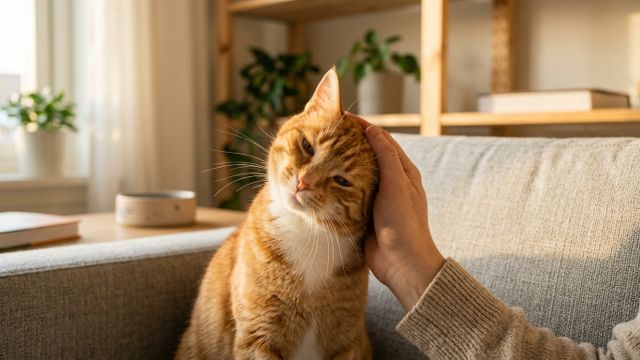
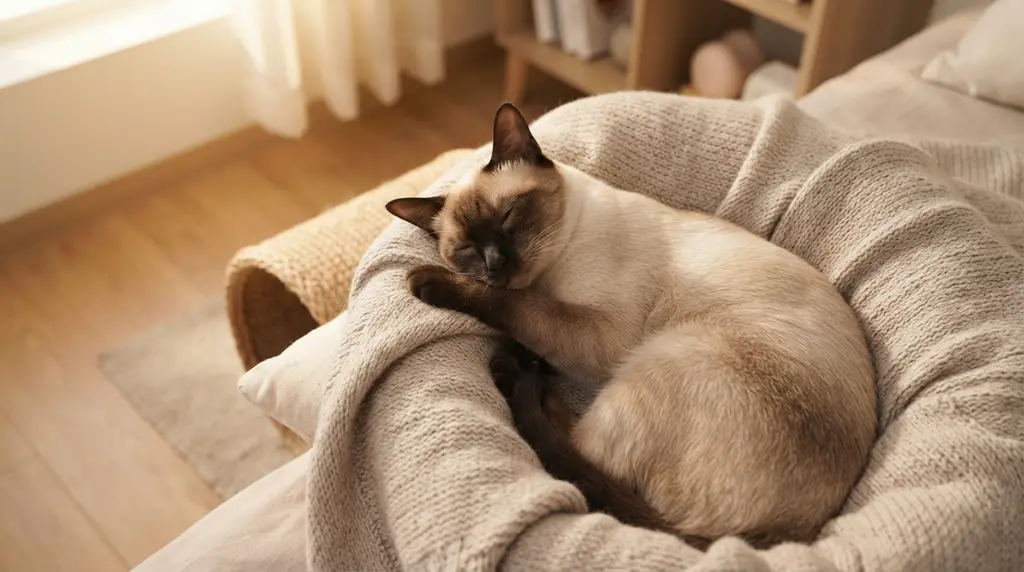
What Does It Mean When Cats Lick You? Understanding Licking Hands, Licking You, and Interpreting Your Cat's Affection
When cats lick people, it's usually an intimate grooming behavior that signifies they see you as part of their own kind, representing trust and affection. However, it can also sometimes be a sign of begging for food, imitation, or stress. This article breaks down the behavior from both ethological and emotional perspectives.
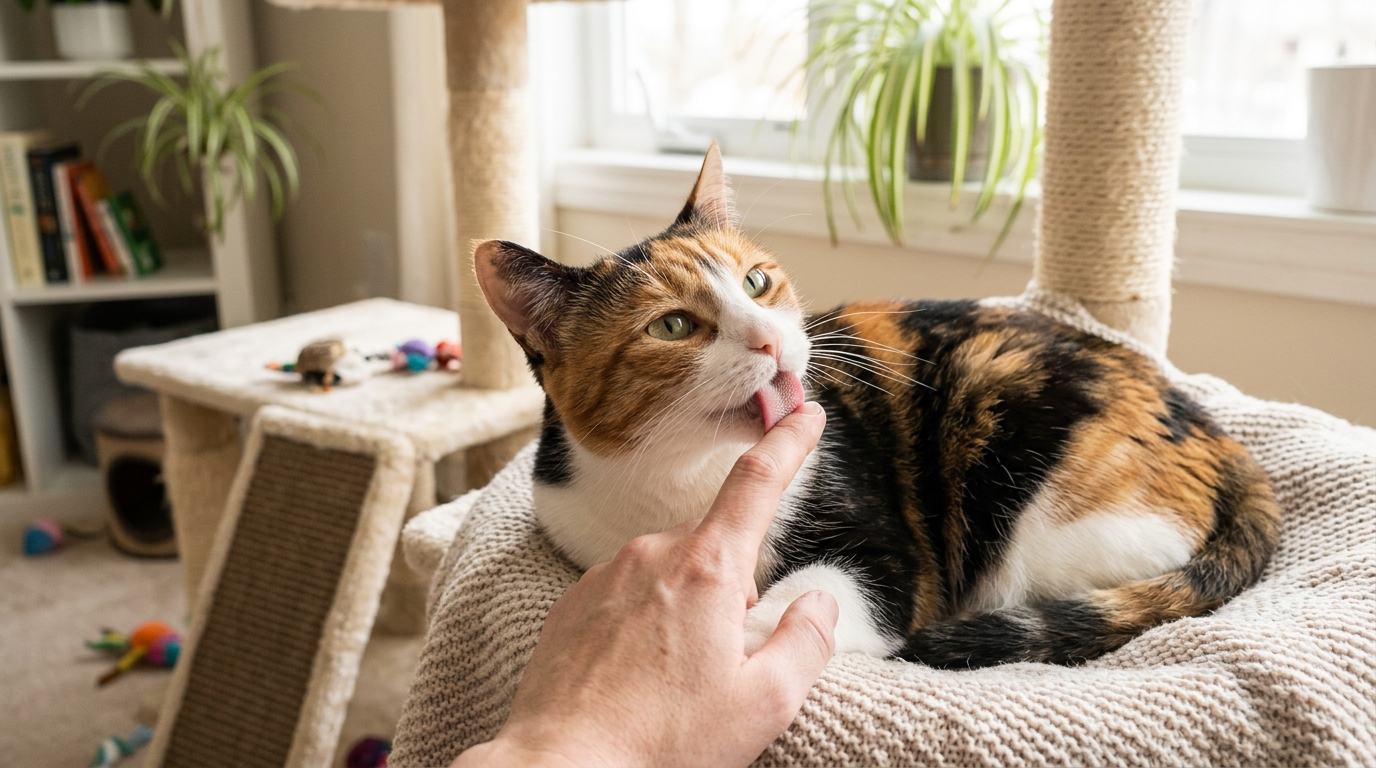
When cats lick people, the most common meaning is an intimate grooming behavior that signifies "treating you as family," representing trust, attachment, and affection. However, not every lick has only one interpretation—sometimes it's about begging for food, imitation, attraction to the taste of salt or cream, or even a self-soothing signal when anxious.
At CatBackyard, we interact with various furry friends daily, and the most frequent question from owners is: "My cat keeps licking my hand, does it like me or want to bite me?" This article will clarify "cats licking people" from both ethological and emotional perspectives.
Key Takeaways
- The primary reason cats lick people is "social grooming (allogrooming)," which they only do towards those they trust and consider companions.
- Cat tongues have backward-facing papillae (keratinized barbs), giving them a rough texture when licking. This is a natural structure used for grooming their fur.
- Cats licking your hands is often related to "the scent on your hands": the salt from sweat, hand cream, or lingering food aromas can attract them.
- If licking is accompanied by excessive self-grooming, hair pulling, hiding, or changes in appetite, it might indicate stress or health issues, rather than simple affection.
- Licking followed by gentle nibbling (love bites) is usually part of play or grooming and doesn't necessarily equate to aggression.
What Does Cat Licking Mean? Let's Start with "Social Grooming" as the Core
In the cat world, mutual grooming (allogrooming) is a symbol of close relationships. Mother cats groom their kittens, and cats with strong bonds groom each other's heads and faces. This is an act of incorporating the other into "the same group."
So, when a cat licks your hand or face, it's essentially "grooming you" as if you were a companion. This is a behavior of high trust—they won't do this to someone who makes them feel tense.
Common Scenarios of Cats Licking People
- Licking Hands, Licking Fingers: The scent on your hands is the richest, with the saltiness of sweat and the aroma of recently handled food being very attractive to cats. This is the most common reason for "cats licking my hands."
- Licking Face, Licking Hair: Mimicking a mother cat grooming her kittens, this usually signifies treating you as a very close family member.
- Licking You Before Sleep or When Seeking Affection: A gesture of goodwill in a relaxed, secure state, similar to choosing to nap beside you.
- Purring While Licking: An amplified expression of joy and contentment, typically pure affection.
If you want to understand your cat's emotional expressions more comprehensively, you can read our other article on What Does Your Cat's Sleeping Position Mean? Interpreting Sleeping Postures, Positions, and Their Affection Level—where they sleep and how they sleep are actually part of the same "trust scale" as licking you.
The Scent and Physiological Factors of Cat Licking
The surface of a cat's tongue is covered with keratinized barbs (papillae), which are their natural combs. This is why cat licks feel distinctly rough, like sandpaper, which is completely normal.
Besides grooming, scent is also a key factor. In our shop, cats are particularly prone to licking us repeatedly after grooming when our hands still carry the scent of conditioning products. The following situations might make a cat particularly fixated on your hands:
- Just after sweating, with salt on the skin
- After applying hand cream or lotion (some scents or ingredients might pique a cat's curiosity)
- After handling wet food, treats, or meat
- The scent of your own body on your hands, which they want to "mark" with familiarity
It's important to note: If the lotion you've applied to your hands contains ingredients that cats cannot tolerate, excessive licking could pose a risk. For information on what is harmful to cats, you can refer to What Can't Cats Eat? Common Household Dangers and Poisoning Signs—be especially cautious after applying ointments or essential oils.
Comparing with Other Affectionate Behaviors: Viewing "Licking" within a Cluster of Behaviors
Looking at a single action in isolation can lead to misinterpretation. A cat's emotions are actually expressed through a "whole set of behaviors." It's much more accurate to judge by looking at licking in conjunction with the following:
Loafing (Cat Sitting Posture with Paws Tucked)
When a cat tucks its paws beneath its body, sitting like a loaf of bread, it indicates a state of relaxation and defenselessness. Willingness to loaf in front of you shows they feel secure in their environment. If they also lick you while in this posture, the level of affection is even higher.
Kneading (Making Biscuits)
Using their front paws alternately on you is a residual behavior from kittenhood when nursing, signifying comfort, satisfaction, and dependence on you as a mother figure. Kneading + licking + purring is a classic "I love you very much" trifecta.
Head Bunting, Cheek Rubbing
Cats have scent glands on their cheeks. Rubbing is a way of leaving their scent on you, marking you as "theirs." This, like licking, is an intimate behavior within their territory.
Showing Their Belly
The belly is a cat's most vulnerable area. Willingness to roll over and expose their belly indicates extreme trust. However, be aware that exposing their belly isn't always an invitation to be touched; many cats react defensively if their belly is petted.
Gentle Nibbling After Licking (Love Bite)
Licking followed by a gentle nibble is usually part of the grooming process or play, and the pressure is typically not strong. This is different from actual aggression (flattened ears, dilated pupils, growling) and shouldn't cause undue alarm.
When to Be Cautious? Licking Can Also Be a Sign of Stress
Most of the time, cats licking people is a positive sign. However, there are situations that warrant increased vigilance:
- Excessive self-grooming leading to localized hair loss: Commonly seen with anxiety, environmental changes (moving, new family members, your prolonged absence).
- Sudden, abnormal clinginess and constant licking: This could indicate physical discomfort or emotional distress.
- Licking accompanied by hiding, decreased appetite, or inappropriate urination: This is usually not simple affection but a warning sign of stress or health issues.
If you travel frequently and your cat becomes particularly anxious and grooms itself excessively when you leave, consider reading Does Your Cat Collapse When You Leave? Recognizing Signs and Solutions for Separation Anxiety. Before leaving for extended periods, it's better to arrange a stable environment for them (or book boarding with supervision) than to let them suffer from anxiety alone.
Furthermore, if your cat exhibits significant behavioral changes, lethargy, or abnormal body temperature, don't just attribute it to emotional issues. First, check their temperature. You can refer to What to Do If Your Cat Has a Fever? Normal Temperature, How to Take It, and Danger Signs Explained. If symptoms persist or worsen, seek veterinary attention promptly. This article cannot replace professional veterinary diagnosis.
Want to Encourage Your Cat to Express Affection Towards You? Here's How
Affection is built through interaction, not forced. In our shop, we encourage unfamiliar cats to approach us by following the principle of "no pressure, offer choices":
- Let them initiate: Extend your hand towards their nose for them to sniff, allowing them to decide whether to rub or lick.
- Pet them where they like: Most cats enjoy chin, cheek, and head scratches. Preferences for petting near the tail base or belly vary by individual.
- Build positive associations: Playtime, feeding, and grooming all build trust. Using a bit of Premium Catnip as an interactive toy can also bring you closer.
- Respect their boundaries: When they stop licking, flatten their ears, or flick their tail, it means "enough." Withdraw appropriately, and they'll be more willing to approach you next time.
For a deeper understanding of personality differences among various coat patterns, you can read Complete Guide to Tabby Cats: Coat Types, Personality Traits, and Care Essentials. Personality and sociability indeed vary by individual and environment.
Frequently Asked Questions
Is my cat licking my hand because it likes me?
In most cases, yes. Licking hands is a form of social grooming, signifying trust and that they consider you a companion; it can also be attracted by the scent on your hands (sweat, food, cream). Both reasons often coexist.
Why is my cat's tongue so rough when it licks me?
A cat's tongue has keratinized, backward-facing papillae, which are natural structures used for grooming fur and removing loose hair. This is why it feels like sandpaper. It's completely normal and not a sign of illness.
My cat licks my hand then gently bites me, does it dislike me?
Usually not. Licking followed by gentle nibbling is often an extension of grooming or play (love bite), and the pressure is light. If they flatten their ears, growl, or their pupils dilate simultaneously, they are genuinely annoyed, and you should stop and give them space.
Is it normal for my cat to suddenly start licking me a lot?
Occasional increased clinginess is normal. However, if it's accompanied by excessive self-grooming, hair loss, hiding, or changes in appetite or elimination, it could indicate stress or health problems. Observe them, and seek veterinary care if symptoms persist.
Can I let my cat lick me all the time? Is it unhygienic?
Limited interaction is generally fine. However, avoid letting your cat lick wounds. Also, don't let them lick extensively after you've applied ointments, essential oils, or lotions containing harmful ingredients. If you have concerns about your immune system, consult your doctor first.
This article was written by the CatBackyard editorial team. The content is for general care and behavioral reference and cannot replace professional veterinary diagnosis.
CatGarden offers curated supplies, cat boarding, and grooming
Book services or shop online.