Bathing a Giant Cat Like a Battle? 4 Major Tips to Easily Tame Your Fluffy Beast!

Got a Maine Coon, Ragdoll, or Norwegian Forest Cat? These walking, fluffy giants can be a handful, especially when it's bath time!
CatGarden Editorial TeamPublished 2025/05/01
Daily GroomingBathingCat Care
Bathing a Giant Cat Like a Battle? 4 Major Tips to Easily Tame Your Fluffy Beast!

Do you have a Maine Coon, Ragdoll, or Norwegian Forest Cat? These walking, fluffy giants are adorable, but does the mere mention of "bath time" send shivers down your spine, anticipating a chaotic battle of fur and drool?

Holding a cat weighing over ten kilograms (22 lbs) can feel like your arms are about to break, all while fending off their relentless paws. It's just too difficult! Don't worry, you're not alone! This article is your exclusive rescue guide, teaching you how to use techniques and tools to transform bathing your large cat from a nightmare into a bonding SPA experience.

Key takeaways

  • The water temperature for bathing large cats must be maintained between 37-39°C. Start by gently wetting their back with a mild stream, avoiding direct high-pressure jets to the face and ears.
  • For long-haired large cats that don't go outdoors or get particularly dirty, bathing once every 1 to 2 months is recommended. Over-bathing can damage the skin's natural protective layer.
  • Ensure the bathing area floor is covered with a non-slip mat. Stable footing significantly reduces a cat's fear during bath time.
  • When drying, first use an absorbent, quick-drying towel to remove excess water. Then, use a pet-specific comb with a low-temperature hairdryer to groom and dry the fur. This speeds up drying and prevents matting.

What we use for this

CatGarden’s own products, shipped from Taiwan
See all products
Quick-Dry Pet TowelQuick-Dry Pet TowelFrom CA$49.35 per pieceFree shipping on multi-packs

Taming the Giant Beast! 4 Major Secrets to Successfully Bathing Your Large Cat

The thoroughness of your preparation before bathing a large cat determines how gracefully you'll get through the process. Be sure to have everything ready before your feline overlord enters the bathroom!

Secret 1: Set Up a "Zero-Error" Battlefield

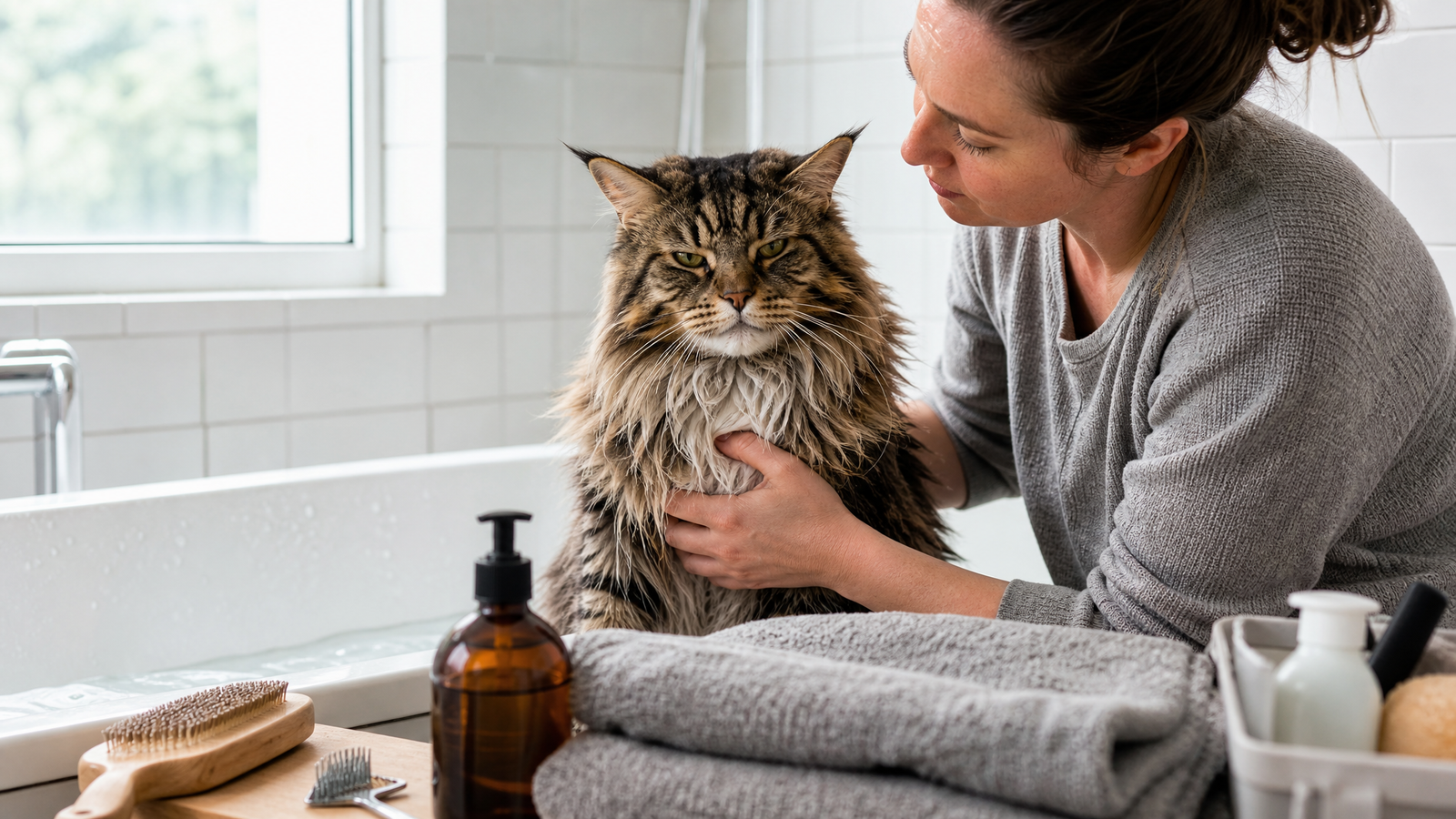
  • Spacious, Non-Slip Space: Large cats need more room to maneuver. It's recommended to bathe them in a spacious bathroom. Be sure to lay down non-slip mats on the floor; stable footing significantly reduces the cat's fear.
  • Easily Accessible Supplies: Place all your supplies, including shampoo, towels, and combs, within easy reach. Absolutely do not scramble to find things after your cat is soaking wet.

Secret 2: Choose "All-Star" Cleaning Products

  • Gentle Yet Effective Shampoo: Large cats have long, thick fur that requires a cleaning product with sufficient power but one that won't harm their skin. We highly recommend CatGarden Herbal Cat Shampoo. Its natural herbal formula is not only gentle and hypoallergenic but also easily cleanses the oil and dirt deep within their thick fur, leaving it fluffy and not dry.
  • Efficiency-First Absorbent Towel: The amount of fur on a large cat is astonishing; ordinary towels just won't cut it. Having a CatGarden Quick-Dry Pet Towel is absolutely essential! It quickly absorbs a large amount of water, effectively shortening the blow-drying time that cats often find most frustrating.

Secret 3: Gentle Water Application, Avoiding the Cat's Sensitive Spots

  • Golden Water Temperature and Pressure: The water temperature must be maintained between 37-39°C (98.6-102.2°F). Use a showerhead with a gentle stream to slowly wet the cat's back first. Remember, never aim a strong jet of water directly at the cat's face or ears!
  • Protecting the Senses: While bathing, gently shield the cat's face with your hand to prevent water and foam from entering their eyes and ears. This is one of the keys to preventing your cat from resisting bath time.

Secret 4: Post-Battle "Peace Treaty" and Rewards

  • Stay Calm: Your emotions will directly transfer to your cat. Take deep breaths and maintain a calm, gentle tone and movements. Only then will your cat feel that you are helping them, not harming them.
  • Sign a Peace Treaty: If your cat is extremely stressed, you can strategically deploy the ultimate weapon: CatGarden Premium Catnip. Let them smell or taste a little before or after the bath to effectively help them relax and associate bathing with a positive experience.

Large Cat Bathing Q&A

Q1: How often should a cat with very thick fur, like a Maine Coon, be bathed?

A: Even long-haired large cats should not be bathed too frequently. Unless they've been outside or gotten particularly dirty, bathing them once every 1-2 months is sufficient. Over-cleaning can actually damage their skin's natural protective layer.

Q2: What should I do if my large cat struggles and tries to escape during a bath?

A: Never force it! When they start struggling intensely, pause your actions, wrap them in a towel, and soothe them gently. Sometimes, working as a "two-person team" – one person to soothe and secure, the other to wash – is more efficient than going it alone.

Q3: My large cat's fur takes forever to dry and gets tangled easily. Is there a solution?

A: This is precisely why we emphasized the importance of a "quick-dry absorbent towel"! Absorb as much moisture as possible with the towel first, then patiently blow-dry using the low-heat setting on a hairdryer. While blow-drying, you can use a pet-specific comb, brushing along the direction of the fur as you dry. This not only speeds up drying but also prevents tangles, leaving the fur fluffier after drying.

Bathing a giant cat is indeed a major undertaking, but with adequate preparation and the right methods, you'll find that even this fluffy behemoth can obediently enjoy a comfortable bubble bath under your gentle approach!

Cat Grooming Schedule Recommendations

If the situations described in this article are affecting your cat's fur, skin, nails, or overall hygiene, you can first check out CatGarden Cat Grooming Services and then schedule baths, trims, or nail clippings based on your cat's age, coat condition, and stress levels.

Frequently Asked Questions

How often do cats need grooming or bathing?

Most healthy indoor cats do not require frequent bathing. However, if there are issues like matted fur, oiliness, odor, excessive shedding, or skin cleanliness needs, grooming can be scheduled based on the coat's condition.

Can cats that are afraid of water or easily stressed be groomed?

Yes, but the process needs to be adjusted based on the cat's personality, age, and health status. For stressed cats, it's recommended to choose a grooming environment familiar with feline behavior and avoid excessive force.

What should owners pay attention to before their cat's grooming appointment?

Before grooming, inform the groomer if your cat is afraid of blow dryers, has a history of skin conditions, has recently taken medication, or is experiencing any physical discomfort. This will help ensure a safer grooming process.

CatGarden offers curated supplies, cat boarding, and grooming

Book services or shop online.
Back

Blog

Bathing a Giant Cat Like a Battle? 4 Major Tips to Easily Tame Your Fluffy Beast!

CatGarden Editorial TeamPublished 2025/05/01
Daily GroomingBathingCat Care
Bathing a Giant Cat Like a Battle? 4 Major Tips to Easily Tame Your Fluffy Beast!

Do you have a Maine Coon, Ragdoll, or Norwegian Forest Cat? These walking, fluffy giants are adorable, but does the mere mention of "bath time" send shivers down your spine, anticipating a chaotic battle of fur and drool?

Holding a cat weighing over ten kilograms (22 lbs) can feel like your arms are about to break, all while fending off their relentless paws. It's just too difficult! Don't worry, you're not alone! This article is your exclusive rescue guide, teaching you how to use techniques and tools to transform bathing your large cat from a nightmare into a bonding SPA experience.

Key takeaways

  • The water temperature for bathing large cats must be maintained between 37-39°C. Start by gently wetting their back with a mild stream, avoiding direct high-pressure jets to the face and ears.
  • For long-haired large cats that don't go outdoors or get particularly dirty, bathing once every 1 to 2 months is recommended. Over-bathing can damage the skin's natural protective layer.
  • Ensure the bathing area floor is covered with a non-slip mat. Stable footing significantly reduces a cat's fear during bath time.
  • When drying, first use an absorbent, quick-drying towel to remove excess water. Then, use a pet-specific comb with a low-temperature hairdryer to groom and dry the fur. This speeds up drying and prevents matting.

What we use for this

CatGarden’s own products, shipped from Taiwan
See all products
Quick-Dry Pet TowelQuick-Dry Pet TowelFrom CA$49.35 per pieceFree shipping on multi-packs

Taming the Giant Beast! 4 Major Secrets to Successfully Bathing Your Large Cat

The thoroughness of your preparation before bathing a large cat determines how gracefully you'll get through the process. Be sure to have everything ready before your feline overlord enters the bathroom!

Secret 1: Set Up a "Zero-Error" Battlefield

  • Spacious, Non-Slip Space: Large cats need more room to maneuver. It's recommended to bathe them in a spacious bathroom. Be sure to lay down non-slip mats on the floor; stable footing significantly reduces the cat's fear.
  • Easily Accessible Supplies: Place all your supplies, including shampoo, towels, and combs, within easy reach. Absolutely do not scramble to find things after your cat is soaking wet.

Secret 2: Choose "All-Star" Cleaning Products

  • Gentle Yet Effective Shampoo: Large cats have long, thick fur that requires a cleaning product with sufficient power but one that won't harm their skin. We highly recommend CatGarden Herbal Cat Shampoo. Its natural herbal formula is not only gentle and hypoallergenic but also easily cleanses the oil and dirt deep within their thick fur, leaving it fluffy and not dry.
  • Efficiency-First Absorbent Towel: The amount of fur on a large cat is astonishing; ordinary towels just won't cut it. Having a CatGarden Quick-Dry Pet Towel is absolutely essential! It quickly absorbs a large amount of water, effectively shortening the blow-drying time that cats often find most frustrating.

Secret 3: Gentle Water Application, Avoiding the Cat's Sensitive Spots

  • Golden Water Temperature and Pressure: The water temperature must be maintained between 37-39°C (98.6-102.2°F). Use a showerhead with a gentle stream to slowly wet the cat's back first. Remember, never aim a strong jet of water directly at the cat's face or ears!
  • Protecting the Senses: While bathing, gently shield the cat's face with your hand to prevent water and foam from entering their eyes and ears. This is one of the keys to preventing your cat from resisting bath time.

Secret 4: Post-Battle "Peace Treaty" and Rewards

  • Stay Calm: Your emotions will directly transfer to your cat. Take deep breaths and maintain a calm, gentle tone and movements. Only then will your cat feel that you are helping them, not harming them.
  • Sign a Peace Treaty: If your cat is extremely stressed, you can strategically deploy the ultimate weapon: CatGarden Premium Catnip. Let them smell or taste a little before or after the bath to effectively help them relax and associate bathing with a positive experience.

Large Cat Bathing Q&A

Q1: How often should a cat with very thick fur, like a Maine Coon, be bathed?

A: Even long-haired large cats should not be bathed too frequently. Unless they've been outside or gotten particularly dirty, bathing them once every 1-2 months is sufficient. Over-cleaning can actually damage their skin's natural protective layer.

Q2: What should I do if my large cat struggles and tries to escape during a bath?

A: Never force it! When they start struggling intensely, pause your actions, wrap them in a towel, and soothe them gently. Sometimes, working as a "two-person team" – one person to soothe and secure, the other to wash – is more efficient than going it alone.

Q3: My large cat's fur takes forever to dry and gets tangled easily. Is there a solution?

A: This is precisely why we emphasized the importance of a "quick-dry absorbent towel"! Absorb as much moisture as possible with the towel first, then patiently blow-dry using the low-heat setting on a hairdryer. While blow-drying, you can use a pet-specific comb, brushing along the direction of the fur as you dry. This not only speeds up drying but also prevents tangles, leaving the fur fluffier after drying.

Bathing a giant cat is indeed a major undertaking, but with adequate preparation and the right methods, you'll find that even this fluffy behemoth can obediently enjoy a comfortable bubble bath under your gentle approach!

Cat Grooming Schedule Recommendations

If the situations described in this article are affecting your cat's fur, skin, nails, or overall hygiene, you can first check out CatGarden Cat Grooming Services and then schedule baths, trims, or nail clippings based on your cat's age, coat condition, and stress levels.

Frequently Asked Questions

How often do cats need grooming or bathing?

Most healthy indoor cats do not require frequent bathing. However, if there are issues like matted fur, oiliness, odor, excessive shedding, or skin cleanliness needs, grooming can be scheduled based on the coat's condition.

Can cats that are afraid of water or easily stressed be groomed?

Yes, but the process needs to be adjusted based on the cat's personality, age, and health status. For stressed cats, it's recommended to choose a grooming environment familiar with feline behavior and avoid excessive force.

What should owners pay attention to before their cat's grooming appointment?

Before grooming, inform the groomer if your cat is afraid of blow dryers, has a history of skin conditions, has recently taken medication, or is experiencing any physical discomfort. This will help ensure a safer grooming process.

One email a month of cat-care tips

Hand-picked care, behavior and grooming tips once a month. Subscribe and we will send you our three most-read articles right away.

Keep reading