What Is a Dragon Li Cat? Understanding Its Personality, Origins, and Differences from Tabby Cats
The Dragon Li cat is a native Chinese breed known for its intelligence, independence, and loyalty. This article clarifies the correct terminology, appearance, personality traits, and how it differs from tabby cats.
The Dragon Li cat is a native Chinese breed (often called Dragon Li or Chinese Li Hua in English), characterized by its classic mackerel tabby markings, a strong yet lean physique, and a personality that is intelligent, independent, and loyal to its owner. Simply put: the Dragon Li is a "breed," while tabby is a "coat pattern." These are not concepts on the same level – which is where most owners get confused. This article will clarify it all for you.
At CatGarden's boarding facility, Dragon Li cats and cats with various tabby patterns make up a significant portion of our guests. We've had extensive experience with these cats, so we'll share our firsthand insights on how to identify them and how to interact with them.
Key Takeaways
- The Dragon Li cat is a native Chinese breed (often called Dragon Li or Chinese Li Hua in English), characterized by mackerel tabby markings, a strong, lean build, and an intelligent, independent, and loyal personality.
- The Dragon Li is a "breed," while tabby is a "coat pattern." They are not on the same hierarchical level; almost all Dragon Li cats are tabbies, but not all tabby cats are Dragon Lis.
- "狸花貓" (Lí huā māo) is the most correct and commonly used Chinese term. "貍花貓" (Lí huā māo) is an alternative character with the same meaning and is also correct. "梨花貓" (Lí huā māo) is a homophone misspelling and is not recommended.
- The Dragon Li is a long-standing native Chinese working cat, historically used for rodent control and guarding granaries. It was registered as an experimental breed by the CFA in 2003.
- Dragon Li cats are generally robust and healthy, making them easy to care for. However, they have a good appetite and can become overweight, so portion control is necessary. Daily play sessions of 15–20 minutes are recommended to satisfy their hunting instincts.
"狸花貓," "貍花貓," "梨花貓": Which Chinese Spelling Is Correct?
Let's first address a common point of confusion: you'll see all three spellings online.
- "狸花貓" (Lí huā māo): This is the most formal and commonly used spelling. "狸" (Lí) refers to the civet cat, describing its markings as resembling those of a wild civet. This is the recommended and correct name.
- "貍花貓" (Lí huā māo): "貍" (Lí) is an alternative character for "狸" (Lí), meaning exactly the same thing. It is also correct, just less common.
- "梨花貓" (Lí huā māo): This is a homophone misspelling. "梨" (Lí, meaning pear) has no relation to the cat's markings; it's purely a typographical error. While it has a significant search volume, it's not recommended for formal use.
Therefore, when filling out forms, adopting a cat, or registering at a cattery, using "狸花貓" will be the most accurate.
The Origin of the Dragon Li Cat: A True Native Chinese Breed
The Dragon Li is a native domestic cat with a long history in China. As far back as agricultural societies, they were invaluable helpers in homes, catching mice and guarding granaries. They are not a breed developed through recent artificial crossbreeding but rather a "working cat" that evolved and was selected for over a long period in natural environments. This is why they possess exceptional robustness and strong hunting instincts.
In 2003, the Dragon Li cat (China Li Hua / Dragon Li) was registered as an experimental breed by the CFA, bringing this ancient native cat to the attention of the international cat fancy. However, many of the "mixed-breed tabbies" commonly seen on the streets of Taiwan actually carry traces of Dragon Li lineage. Whether they are purebred or not is less important for household pets; their personality and health are key.
How to Identify a Dragon Li Cat: Key Physical Traits
When assessing if a cat "resembles a Dragon Li cat" at our facility, we typically look at these points:
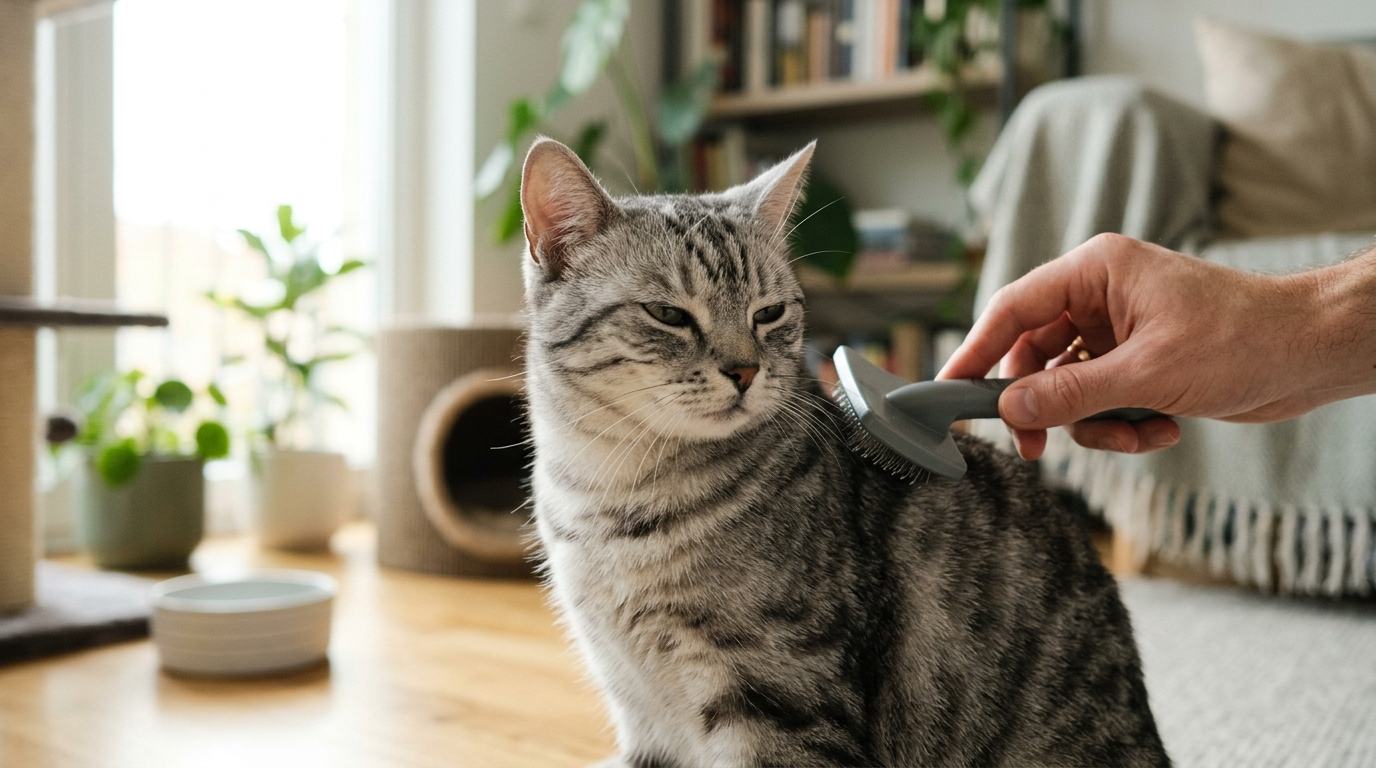
- Markings: Primarily mackerel tabby (鯖魚虎斑), with thin, parallel, fishbone-like vertical stripes on the sides. A distinct "M" marking on the forehead.
- Base Color: Often a yellowish-brown or grayish-brown base with a greenish undertone. The markings contrast clearly with the base color.
- Body Type: Medium to large, muscular, with strong limbs. Not a plump type, but rather a lean and agile hunter's build.
- Eyes: Often almond-shaped, in shades of amber or yellow-green, with a sharp, alert gaze.
- Coat: Short, sleek, and glossy. They shed seasonally but are not difficult to groom.
If you have a long-haired cat prone to matting, the care routine will be entirely different. You can refer to How to Care for Long-Haired Cats: Daily Brushing, Detangling, and When to Visit the Groomer.
Dragon Li Cat Personality: Intelligent, Independent, and Devoted to Their Owner
This is what owners care about most. Based on our care experience, Dragon Li cat personality generally exhibits these traits:
1. Highly Intelligent and Quick Learners
Dragon Li cats have remarkable observation skills and quickly learn how to open doors, cabinets, and bags. Their reaction time and predictive ability when playing with feather wands are noticeably superior to average cats. They require ample environmental enrichment to stimulate their minds; otherwise, they can become bored and mischievous.
2. Independent, Not Clingy, but Loyal
They don't constantly demand attention like some breeds. They prefer to operate on their own schedule, enjoying your presence but maintaining a comfortable distance. However, once they bond with their owner, their loyalty is profound, and they will show their affection in their own way.
3. Strong Hunting Instincts and High Activity Levels
Having originated as rodent hunters, Dragon Li cats are energetic. They need vertical space (cat trees, shelves) and regular hunting-style play. Insufficient activity can lead to weight gain or emotional tension.
4. Sensitive to Environmental Changes
Intelligent cats are often more sensitive. Moving house, new family members, or extended periods of owner absence can cause them anxiety. If you notice your cat becoming particularly distressed when you leave, consider reading about Signs of Separation Anxiety and How to Improve It.
Dragon Li Cat vs. Tabby Cat: What's the Difference?
This is the core of this article. Many people ask, "How do I tell the difference between a Dragon Li cat and a tabby cat?" In reality, the question itself contains a slight misunderstanding.
| Comparison Item | Dragon Li Cat | Tabby Cat |
|---|---|---|
| Essence | A breed (native cat breed) | A coat pattern (tabby) |
| Scope | A type of tabby pattern | Encompasses mackerel, classic, spotted, ticked, and other patterns |
| Lineage | Native Chinese cat, robust health | Any breed can have tabby markings, e.g., American Shorthair, Maine Coon |
| Color | Mostly brown mackerel tabby | Can have orange, gray, brown, silver, and other base colors |
In other words: Almost all Dragon Li cats are tabbies, but not all tabby cats are Dragon Li cats. Your orange "ginger cat" is also a type of tabby, and the silver tabby American Shorthair is also a tabby, but neither of them is a Dragon Li cat.
Is There a Difference in Personality?
Discussing tabby cat personality is difficult to generalize because tabby patterns span numerous breeds. However, if we specifically refer to the common brown mixed-breed tabbies in Taiwan that carry Dragon Li lineage, they are generally more robust, alert, and adaptable than purebred cats. This is why many experienced owners say Dragon Li mixes are "easy to raise, rarely get sick, and live long lives."
Are Dragon Li Cats Easy to Care For? Key Care Points
In terms of health, Dragon Li cats are relatively easy to care for, but there are a few key points:
- Dietary Control: They have a good appetite and are prone to obesity, so portion control is important. Refer to How Much Should a Cat Eat Per Day? Dry Food, Wet Food, and Hydration Tips.
- Grooming and Hairballs: Although they have short fur, they shed significantly during seasonal changes. Regular brushing can reduce hairball issues. Refer to Cat Hairball Care Guide.
- Summer Cooling: Dragon Li cats are active. In Taiwan's hot and humid summers, be mindful of heatstroke and take measures for Cooling and Observing Signs of Heatstroke.
- Sufficient Exercise: Engage in 15–20 minutes of play daily to satisfy their strong hunting instincts.
If you've just brought a Dragon Li cat home, it's best to let them gradually acclimate to their new environment. You can find guidance in How to Care for Your New Cat During the First Week. If you need to travel and your cat is sensitive, choosing a quiet cattery where their condition can be monitored (like CatGarden's Boarding Services) can provide more peace of mind than leaving them home alone. While their short coats are easy to manage, if you want to freshen them up after shedding season or upon returning home, you can also schedule a Grooming session.
Frequently Asked Questions
Are Dragon Li cats and tabby cats the same?
No, they are not the same concept. A Dragon Li cat is a native cat breed, while tabby is a coat pattern. Dragon Li cats have tabby markings, but many other breeds also have tabby patterns, so a tabby cat is not necessarily a Dragon Li cat.
Regarding the Chinese spellings "狸花貓," "貍花貓," and "梨花貓," which is correct?
"狸花貓" is the most correct and commonly used. "貍花貓" is an alternative character with the same meaning and is also acceptable. "梨花貓" is a homophone misspelling and is not recommended.
Are Dragon Li cats affectionate?
Dragon Li cats are intelligent and independent. They don't constantly demand cuddles but are very loyal to their chosen owners, showing affection in their own way. They are the type that is "not clingy but deeply attached."
Are Dragon Li cats easy to care for? Are they aggressive?
As native cats, they are generally robust and healthy, making them relatively easy to care for. They are alert and active. As long as they are provided with sufficient play and space, they are typically gentle and stable and won't become aggressive without reason. If a cat exhibits persistent hiding, aggression, or a significant decrease in appetite, it's advisable to seek veterinary attention.
Do Dragon Li cats need frequent baths?
Short-haired Dragon Li cats are good self-groomers and do not require frequent baths. Regular brushing and nail trimming are sufficient. For detailed timing, refer to recommendations on bathing and grooming frequency.
This article was written by the CatGarden editorial team. Health-related advice in this article is for reference only. If your cat exhibits persistent or severe symptoms, please seek veterinary care promptly.
CatGarden offers curated supplies, cat boarding, and grooming
Book services or shop online.