What to Do When Your Senior Cat's Hind Legs Are Weak and Unstable? Distinguishing Joint Degeneration, Hypokalemia, and Spinal Diseases, A Complete Guide to Non-Slip Home Modifications and Care for Elderly Cats
The three most common reasons for hind leg weakness in senior cats are osteoarthritis, hypokalemia (often associated with chronic kidney disease), and spinal nerve issues. This article teaches you how to differentiate these at home, determine when emergency care is needed, and provides guidance on non-slip home modifications and daily care for elderly cats.
When a senior cat's hind legs are weak and they wobble when walking, the three most common causes are osteoarthritis (degenerative joint disease), hypokalemia (often associated with chronic kidney disease or thyroid issues), and spinal/nerve diseases. Among these, hypokalemia and spinal compression are conditions where "the sooner you test, the better," as a blood test combined with a neurological exam can usually differentiate them. However, if your cat experiences sudden weakness in one or both hind legs, cold paws, or cries out loudly, do not wait to observe – seek emergency veterinary care immediately. This is a typical presentation of a cardiac thrombus (aortic thromboembolism), where time is critical.
Key Takeaways
- Cats over 12 years old have a very high incidence of degenerative joint disease changes visible on imaging (studies range from 80-90%). However, because cats don't limp as obviously as dogs, most owners only notice when their cat can no longer jump onto the sofa.
- A key characteristic of weakness caused by hypokalemia is neck drooping, with the chin almost touching the chest (cervical flexion), accompanied by weak hind legs. This is usually a complication of chronic kidney disease, hyperthyroidism, or long-term poor appetite. A blood test to check potassium levels (K⁺) will confirm this.
- Cats with diabetes may develop a "plantigrade stance" – walking with their hocks directly on the ground, similar to a rabbit's squat. This is peripheral neuropathy, and most cases can partially improve once blood sugar is well-controlled.
- Sudden hind limb paralysis, cold paws, and vocalizing in pain indicate a suspected aortic thromboembolism (ATE), a critical emergency where time is of the essence. Do not attempt to apply heat or massage at home.
- The three most effective home interventions are: non-slip surfaces throughout the house (non-slip mats in walkways), lowering the entrance height of litter boxes to 5-8 cm, and creating gentle ramps with 20-25 cm increments for high places. These three changes alone can significantly improve the mobility of most arthritic senior cats.
Step 1: Determine if it's an Emergency or if Observation is Possible
When we board senior cats at our facility, the first thing we observe upon their arrival is "how they walk into their carrier." You can perform a similar assessment at home using the checklist below to triage the situation:
Seek Immediate Veterinary Care (Do Not Wait Until Tomorrow)
- Sudden hind leg weakness or paralysis, especially unilateral; paw pads are noticeably colder than the front paws, and pressing them causes pain and vocalization.
- Accompanied by open-mouth breathing, rapid breathing, or a bluish tongue.
- Unable to stand at all, dragging hind legs (skin on the top of the paw is abraded on the ground).
- Unable to urinate, distended abdomen, no urination for over 24 hours.
- Altered consciousness, seizures, head tilt, rapid eye movements.
- History of trauma (fall, door pinch, being stepped on) followed by reluctance to use hind legs.
Observe at Home for 1-3 Days, but Schedule a Veterinary Appointment as Soon as Possible
- In recent weeks, the cat has stopped jumping onto high places, slides down when jumping up, or uses intermediate steps to reach elevated areas.
- Walking with hind legs splayed outwards, waddling gait, sitting down after a few steps.
- Hind leg trembling (especially when standing to eat or use the litter box).
- Increased sleeping duration, reduced grooming or only grooming the front half of the body.
- Urinating outside the litter box, stepping in feces, or adopting an awkward squatting posture.
One important note: Cats do not express joint pain through vocalization; their pain signals manifest as reduced activity. Therefore, the statement "they're just old and lazy" is never accepted as a conclusion at our facility. If your cat also shows lethargy, decreased appetite, or is hiding in a corner, it's wise to check their temperature. Refer to our guide on What to Do If Your Cat Has a Fever? Understanding Normal Temperature, How to Measure It, and Danger Signs.
5 Common Causes of Hind Leg Weakness in Senior Cats: How to Differentiate?
1. Osteoarthritis (Degenerative Joint Disease, OA): Most Common, but Most Easily Dismissed as "Just Old Age"
Typical Presentation: Gradual onset, primarily characterized by "avoidance of certain actions." A cat that used to leap onto the refrigerator now uses the sofa as a stepping stone to the windowsill. When jumping down, they might hesitate, test the landing, or slide down slowly. They prefer sleeping on the floor rather than elevated spots. Grooming may decrease, leading to matting on the back and base of the tail. Touching the hip or knee area might cause them to suddenly turn their head or freeze.
Pain Location: Cats most commonly experience pain in the hip joints, knee joints, elbow joints, and the lumbosacral junction (lower back). They rarely exhibit obvious limping; instead, pain in both sides often results in a shorter stride and a waddling gait.
Confirmation: Physical examination and X-rays at the veterinary clinic. Sometimes, X-ray findings don't perfectly correlate with pain levels, so veterinarians may use questionnaires (like the Feline Musculoskeletal Pain Index) combined with videos you provide to assess the situation. Recording videos is crucial: capture straight-line walking, jumping up and down from furniture, and using the litter box, each for 10-20 seconds. This is far more informative than a cat that freezes due to stress in the examination room.
Treatment Approach: Weight management (an extra kilogram significantly burdens a cat's hips and knees), environmental modifications, veterinary-prescribed pain relief (such as injections of feline-specific anti-nerve growth factor monoclonal antibodies, or short-term NSAIDs evaluated based on kidney function), Omega-3 fatty acids (EPA/DHA), and joint supplements like glucosamine/green-lipped mussel.
> ⚠️ Never administer human pain medications to your cat. Acetaminophen (like Tylenol) and aspirin are toxic and can be fatal even in small doses.
2. Hypokalemia: An Internal Medicine Issue Masquerading as "Weak Legs"
This is a condition I most hope is not missed in senior cats because it's easily diagnosed with a blood test and improves with supplementation.
Typical Presentation: Generalized weakness, not limited to the hind legs. The most distinctive sign is neck drooping – the cat's neck appears soft and hangs down when standing, with the chin almost touching the chest, giving a "drunk" appearance while walking. This is often accompanied by poor appetite, increased thirst and urination, and weight loss.
Common Underlying Diseases: Chronic kidney disease (potassium loss through urine), hyperthyroidism, insufficient intake due to long-term anorexia, vomiting and diarrhea, and rarely, primary hyperaldosteronism.
Diagnostic Tests: Blood chemistry panel (including electrolytes like K⁺), kidney values (BUN/CREA/SDMA), urine specific gravity, blood pressure, and T4 (thyroid hormone level).
If your senior cat is also losing weight, prioritize ruling out internal medicine issues. You can cross-reference this with our guide on Is it Normal for Senior Cats to Lose Weight? 5 Major Disease Warning Signs and Nutritional Care Guide for Weight Loss in Elderly Cats.
3. Spinal and Nerve Diseases: "Incoordination" More Than "Weakness"
Typical Presentation: Hind legs crossing over each other, stepping on their own feet, dragging the top of the paw, tail weakness or drooping, and fecal or urinary incontinence. Cats with joint pain "don't want to move," whereas cats with nerve damage "want to move but can't control it."
Common Causes: Lumbosacral stenosis/degeneration, intervertebral disc disease (less common in cats than dogs, but it occurs), spinal tumors, infections or inflammation (e.g., FIP affecting the central nervous system), trauma, and sacral nerve damage caused by tail pulling.
Diagnostic Tests: Comprehensive neurological examination (to localize the lesion), X-rays, and if necessary, CT scans or MRIs, and cerebrospinal fluid analysis.
4. Diabetic Peripheral Neuropathy: Recognize the "Plantigrade Stance"
Cats with persistently high blood sugar may develop a collapse of their hind ankles, causing them to walk with their hocks/lower legs on the ground, appearing to squat as they walk. This is accompanied by increased thirst and urination, and despite eating a lot, they lose weight. This weakness often partially recovers once blood sugar is well-controlled, but prolonged duration can lead to permanent damage.
5. Other Conditions Not to Forget: Hyperthyroidism, Hypertension, Anemia, Heart Disease
- Hyperthyroidism: Muscle loss leads to hind leg weakness and difficulty jumping. It's also associated with increased appetite, weight loss, abnormal hyperactivity, or excessive vocalization at night.
- Hypertension: Can cause retinal hemorrhages (leading to bumping into objects) and neurological symptoms.
- Severe Anemia: Causes breathlessness after minimal exertion and pale gums and ear pinnae.
- Cardiomyopathy with Thrombus: This refers to the emergency situation described earlier.
On a related note, many owners assume nighttime vocalization and pacing are signs of "senility," but pain is also a common cause. Our guide on Senior Cat Crying All Night? First Check Dementia (CDS), Hyperthyroidism, and Pain: Causes and Soothing Care provides a more comprehensive diagnostic approach.
Prepare These 5 Things Before Your Veterinary Visit
1. Three Videos: Walking in a straight line on a flat surface, jumping up and down from furniture, and using the litter box.
2. Weight Trend: At least the last three recorded weights (a baby scale is convenient; weigh every two weeks).
3. Food, Water, and Urination/Defecation Records: How much water is added to the bowl daily, and the size and number of urine clumps and feces in the litter box.
4. Symptom Timeline: When did the symptoms start? Were they sudden or gradual? Have they worsened or fluctuated?
5. Medication/Supplement List: Include all joint powders, hairball remedies, and nutritional pastes.
Veterinary visits typically include: a complete physical examination and palpation, neurological examination, blood chemistry panel, electrolytes, complete blood count, T4 level, blood pressure measurement, and urinalysis. X-rays may be added if necessary. The cost structure for these services is similar to pre-surgical bloodwork. For an idea of costs, you can refer to the bloodwork item descriptions in our guide on How Much Does Cat Neutering Cost? A Complete Guide to Spay/Neuter Costs for Male and Female Cats, Pre-Surgical Blood Tests, and Subsidy Applications by County.
Non-Slip and Accessible Home Modifications: What We Do at Our Facility
Our senior cat rooms are designed with the utmost care because cats with joint issues fear two things most: slipping and height differences. Here are modifications you can implement directly:
Flooring: Address "Slipping" First
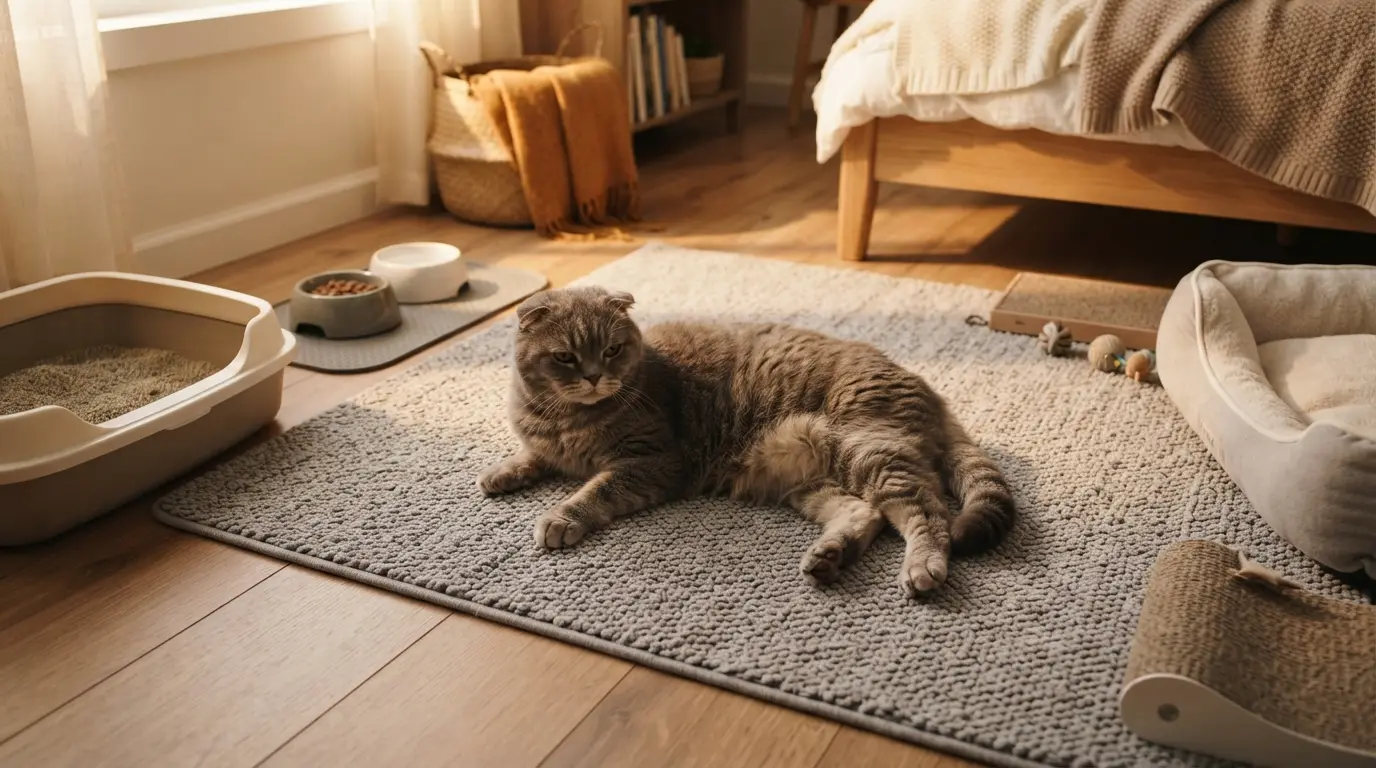
- Ceramic tiles, wooden floors, and polished porcelain tiles are enemies of senior cats. At the very least, cover the main pathways (from sleeping area to water bowl to litter box) with continuous non-slip surfaces. Use washable mats, yoga mats, or interlocking foam tiles. Secure seams with non-slip tape to prevent edges from flipping up.
- Place non-slip mats around the litter box to prevent hind leg slippage when squatting – this is a primary reason senior cats urinate near the edge of the box.
- Trim paw fur (especially important for long-haired cats). Fur covering the paw pads is like wearing socks on a slippery floor. Keep nails trimmed short; long nails alter the paw's grip angle. Be mindful of the quick when trimming. If you're concerned about accidents, refer to What to Do If Your Cat's Nail Bleeds? How to Use Styptic Powder, 3 Home First-Aid Steps, and Prevention Guide, or entrust this to a groomer. When booking grooming, inform us about your cat's joint issues, and we will adjust the handling time, opting for side-lying and multiple sessions.
Height Differences: Convert "Jumping" to "Walking"
- Keep each step height to 20 cm or less, with a tread depth of at least 25 cm (enough for the cat's entire body to rest). The surface should have fabric or non-slip material.
- Provide intermediate steps for frequently used high places (windowsills, beds, sofas). Senior cats' desire to survey their territory from above is natural; don't block access, but rather "reduce the difficulty."
- Modify sleeping areas to be shallow bowls or semi-enclosed beds that don't require lifting legs to enter, with thick padding to reduce pressure points on joints.
Litter Box: Entrance Height is Key
The entrance height should be lowered to 5-8 cm. Enlarge the box to 1.5 times the cat's body length, allowing them to turn around fully without squatting awkwardly. Hooded and top-entry boxes are very unfriendly to stiff-jointed cats; if you must use them, remove the door flap. For more details on this (including DIY modifications and troubleshooting accidents), refer to Choosing the Right Litter Box for Senior Cats: Low-Entry Accessible Modifications, Accident Troubleshooting, and Arthritis Care Guide. If you prefer not to DIY, the Butter Toast Litter Box we use in our senior cat rooms is an open-design, low-sided option that requires less leg lifting, making it much easier for cats with weak hind legs to access.
Living Space: Shorten Distances
- Place water, food, and the litter box separately but on the same level. Avoid making senior cats climb stairs to use the litter box.
- If your home has multiple levels, recommend placing a litter box on each level.
- Use nightlights: Senior cats' declining vision combined with weak legs makes them more prone to missteps in the dark.
- Keep warm in winter: Cold temperatures significantly worsen joint stiffness. In our facility, we maintain the senior cat rooms at 24-26°C during winter. Heating pads are placed on only half of the sleeping area, allowing the cat to choose whether to move away from the heat source.
Daily Care: Eat, Move, Measure, Record
Weight management is the cheapest and most effective treatment for arthritis. Avoid aggressive weight loss goals; aim for no more than a 1% reduction of body weight per week, under veterinary guidance. For calorie calculations, refer to How Much Should a Cat Eat Per Day? Cat Feeding Amount Calculation Formula.
Nutritionally, senior cats need sufficient, easily digestible protein to maintain muscle mass (unless specifically restricted by a vet due to kidney disease), along with anti-inflammatory Omega-3 fatty acids. Senior cats often eat less due to dental issues and reduced sense of smell. Warming wet food to near body temperature (around 38°C) can enhance its aroma. Detailed steps can be found in What to Do If Your Senior Cat Isn't Eating? Addressing Dental Issues, Reduced Sense of Smell, and Ruling Out Chronic Diseases.
Moderate activity is better than complete rest. Use a wand toy for short, low-amplitude chasing sessions on the floor, 3-5 minutes at a time, 2-3 times a day. Avoid encouraging jumping. If your cat sits down after a few steps or their hind legs tremble, stop the activity.
Record-keeping is invaluable for follow-up visits: weigh your cat every two weeks and record a video of them walking monthly. This provides a more objective view of their progress than memory alone.
If your senior cat needs boarding, prioritize "accessible rooms, medication administration capabilities, and the ability to monitor them at all times." Assess potential facilities using the criteria in Can Senior Cats Stay at a Cat Hotel? A Comprehensive Guide to Boarding Elderly Cats, Chronic Disease Medication, and Choosing the Right Cat Hotel. We also offer individualized care arrangements for senior and chronically ill cats. Feel free to book a stay at CatGarden Cat Hotel and inform us of your cat's medical history and medications when booking.
Frequently Asked Questions
Is hind leg trembling in senior cats due to joint pain or calcium deficiency?
Cats eating a complete and balanced commercial diet are rarely calcium deficient. Hind leg trembling is more commonly caused by pain, muscle loss, hypokalemia, or neurological issues. Do not self-supplement with calcium or potassium; incorrect supplementation can be dangerous. First, have blood tests done to check electrolytes and kidney values.
Can arthritis be improved solely with supplements?
Supplements like Omega-3, glucosamine, and green-lipped mussel are "supportive." They typically require 4-8 weeks of consistent use to show noticeable effects and cannot replace pain medication. Cats with moderate to severe pain require a veterinary-prescribed pain management plan, along with environmental modifications and weight control, for the most effective results.
Will hind leg instability in senior cats resolve on its own? How long should I observe?
Gradual joint degeneration will not resolve on its own and will likely worsen over time. However, weakness caused by hypokalemia, diabetes, or hyperthyroidism will improve with treatment of the underlying cause. It is recommended not to observe for more than 3 days at home; for sudden paralysis, seek emergency care immediately.
Can I still trim my senior cat's nails or bathe them if they have hind leg weakness?
Yes, but adjustments are necessary: perform procedures while the cat is lying on their side or in multiple short sessions, reduce handling time, avoid prolonged elevation of the hind legs, and after bathing, towel dry thoroughly before using a low-heat dryer to minimize standing time. It is crucial to inform the groomer of your cat's joint condition beforehand.
My home has all tile floors; what can I do if I can't make major renovations immediately?
Start with "pathway mats": Cover the route from the sleeping area to the water bowl and litter box with continuous non-slip mats. Add an extra mat around the litter box and provide an intermediate step for one frequently used high perch. These three steps can usually be completed over a weekend and provide immediate benefits.
In conclusion: The decline in mobility in senior cats is often not "hopeless" but rather "discovered too late." Noticing that your cat can no longer jump onto the sofa or that their hind legs tremble means you are already one step ahead of many owners. Record videos, get blood tests done, and improve the flooring. Your cat still has many years ahead to walk slowly for you. If symptoms persist or worsen, please seek veterinary care. This article cannot replace a veterinarian's diagnosis.
Article by the CatGarden Editorial Team
CatGarden offers curated supplies, cat boarding, and grooming
Book services or shop online.