Can Cats Eat Watermelon? Summer Feeding Precautions, Portion Sizes, and Proper Consumption Explained
Cats can eat small amounts of watermelon flesh, but it's not a necessity. Always remove seeds and rind, cut into small pieces, and strictly control portions. This article explains the correct way to feed watermelon and important summer feeding precautions.
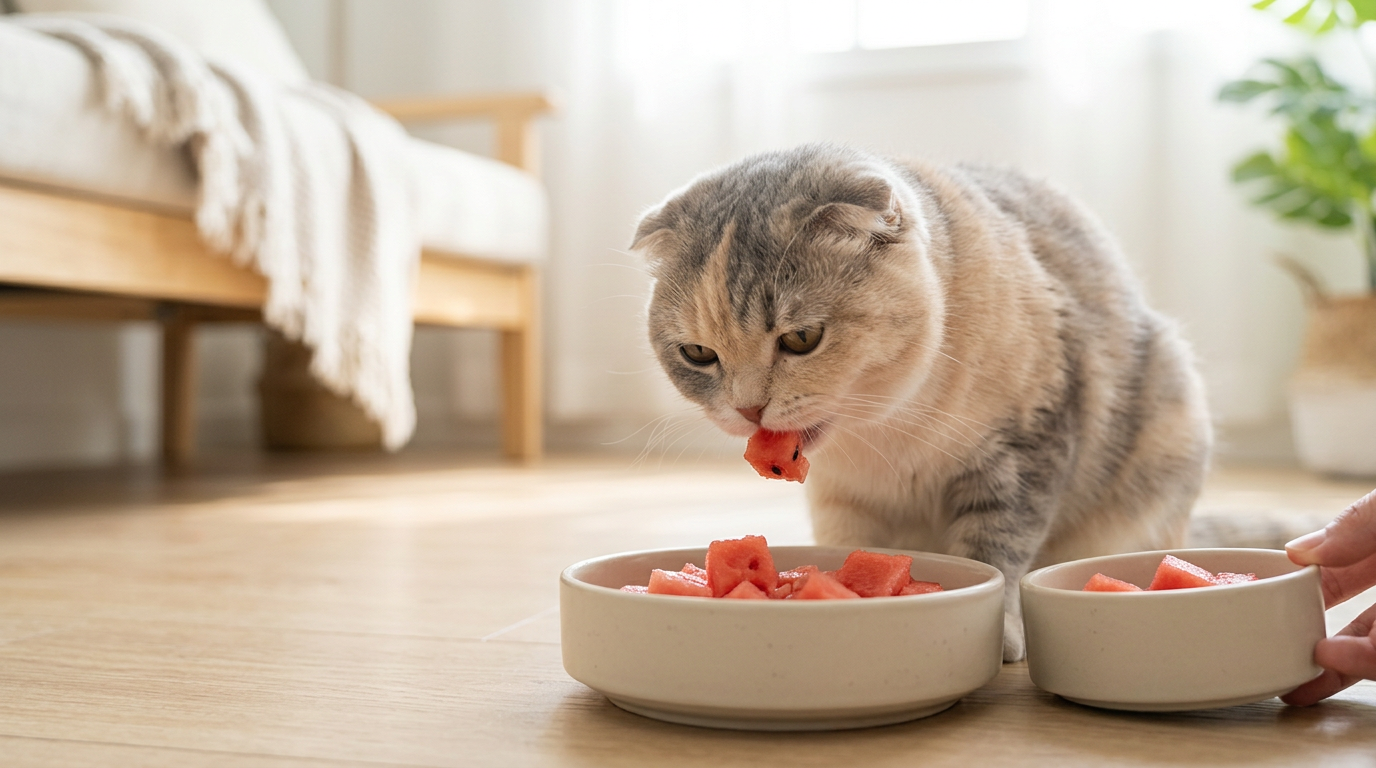
Can cats eat watermelon? Yes, but only in small amounts as an occasional treat, and it must be seedless, rindless, and cut into small pieces. Watermelon is not a toxic food for cats. A small amount of the red flesh is safe, but it's not a necessary nutrient source for cats, and too much can lead to diarrhea.
In the summer, many owners see their cats showing interest in the watermelon they're eating and want to share a piece to cool them down. In this article, drawing from our frontline experience at a cat hotel, we'll clarify the question "Can cats eat watermelon?": which parts are off-limits, how much can be given at once, how to feed it safely, and better ways to cool them down in the summer.
Key Takeaways
- Cats can eat the red flesh of watermelon, but it should be considered an "occasional treat," not a meal replacement or a way to supplement hydration.
- Safe portion size: For adult cats, 1-2 small cubes (about 1 cm square) at a time, no more than 1-2 times a week, accounting for no more than 10% of daily calories.
- Watermelon seeds and the white rind must be completely removed. Seeds contain trace amounts of cyanide and pose a risk of intestinal blockage.
- Cats are obligate carnivores and cannot efficiently digest large amounts of sugar and fiber. Overfeeding watermelon commonly results in soft stools and diarrhea.
- For cats with diabetes, kidney disease, or sensitive stomachs, consult your veterinarian before feeding. Self-experimentation is not recommended.
Is It Safe for Cats to Eat Watermelon?
Let's get straight to the point: the red flesh of watermelon itself does not contain any toxic components for cats, and small amounts are safe to consume. Watermelon is about 90% water, and the sugar and calorie content are not excessively high for a "small piece," so you don't need to be overly anxious if you let your cat try a little occasionally.
However, "safe" does not equate to "beneficial." Cats are obligate carnivores; their digestive systems are designed to process animal protein, and they have very low utilization rates for the fructose and fiber found in fruits. In other words, while cats can eat watermelon, they won't gain the nutrients they truly need from it.
At our establishment, our principle is simple: Watermelon is a "small treat during interaction," not a nutritional supplement, and certainly not a hydration method. The focus should be on ensuring their daily meals and water intake are adequate. For more on this, you can refer to our article on How Much Should a Cat Eat Per Day? Dry Food, Wet Food, and Hydration Guide.
Which Parts of Watermelon Can Cats NOT Eat?
Watermelon Seeds: Must Be Removed
Black watermelon seeds contain trace amounts of cyanide precursors. While one or two seeds won't cause poisoning, it's unnecessary risk for a cat weighing only a few kilograms. A more practical concern is that seeds can cause gastrointestinal obstruction, especially in small or young cats. Please remove all seeds before feeding. Even seedless watermelons may have residual white, soft seeds.
White Rind and Green Rind: Do Not Feed
The white part near the green rind is fibrous and difficult to digest. Cats cannot chew it well and have trouble swallowing it, which can lead to choking or vomiting. The hard green rind should never be given; a cat's teeth are not designed for gnawing on it. Only give the ripe, red flesh from the center.
If you want a more comprehensive understanding of foods to avoid at home, we recommend bookmarking this article: What Can't Cats Eat? Common Household Dangers and Poisoning Signs.
Safe Portion Sizes and Proper Feeding of Watermelon for Cats
How Much Can Be Given at Once?
Here's an easy-to-remember principle: All treats (including watermelon) should not exceed 10% of a cat's daily caloric intake. In terms of watermelon, this translates to:
- Adult cats: 1-2 small cubes at a time, each about 1 cm square.
- Frequency: No more than 1-2 times a week.
- Kittens, senior cats, and cats with sensitive stomachs: Even less, or not recommended at all.
When feeding for the first time, give a tiny piece the size of your fingernail and observe for 12-24 hours for any signs of soft stools, vomiting, or changes in appetite. If all is well, you can gradually maintain the portion size mentioned above next time.
Five Steps for Proper Feeding
1. Choose ripe, red flesh, avoiding the white parts near the rind.
2. Thoroughly remove all seeds, including any soft ones.
3. Cut into small pieces less than 1 cm, reducing the risk of choking and rapid ingestion.
4. Serve at room temperature or slightly cool. Do not give ice-cold watermelon directly, as the cold stimulus can cause gastrointestinal upset.
5. Serve as an independent treat, not mixed with kibble or wet food, to prevent the cat from refusing their regular meals.
Practices to Avoid
- Do not feed watermelon juice or watermelon products with added sugar or seasonings.
- Do not use watermelon to "replace drinking water." Cats should hydrate with clean water, a water fountain, and wet food.
- Do not feed large amounts just because the weather is hot. Overfeeding most commonly results in diarrhea.
Cooling Down with Watermelon in Summer? The Approach is Wrong
Many people think of feeding cats watermelon in the summer for "cooling down" and "hydration." This is a common misconception.
Cats regulate their body temperature primarily not through drinking water or eating fruit, but through ambient temperature, ventilation, and normal water intake. The hydration provided by one or two pieces of watermelon is minimal. What you should really focus on is managing the cooling of your home environment. For information on signs of heatstroke, how to identify panting, and how to cool your home, be sure to read our main series article on Are Cats Afraid of Heat? Signs of Heatstroke, Panting, and Summer Cooling Guide.
If you notice your cat panting continuously, appearing lethargic, or having a higher body temperature on a hot day, watermelon won't solve the problem. The first step is to take their temperature and cool them down, seeking veterinary care if necessary. For guidance on how to assess this, refer to What to Do If Your Cat Has a Fever? Normal Temperature, How to Measure, and Danger Signs.
Truly effective hydration methods for summer:
- Increase the proportion of wet food. Wet food has high water content and is the most natural way to hydrate.
- Place multiple water bowls or use a water fountain to encourage drinking.
- Maintain indoor ventilation, avoid enclosed high temperatures, and use air conditioning moderately during the day.
Which Cats Should Not Eat Watermelon?
- Cats with diabetes: The fructose in watermelon can affect blood sugar levels and should be completely avoided.
- Cats with kidney disease or senior cats: Their diet requires careful management. Any additional treats should be discussed with a veterinarian first. Refer to How Old is a Senior Cat? Diet, Veterinary Care, and Home Care for Senior Cats.
- Cats with sensitive stomachs or prone to soft stools: The sugar and fiber in watermelon may exacerbate their condition.
- Kittens: Their digestive systems are not yet mature, and there's no need to take risks with new foods.
For cats with sensitive stomachs, instead of trying new foods, focus on daily maintenance, such as maintaining a stable diet and appropriately supplementing with Specialty Probiotics to help balance their gut flora. If your cat experiences persistent diarrhea, vomiting, or loss of appetite after eating watermelon, stop feeding it and consult a veterinarian as soon as possible.
Cats Don't Really Need "Sweet" Things
Here's an interesting fact: Cats can barely taste sweetness. Cats lack the complete receptors to detect sweet flavors. So, when they sniff your watermelon, they are likely attracted by the moisture, scent, or curiosity about "what you're eating," rather than a genuine love for sweetness.
This also means: Your cat will not suffer any loss if you don't give them watermelon. Instead of using fruit as a reward, opt for treats that are more suitable and popular for cats, such as a bit of Premium Catnip during playtime. It's safe and can increase their activity levels. For more suitable treats and supplies for cats, you can directly browse the shop.
Frequently Asked Questions
Can cats get poisoned by eating watermelon?
Pure red flesh is not poisonous, and small amounts are safe. However, watermelon seeds contain trace amounts of cyanide and pose a blockage risk. Always remove seeds and rind before feeding, and keep portions small.
Can cats eat watermelon rind?
Not recommended. The white rind is fibrous and hard to digest, and the green rind should never be given. It can easily cause vomiting or gastrointestinal upset. Only give the red flesh from the center.
How much watermelon can a cat eat at once?
For adult cats, 1-2 small cubes (about 1 cm square) at a time, no more than 1-2 times a week, and all treats combined should not exceed 10% of their daily caloric intake. For the first time, give a tiny piece and observe their reaction.
Can watermelon be used to hydrate cats in the summer?
Its effect is limited, and it's not recommended as a hydration method. More effective ways include increasing wet food intake, providing multiple water bowls or a water fountain, and ensuring proper environmental cooling.
What should I do if my cat gets diarrhea after eating watermelon?
Stop feeding watermelon immediately and provide plenty of clean water. If soft stools resolve within a day, you can observe. If diarrhea is persistent, accompanied by vomiting or lethargy, consult a veterinarian promptly.
This article was compiled by the Cat Hou Yuan editorial team. The content is general care advice and cannot replace professional veterinary diagnosis. If your cat exhibits persistent or severe symptoms, please seek veterinary care promptly.
CatGarden offers curated supplies, cat boarding, and grooming
Book services or shop online.