返回

Blog

What is a Normal Cat Temperature? Is a Warm Ear, Nose, or Paw Pad a Fever? Understand Everything from Touching to Danger Signs

CatGarden Editorial TeamPublished 2026/07/09
Cat TemperatureCat FeverCat HealthCat Care
What is a Normal Cat Temperature? Is a Warm Ear, Nose, or Paw Pad a Fever? Understand Everything from Touching to Danger Signs

A cat's normal body temperature is typically between 38-39.2°C, which is higher than a human's. Therefore, they naturally feel "warm" to the touch, and this is normal. You cannot accurately determine if a cat has a fever by simply touching its ears, nose, or paw pads—there is only one truly reliable method: taking its rectal temperature with a thermometer.

We interact with many cats daily at our facility, and the most common question from owners is, "Her ears feel so hot, does she have a fever?" Today, starting with your most intuitive method—touching—we'll help you understand everything about cat body temperature.

Key Takeaways

  • A cat's normal body temperature is approximately 38-39.2°C. Temperatures above 39.5°C are generally considered a fever, and above 41°C is a dangerous high temperature requiring immediate veterinary attention.
  • Touching a cat's ears, nose, or paw pads only allows you to feel "relative warmth or coolness," which is influenced by environmental temperature and activity level. It cannot be used to determine a fever.
  • The most accurate way to measure a cat's temperature is by taking its rectal temperature with an electronic thermometer. Ear thermometers are a second option but have a larger margin of error.
  • A wet and cool nose is common in cats, but a dry nose does not equal illness. Noses can naturally be drier after waking up or in dry environments.
  • Hypothermia (below 37.5°C), persistent high fever, refusal to eat or drink, and lethargy are emergency-level conditions; do not wait at home.

What is a Cat's Normal Body Temperature?

Cats are warm-blooded animals, but their basal body temperature is higher than humans. The normal body temperature for a healthy adult cat ranges from 38-39.2°C, while kittens may have a slightly higher temperature due to their active metabolism.

Based on this, you can generally consider the following ranges:

  • 38-39.2°C: Normal range
  • 39.3-39.5°C: Slightly elevated, observe closely (may be temporarily higher after intense play or returning from outdoors)
  • Above 39.5°C: Fever
  • Above 41°C: Dangerous high temperature, potentially related to heatstroke or severe infection; seek immediate veterinary care.
  • Below 37.5°C: Hypothermia, also dangerous; commonly seen in shock, hypothermia, or late-stage critical illness.

Many owners overlook that "hypothermia" is also very serious. Elderly cats, sick cats, or cats who have just undergone surgery may feel cold and curl up tightly, which should be a cause for greater concern.

Can Touching Ears, Nose, or Paw Pads Really Detect a Fever?

The answer is: No. However, these areas do offer some reference value if you know how to interpret them.

Warm Cat Ears

A cat's ears are rich in blood vessels and have thin skin, making them an important area for heat dissipation. When it's hot, after waking up, after sunbathing, or after running around, warm ears are completely normal. Conversely, when a cat feels cold or its blood circulation slows down, the tips of its ears will feel cool.

Therefore, "hot ears" are more of a signal that the body is trying to cool down or that the environment is warm, rather than evidence of a fever. What you should truly worry about is if the ears are hot, and the cat is also panting with its mouth open and hiding in a corner—this could indicate a heat-related issue. In such cases, you can refer to our article Is It Normal for Cats to Stick Their Tongues Out and Pant? for guidance.

Wet / Dry Cat Nose

The idea that "a wet cat nose means health, and a dry nose means illness" is one of the most widespread myths. In reality:

  • The wetness of a cat's nose varies throughout the day: It tends to be drier upon waking and wetter after activity.
  • Environmental humidity, whether air conditioning is on, and if the cat has just drunk water all influence its nose's moisture.
  • A dry nose does not equal a fever, and a wet nose does not guarantee good health.

What you should truly pay attention to regarding the nose are "abnormalities": thick nasal discharge, nosebleeds, crusting on the nose, or abnormal breathing sounds. These are the clues that require veterinary attention, and they have little to do with whether the nose is wet or dry.

Paw Pads

Paw pads are also areas for heat dissipation. They may become slightly sweaty and warm after exercise or when the cat is nervous. Similarly, you cannot determine the cat's overall body temperature by looking at the paw pads alone.

In summary: If these three areas feel warm, it means "heat is being dissipated here," not "the cat has a fever."

The Correct Way to Measure a Cat's Temperature

To know the actual body temperature, measurement is the only accurate way. Here are the methods we actually use.

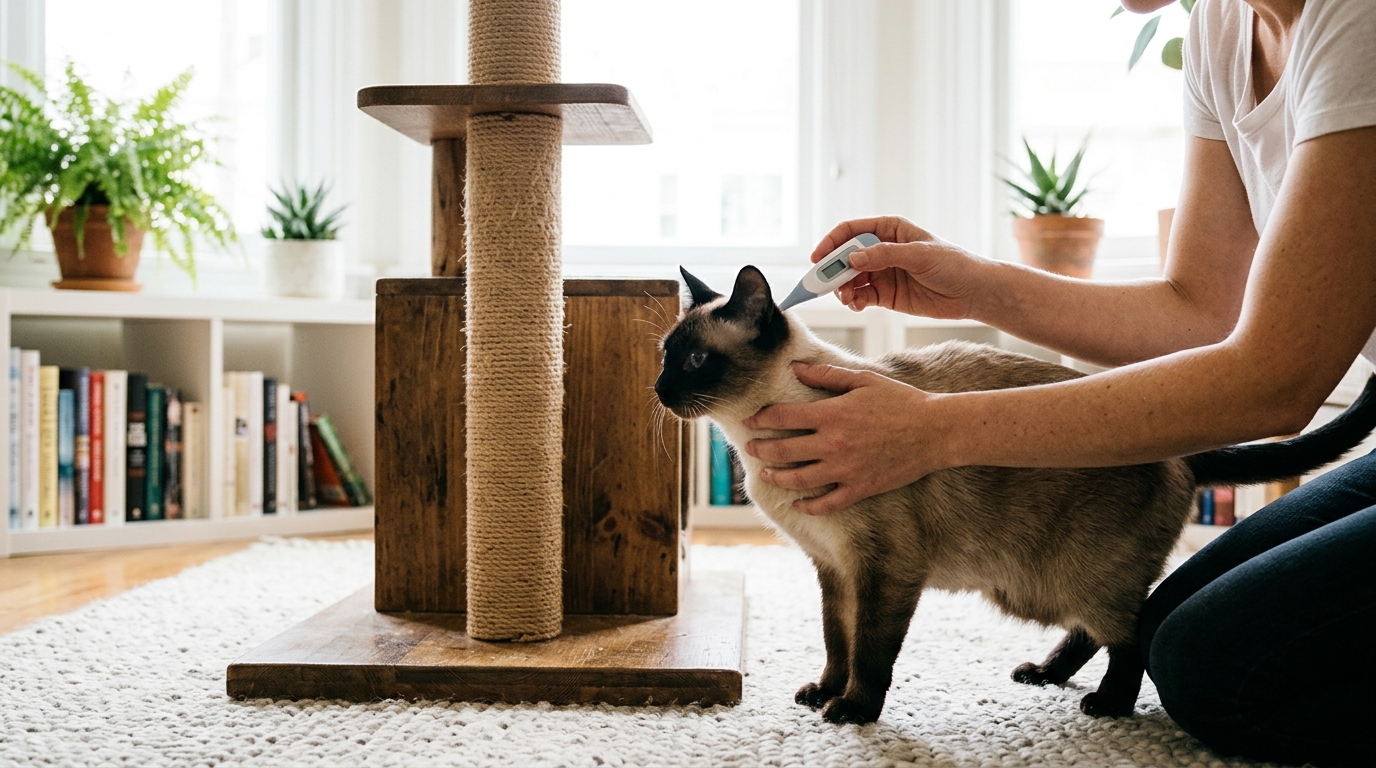
Rectal Temperature (Most Accurate)

1. Prepare a pet-specific electronic thermometer and apply a small amount of petroleum jelly or water-based lubricant to the tip.

2. Have the cat lie on its side or stand. It's best if one person can gently restrain the cat while the other operates the thermometer.

3. Gently insert the thermometer into the anus about 1-2 cm and wait for the beep.

4. Throughout the process, speak softly to comfort the cat and perform the action quickly and steadily to avoid causing tension by pressing too hard.

If the cat is extremely resistant or struggles to the point of potential injury, do not force it; it's safer to let the veterinarian handle it.

Ear Temperature (Convenient but Prone to Error)

Pet-specific ear thermometers are more convenient, but a cat's ear canal is curved. A slight deviation in angle can lead to an error of 0.5°C or more. It can be used for initial reference, but if the readings are abnormal, it's still recommended to confirm with a rectal temperature.

Behavioral Observation (Supplementary)

When you cannot measure the temperature, observing behavior is equally important: Cats with a fever typically have decreased appetite, low energy, hide away, avoid interaction, and curl up tightly. If your cat is still active and eating normally, the urgency is much lower.

For a comprehensive understanding of fever identification and management, you can refer to this in-depth guide: What to Do If Your Cat Has a Fever? Normal Temperature, Measurement Methods, and Danger Signs.

What Situations Can Cause a Cat's Temperature to Be Elevated?

  • Overheating / Heatstroke: Most common in hot, humid weather or when confined in poorly ventilated spaces. In such cases, the body temperature can soar above 40°C, which is very dangerous.
  • Infection or Inflammation: True "fever" caused by viral or bacterial infections.
  • Recent Intense Activity or Stress: Temporary increase that will return to normal after rest.
  • Vaccine Reaction: A mild increase in temperature may occur one to two days after vaccination, usually resolving on its own.

Extreme heat, especially in summer, requires particular caution. Cat heatstroke can progress rapidly. We strongly recommend that owners thoroughly read Are Cats Sensitive to Heat? Signs of Heatstroke, Panting, and Summer Cooling Guide. Proactive cooling measures are far more important than emergency treatment afterward.

These Are Danger Signs—Don't Wait at Home

If any of the following situations occur, take your cat to the veterinarian immediately without delay:

  • Body temperature exceeds 41°C or is below 37.5°C
  • Persistent open-mouth panting, rapid breathing, or bluish tongue
  • Refusal to eat or drink for more than a day, complete lack of energy
  • Seizures, wobbly gait, or altered consciousness
  • Repeated vomiting or diarrhea combined with a high fever

Cats are adept at hiding pain and illness. By the time symptoms are obvious, a significant amount of time may have already passed. Rather than guessing at home by touch, seek veterinary care early.

What's More Practical for Daily Observation?

Instead of anxiously touching your cat's ears every day, it's better to become familiar with your cat's "normal state"—its usual routine, appetite, activity level, and sleeping positions. When these change noticeably, it's a more reliable warning sign.

For example, if your cat maintains a loaf position for an extended period and is less active, or suddenly changes its sleeping spot to a hidden corner, it's worth paying closer attention. Keeping track of your cat's weight, food intake, and energy levels daily will help you notice abnormalities immediately.

If you have an elderly cat at home, you need to be even more vigilant. Their thermoregulation and immune systems are weaker. You can refer to Key Care Points for Senior Cats for daily management.

Frequently Asked Questions

Are warm cat ears always a sign of fever?

Not necessarily. Ears are a heat dissipation area, and they can become warm due to hot weather, after waking up, or after activity, which is normal. To determine a fever, you still need to measure the temperature and consider other factors like energy levels and appetite.

Does a dry cat nose mean it's sick?

Not necessarily. The wetness of a cat's nose changes throughout the day; it's naturally drier after waking up or in dry environments. Only abnormalities like nasal discharge, nosebleeds, or abnormal breathing sounds require veterinary attention. Looking at wetness or dryness alone is not very meaningful.

I don't have a thermometer at home. How can I initially tell if my cat has a fever?

Observing behavior is the most practical approach: Cats with a fever typically have a poor appetite, low energy, hide away, and curl up tightly. If your cat is eating, drinking, and playing normally, the chance of fever is low. However, if its behavior is significantly abnormal, it's still recommended to seek veterinary confirmation.

What is a cat's normal body temperature? Above what temperature is considered a fever?

The normal body temperature for a healthy adult cat is approximately 38-39.2°C. Temperatures above 39.5°C are generally considered a fever, and above 41°C is a dangerous high temperature requiring immediate veterinary care.

Will taking a cat's rectal temperature harm it?

Using a pet-specific electronic thermometer, lubricating the tip, and performing the action gently and quickly generally will not cause harm. If the cat is extremely resistant or struggles, do not force it; it's safer to have a veterinarian handle it.

---

A cat's body temperature is an important indicator of health, but "touching" can only serve as a reference. Learning how to measure temperature correctly and remembering dangerous values and signs will allow you to make the right judgment at critical moments. When taking your cat out in the summer, it's also important to entrust them to someone who knows how to observe them. If needed, you can learn about our boarding services and care methods.

*This article was written by the CatBackyard editorial team. The content is for general care reference only and cannot replace veterinary diagnosis. If your cat's symptoms persist or worsen, please seek veterinary attention promptly.*

訂閱貓後苑養貓知識

每月一封,精選養貓照護、住宿美容小知識與新品,不塞爆你的信箱。

Keep reading