返回
部落格
接貓咪回家第一週怎麼照顧?環境、飲食與讓牠安心的準備
貓後苑編輯團隊發佈 2026/06/03更新 2026/06/22
新手幼貓環境佈置居家照護
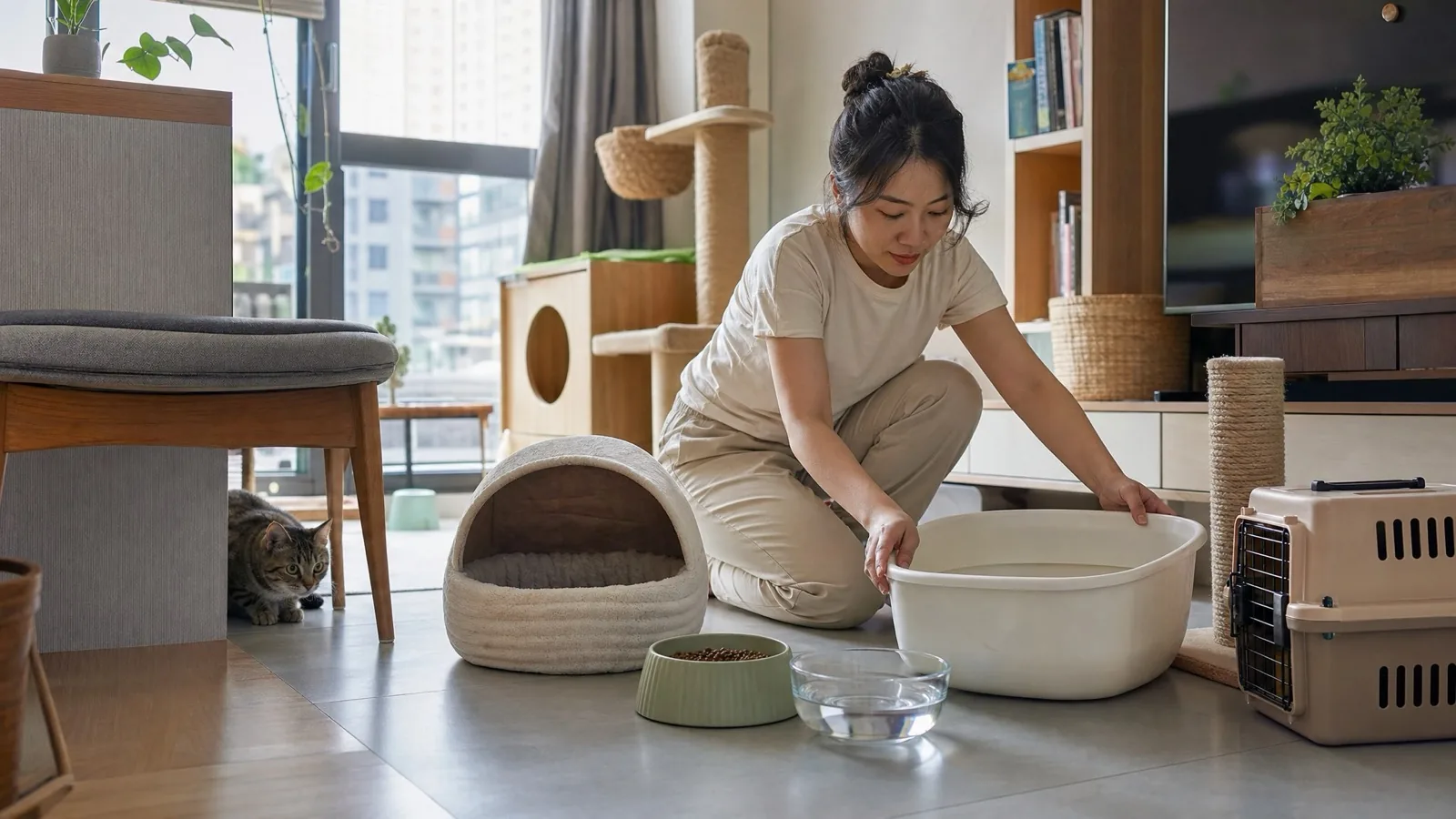
把貓咪帶回家的第一週,是建立信任最關鍵的時期。新環境、新氣味會讓牠緊張,躲起來、不太吃、警戒都很正常。重點不是急著抱牠、逗牠,而是給牠一個安全、好預測的環境,讓牠自己慢慢踏出來。
先準備一個安全的小空間
別一開始就讓貓咪自由探索整間房子,空間太大反而更不安。先安排一個房間或一個角落,放上:
- 一個躲藏處(紙箱、貓窩、半罩式空間)
- 食盆、水盆
- 貓砂盆(和食盆分開放)
- 一件有你或原本環境氣味的小毯子
讓牠先在小範圍裡有安全感,適應後再慢慢開放其他空間。
飲食先維持原本的,別急著換
到新家本來就有壓力,這時再換食容易腸胃不適。先沿用牠原本吃的飼料或罐頭,等穩定一兩週後,再用漸進式換食的方式慢慢調整。也記得隨時備有乾淨的水。
貓砂盆:擺對位置很重要
把貓砂盆放在安靜、好進出、遠離食盆的角落。第一週特別要注意牠有沒有正常上廁所——這是判斷適應狀況的重要指標。砂盆怎麼挑、放哪裡,可參考〈貓砂盆怎麼挑〉。
不要急著互動,讓牠主動靠近
- 蹲低、放慢動作,不要直視貓咪眼睛
- 用零食、逗貓棒讓牠主動接近,不要硬抱
- 講話輕聲,避免突然的巨大聲響
- 給牠時間,有的貓幾天、有的貓兩三週才放鬆
牠願意在你面前露肚子、踩奶、主動磨蹭,就是信任你了。
健康觀察與就醫
第一週多留意食慾、排泄、精神、有沒有打噴嚏或拉肚子。剛接回家建議安排一次健康檢查,並確認疫苗與驅蟲時程。若完全不吃不喝超過一天、精神很差,要盡快就醫。
常見問題
貓咪一直躲著不出來正常嗎?
正常。新環境會讓貓咪警戒,躲一兩天到一兩週都可能。只要牠會趁沒人時吃東西、上廁所,就給牠時間,不要硬拉出來。
第一天就可以幫牠洗澡嗎?
不建議。剛到家壓力已經很大,洗澡會更緊張。等牠完全適應、信任你之後再說。
要不要關籠?
可用較大的圍欄或單一房間給牠安全範圍,但不建議長時間關小籠子。重點是空間單純、好預測,不是限制活動。
結語
第一週的目標只有一個:讓貓咪覺得安全。環境單純、飲食穩定、不強迫互動,多數貓咪都會慢慢卸下警戒。耐心一點,信任是急不來的。
需要用品可到貓後苑商城備齊貓窩、食器與貓砂;之後有美容、住宿需求也歡迎線上預約。
溫馨提醒
本文整理自一般貓咪照護常識,僅供參考,無法取代獸醫的專業診斷與治療。若貓咪出現持續異常或緊急症狀,請盡快諮詢專業獸醫。