返回

Blog

What Does the Cat's "Chicken Sit" Mean? Does the "Bread Cat" Pose Indicate Comfort or Discomfort?

CatGarden Editorial TeamPublished 2026/07/08
cat behaviorcat chicken sitcat sitting posture interpretation
What Does the Cat's "Chicken Sit" Mean? Does the "Bread Cat" Pose Indicate Comfort or Discomfort?

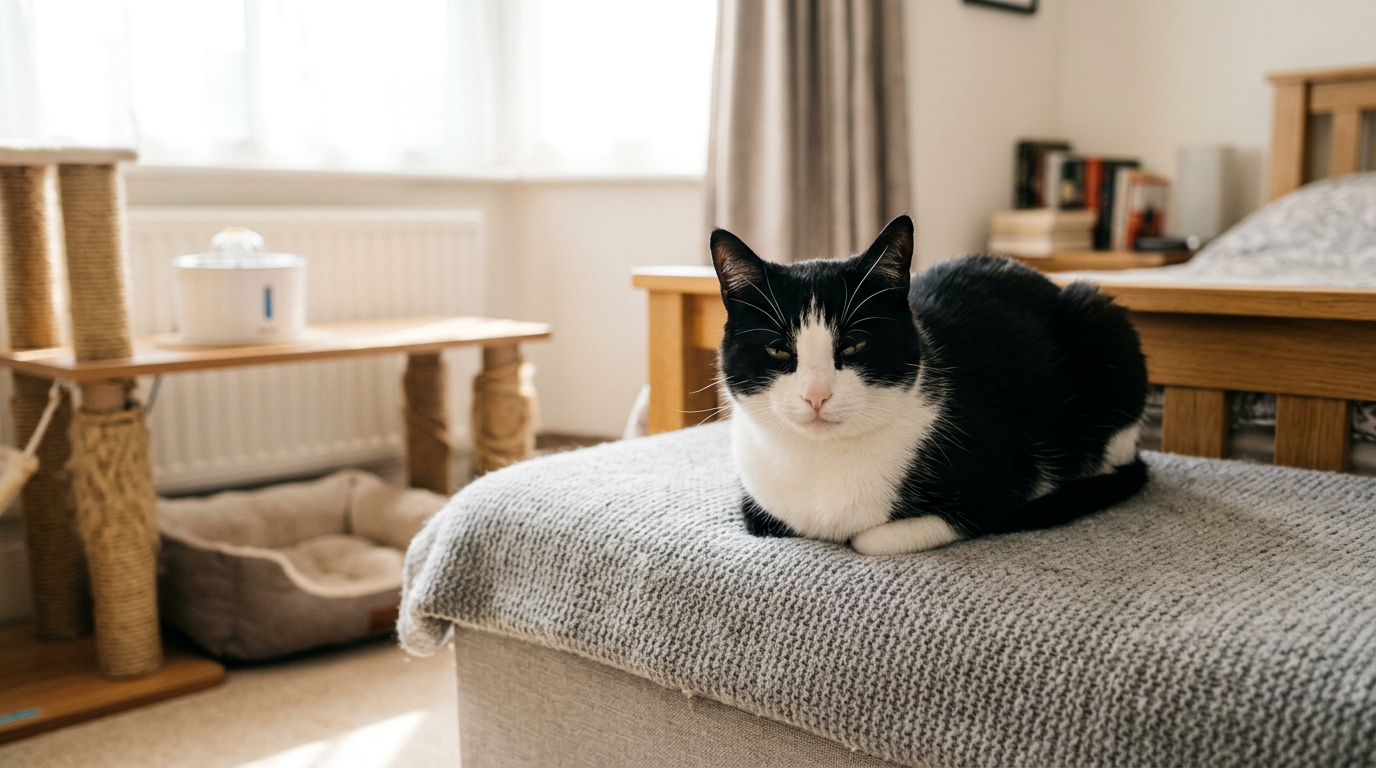
The cat's "chicken sit" (also known as "bread cat") is, most of the time, a comfortable posture for relaxation, security, and incidentally, warmth, indicating they feel safe in their environment. However, if the cat is unusually tightly curled, has a vacant stare, hunched shoulders, and is unresponsive, accompanied by a decreased appetite or lethargy, this pose might be a warning sign that they are silently enduring pain or hiding discomfort, requiring further observation.

Key Takeaways

  • The cat's "chicken sit" involves tucking all four paws underneath the body, resembling a "loaf of bread." When healthy, it usually signifies relaxation and warmth.
  • Cats naturally hide pain; about 80% of cats in discomfort do not vocalize. A "continuously tensed chicken sit combined with poor spirits" is an often-overlooked sign of illness.
  • The key to distinguishing lies in the details: half-closed eyes, relaxed body, and tail naturally tucked = comfortable; vacant stare, hunched shoulders, and stiff body = be alert.
  • If a cat maintains a tensed chicken sit for over half a day to a full day, and is not eating or drinking or is hiding, it's recommended to seek veterinary attention promptly.
  • When the ambient temperature is low (below approximately 24°C or 75°F), cats adopt the chicken sit to reduce heat loss, which is normal warming behavior.

What is the "Cat Chicken Sit"?

The so-called "cat chicken sit" refers to a posture where a cat tucks all four paws underneath its body, with its chest close to the ground and its back arched into a curve, essentially curling into a ball. Because its round shape resembles a freshly baked loaf of bread, it's also popularly called the "bread cat" or "toast cat" online.

At our cat hotel, we see cats in various poses every day, and the chicken sit is one of the most common. What's special about this posture is that the cat hides its front paws, making it unable to get up and flee immediately. This means that a cat willing to sit this way usually indicates that it feels the current environment is "safe enough not to need to be ready to escape at any moment."

Meaning of the Cat Chicken Sit: Mostly Relaxation and Warmth

1. Feeling Secure and Relaxed

Tucking in the paws and exposing the soft belly area towards the ground is a sign of a cat's trust in its environment. If your cat often sits in the chicken sit next to you, on the sofa, or by the window, while also squinting its eyes and purring, it's a classic "I'm very relaxed" state.

This sense of security is also related to where the cat chooses to rest. For a deeper understanding, you can read this article on What Does Your Cat's Sleeping Position Mean? Interpreting Sleeping Postures, Locations, and Their Affection Level, which will help you piece together your cat's behavioral signals more completely.

2. Warming Up, Reducing Heat Loss

Tucking the limbs underneath the body significantly reduces the exposed surface area, making it a very efficient way to conserve body heat. We observe in our facility that whenever the air conditioning temperature is low (around below 24°C or 75°F), or when the season turns cooler, the number of cats in the chicken sit noticeably increases, especially among short-haired cats, kittens, and senior cats.

So, if your cat frequently adopts the chicken sit in winter, it's likely just "a bit cold and trying to stay warm." You can help by providing a warm bed and avoiding direct drafts.

3. Semi-Rest, Ready to Go

Unlike lying completely on its side, the chicken sit is not a state of "deep sleep" but rather a state between wakefulness and rest. Cats can rest their eyes while remaining alert to respond quickly to any movement. This is also a very normal daily posture, so there's no need to worry.

Cat Chicken Sit When Sick? Be Alert to These Details

Here's the crucial point: The difference between a comfortable and an uncomfortable chicken sit is all in the details. Cats are masters at hiding pain; many cats experiencing discomfort will not cry out but will quietly curl up, essentially "shutting down." This is where owners are most likely to miss the signs.

Comfortable vs. Uncomfortable Chicken Sit Comparison

Comfortable-Looking Chicken Sit:

  • Eyes are half-closed or blinking slowly.
  • Body lines are soft and relaxed.
  • Tail is naturally tucked beside the body.
  • Purring is present, and they respond to your calls.
  • Getting up, eating, and using the litter box are normal.

Chicken Sit Requiring Alertness:

  • Curled up very tightly, hunched shoulders, head held low.
  • Vacant stare, pupils unfocused, or eyes half-closed not in relaxation.
  • Body is stiff; shows resistance or cries out when touched or picked up.
  • Hiding in corners, under cabinets, or other unusual places.
  • No interest in treats or toys.
  • Breathing is rapid and shallow, or open-mouth breathing.
  • Fur appears unkempt, messy, or greasy.

If you observe your cat panting with its mouth open, you should be even more vigilant. You can refer to this article on Is It Normal for Cats to Pant with Their Tongues Out? Causes from Heat to Illness and Warning Signs Explained, as normal cat breathing involves a closed mouth with minimal visible chest movement.

Common "Painful Chicken Sit"

When a cat experiences abdominal pain, urinary discomfort, fever, or general weakness, it often adopts a particularly tense chicken sit for self-protection: head lowered, back highly arched, pressing itself flat and tight. This posture is often maintained for a long time, and the cat will be too lethargic to respond to calls or play.

If you suspect a fever, you can take its temperature. We've outlined the procedure and danger signs in What to Do If Your Cat Has a Fever? Normal Temperature, How to Take Temperature, and Danger Signs Explained—a cat's normal body temperature is around 38–39.2°C (100.4–102.6°F); anything above 39.5°C (103.1°F) warrants attention.

Note: The above are only for auxiliary judgment. If the tensed chicken sit persists for over half a day to a full day, and is accompanied by not eating or drinking, hiding, and lethargy, please take your cat to the vet as soon as possible. Do not delay or use home remedies.

What Do Cat Sitting Postures Mean? Common Poses Besides the Chicken Sit

Looking at the chicken sit within the broader "sitting posture map" can help you better interpret your cat's state:

  • Chicken Sit (Bread Cat): Relaxation + warmth, or hiding discomfort (observe details).
  • Lying on Side, Belly Exposed: Extreme relaxation and trust, willing to expose the most vulnerable part.
  • Sphinx Pose (Front Paws Extended Forward): Resting but alert, ready to get up at any moment.
  • Curled into a Ball, Nose Tucked into Tail: Primarily for warmth, also common when feeling cold or seeking security.
  • Suddenly Tensing Up, Ears Flattened: Alertness or fear, completely different from a relaxed chicken sit.

Observing posture in conjunction with "how much they ate today, their energy levels, and whether their litter box habits are normal" is far more accurate than looking at a single action.

How We Judge at the Cat Hotel

When caring for guests' cats, the chicken sit is a signal we read daily. Here are a few practical approaches:

1. Observe the Baseline: First, understand each cat's usual behavior. Some cats naturally love the chicken sit, so it doesn't indicate abnormality; conversely, a cat that normally loves to sprawl or roll suddenly tensing up all day warrants attention.

2. Correlate with Eating, Drinking, and Litter Box Habits: As long as eating, drinking, and elimination are normal, the chicken sit is usually not a problem. For related information, refer to How Much Should a Cat Eat Daily? Dry Food, Wet Food, and Water Intake Essentials.

3. Note Environmental Changes: Cats that have just moved or are newly adopted may tense up due to nervousness. This usually improves with adaptation. See How to Care for Your Cat in the First Week Home? Environment, Diet, and Preparations for Their Comfort for methods.

4. Control Temperature: We maintain the boarding area within a comfortable range for cats, avoiding excessive cold that makes them constantly tense up, and also preventing heatstroke from overheating. For cooling tips in summer, see Are Cats Afraid of Heat? Signs of Heatstroke, Panting, and Comprehensive Summer Cooling Guide.

If you're going away and looking for a place that can carefully observe your cat's condition, you're welcome to learn about What to Prepare for Your Cat's First Boarding Stay? Key Points for Choosing a Cat Hotel and Checklists, or Book a Stay directly.

What Can You Do to Make Your Cat More Likely to "Comfortably Chicken Sit"?

  • Provide a Warm, Safe Nest: A spot against a wall, semi-enclosed, and slightly elevated from the ground offers cats the most security.
  • Maintain a Stable Routine and Environment: Reduce sudden loud noises and the stress of unfamiliar visitors.
  • Ensure Good Gut Health and Overall Well-being: Cats with comfortable digestion are less likely to adopt a protective, tensed posture. Depending on the situation, you can supplement with Specialty Probiotics to help stabilize the gut (supplements are not medication; abnormalities still require veterinary attention).
  • Regular Grooming and Physical Observation: While grooming, gently feel for any lumps or painful spots, which can help detect problems early.

Frequently Asked Questions

Is it sick if my cat is always in a chicken sit?

Not necessarily. If the cat is energetic, eats well, plays, and has alert eyes, the chicken sit is likely just a sign of relaxation or warmth. However, if they are also tensed, lethargic, hiding, and not eating or drinking, it could be a sign of discomfort, and veterinary consultation is recommended.

Why do cats love the chicken sit especially in winter?

Tucking their paws underneath their body reduces heat loss and conserves body heat effectively. When it's cold or the air conditioning is set low, the number of cats in the chicken sit noticeably increases. This is a normal thermoregulation behavior.

Is it a problem if my cat stays in the chicken sit for a long time without moving?

The key is the "quality," not the "duration." When relaxed, they will blink and respond to calls. If they remain motionless, hunched, and unresponsive to calls, be alert and seek veterinary attention promptly.

How can I tell if my cat is relaxed or enduring pain?

A relaxed cat's body is soft, eyes are half-closed, and they react normally when petted. A cat enduring pain will have a stiff, tense body, resist or cry out when touched, and often show decreased appetite and energy.

Do kittens and senior cats need special attention regarding the chicken sit?

Yes. Kittens and senior cats have poorer thermoregulation and are more likely to curl up due to cold. Senior cats may also adopt this posture due to joint discomfort. You can read How Old is a Senior Cat? Diet, Veterinary Care, and Home Care Essentials for Mature Cats for more guidance.

---

*This article was written by the CatBackyard editorial team. The content is a general sharing of care experience and cannot replace veterinary diagnosis. If your cat exhibits persistent or severe abnormalities, please seek veterinary attention immediately.*

訂閱貓後苑養貓知識

每月一封,精選養貓照護、住宿美容小知識與新品,不塞爆你的信箱。

Keep reading