
Blog
Automatic Litter Box Recommendations: How to Choose, Pros & Cons, Safety, and Cleaning Essentials
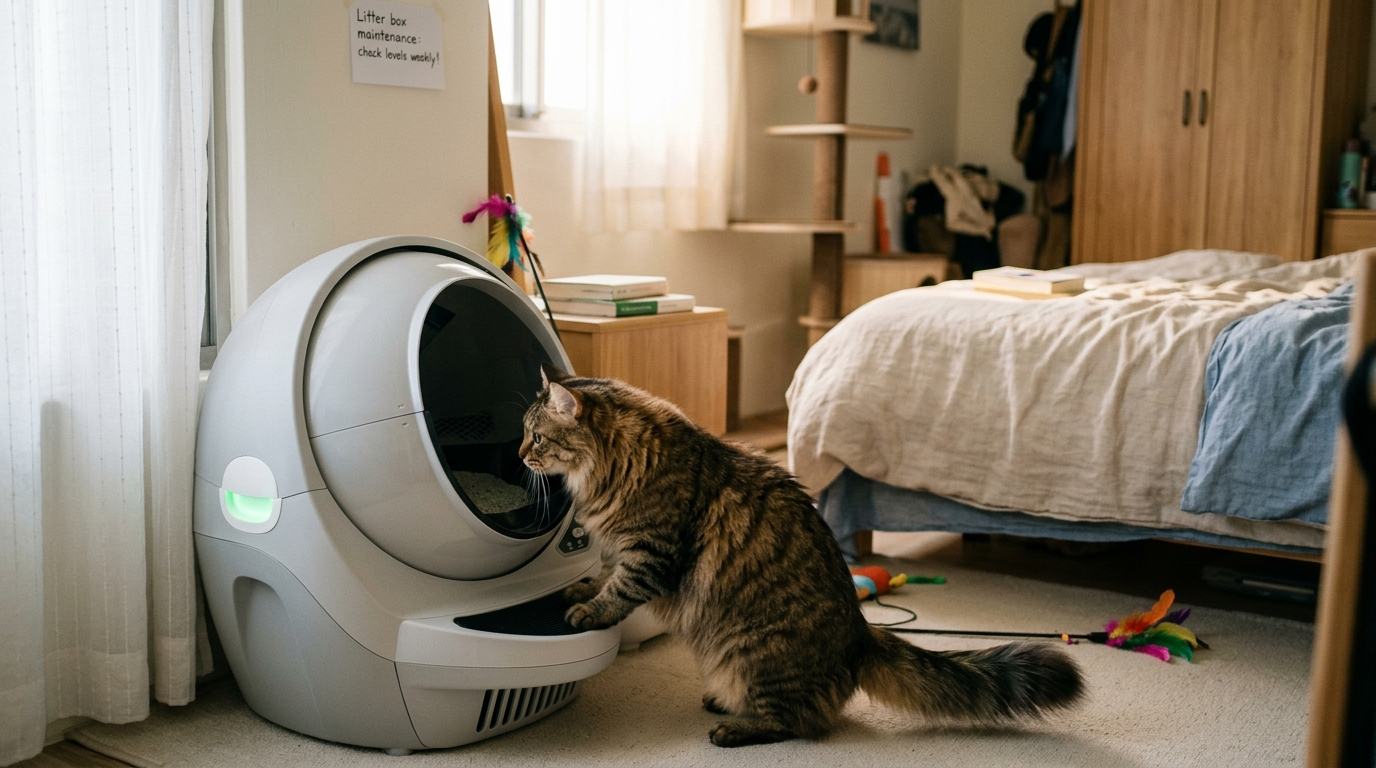
Automatic litter boxes are best suited for owners with "multiple cats, who are often away from home, or are sensitive to odors." They can transform daily scooping into emptying a waste bin just once a week. However, kittens, cats weighing less than 2.5 kg, recently neutered cats, or extremely timid cats are not recommended to switch directly to an automatic litter box in the short term. Whether to buy one and how to choose it doesn't depend on the motor power, but on these three factors: "safety sensor mechanism," "opening size," and "ease of disassembly and cleaning."
Based on our experience caring for hundreds of resident cats at Mao Hou Yuan and helping owners resolve various "cat refusal" issues, here's a comprehensive guide on how to choose an automatic litter box.
Key Takeaways
- The core safety mechanism of automatic litter boxes is weight sensing. Most models are designed to delay activation for 5-15 minutes after the cat leaves, preventing accidental injury.
- Kittens weighing less than approximately 2.5 kg are not recommended for drum-style automatic litter boxes as their weight may not trigger the sensor, posing a safety risk.
- When choosing, the inner diameter of the opening should ideally be larger than the cat's body length (about 40-50 cm including the tail). The drum's inner diameter should be over 45 cm to allow larger cats to turn comfortably.
- Automatic litter boxes are not maintenance-free: the waste bin needs to be emptied about every 5-7 days, and the main unit requires a complete disassembly and wash every 2-4 weeks. Neglecting this can lead to odor and bacteria buildup.
- When introducing a new litter box, keep the old one available for at least 2-3 weeks, allowing your cat to choose and adapt gradually. Sudden removal can lead to inappropriate urination.
How Do Automatic Litter Boxes Work?
There are two main types of automatic litter boxes on the market, each with a different operating principle and suitability for different cats:
Drum-Type (Rotary Separation)
These are the most common spherical/cylindrical models. After the cat finishes using the litter box and leaves, the main unit rotates the drum after a delay. Clumped waste is sifted through an internal grate and falls into the waste bin below, while clean litter remains in the drum. Suitable for clumping mineral litter or clumping tofu litter.
Rake-Type (Platform Rake)
These models resemble traditional rectangular litter boxes and feature a "rake" on top. After the cat leaves, the rake sweeps horizontally across the litter surface, pushing clumps into the waste collection box. These are generally more compatible with different types of litter and require more space, but regular cleaning is still essential.
Both types rely on one premise: the cat litter must clump well. If the litter quality is poor, dusty, or doesn't clump, even an expensive machine won't sift effectively. This is why we often recommend using clumping litter with stable clumping properties like Odor Control Mineral Litter 3.0 or Ultra-Fine Tofu Litter 3.0 to reduce issues with litter sticking or the machine failing to rotate.
Are Automatic Litter Boxes Safe? Understanding the Weight Sensor Mechanism
"Are automatic litter boxes safe?" is the most frequently asked question by owners. The answer is: well-designed models have multiple safety mechanisms, but no machine can completely replace your observation.
Standard automatic litter boxes typically have the following three lines of defense:
- Weight Sensing: Detects weight when the cat steps in, pausing or delaying activation. The machine will never operate while the cat is inside.
- Delayed Activation: Activates 5-15 minutes after the cat leaves to prevent accidental entrapment if the cat returns.
- Infrared/Anti-Pinch Detection: Immediately stops and reverses operation if an object is detected entering during use.
The real risk group is underweight cats. Most drum-type machines have a lower weight limit of 2-2.5 kg. Kittens, frail elderly cats, or sick cats below this weight may not trigger the sensor, which is the primary safety concern. Therefore, our recommendations are clear:
- Kittens and newly adopted cats: Start with a traditional litter box and establish consistent toileting habits first.
- Underweight or very elderly cats: Prioritize safety and do not force a switch to an automatic litter box.
- Multi-cat households: Ensure every cat exceeds the sensor's weight limit and always have at least one open-style litter box as a backup.
Which Cats Are Suitable, and Which Need Caution?
Situations Suitable for Automatic Litter Boxes
- For busy professionals or those frequently away from home who want to reduce daily scooping.
- For multi-cat households where manual scooping cannot keep up with usage frequency.
- For individuals highly sensitive to odors or living in small spaces where litter box smell can linger.
- For adult cats with stable temperaments and a high acceptance of new things.
Situations Requiring Careful Evaluation
- Kittens and cats weighing less than 2.5 kg (due to safety concerns).
- Extremely timid cats or those sensitive to noise – the motor sound of the machine might cause them to refuse to use it.
- Cats with a history of lower urinary tract disease, requiring daily monitoring of urine volume and clump size by the owner. This is crucial because the machine deposits clumps into a hidden waste bin, making it harder for you to detect abnormalities.
Additionally, observing your cat's waste is an important indicator of their health. If you notice abnormal bowel movements, refer to our articles on What to Do About Cat Diarrhea? Causes of Soft or Watery Stools and When to See a Vet and What Does Blood in Cat Stool Mean? Understanding the Color Guide. Don't neglect daily observations just because you've switched to an automatic litter box.
Automatic Litter Box Recommendations: 6 Key Points to Consider Before Buying
When looking for reliable automatic litter box recommendations, instead of focusing on brand rankings, evaluate them using these criteria:
1. Safety Sensors and Anti-Pinch Features: Must have weight sensing, delayed activation, and anti-pinch detection during operation. Avoid models lacking any of these.
2. Opening and Inner Drum Size: The inner diameter of the opening should ideally be over 25 cm, and the inner drum diameter over 45 cm, to allow larger cats (like Maine Coons or Ragdolls) to turn comfortably without feeling cramped.
3. Waste Bin Capacity: For multi-cat households, choose models with a large capacity that can last 5-7 days, reducing the frequency of emptying.
4. Ease of Disassembly and Cleaning: Whether the drum and grate can be fully disassembled for rinsing is a key factor in whether you'll regret your purchase. Models that cannot be disassembled will inevitably accumulate odors over time.
5. Noise Level: Lower operating decibels are better, as timid cats are particularly sensitive to sound.
6. Litter Compatibility: Ensure the machine supports the type of mineral or tofu litter you typically use, to avoid incompatibility issues after purchase.
If you're simply looking to upgrade your cat's toileting environment and aren't set on an automatic model yet, we recommend strengthening the basics first. For a comprehensive understanding of litter box sizes, types, and placement logic, read our main article: How to Choose a Litter Box: Size, Type, and Placement Guide. For new cat owners looking to get everything they need at once, consider the New Cat Starter Kit.
Cleaning and Maintenance: Automatic Doesn't Mean Maintenance-Free
This is where many people regret their purchase – an automatic litter box scoops the waste, but it doesn't disinfect.
Based on our experience managing multi-cat environments, here are the general cleaning frequencies:
- Waste Bin: Empty every 5-7 days. More frequently in hot weather or with multiple cats. The odor trapped in the waste bin can be more pronounced than in an open litter box, so don't skip this.
- Drum/Rake Main Unit: Disassemble completely every 2-4 weeks, rinse with water, allow to dry thoroughly, and reassemble. Residual litter stuck in crevices can affect sensor function and clump separation.
- Sensors and Tracks: Wipe regularly with a dry cloth to prevent dust buildup that could lead to false readings.
- Adding Litter: Maintain the litter level within the recommended range. Too little won't cover waste effectively, and too much can interfere with rotation.
If you notice your cat excessively licking its front paws or grooming itself, or if it has a body odor, it might be related to an unclean toileting environment or litter sticking to its paws. Refer to Is It Normal for Cats to Lick Their Front Paws? From Grooming to Anxiety and Skin Conditions for comparison. If a thorough cleaning is needed, you're welcome to book a grooming session and let the professionals handle it.
Getting Your Cat to Use It: The Correct Steps for Switching
Cats are very sensitive to their toileting environment, and forcing a change can easily lead to accidents around the house. Our recommendations are:
1. New and Old Coexist: Place the automatic litter box near the original one, keeping both available and do not remove the old box immediately.
2. Do Not Activate Automatic Function Initially: For the first few days, let the machine simply serve as a new litter box, allowing your cat to get used to its shape and smell.
3. Use the Same Type of Litter: Consistent scent and feel will maximize acceptance.
4. Gradual Transition: After confirming your cat has been using the new box consistently for 2-3 weeks, consider removing the old one.
5. Observe Reactions: If your cat starts hiding, urinating inappropriately, or holding its urine, revert to the traditional litter box. Do not force it.
If you're going away and there's no one to care for your cat, you don't necessarily need to rush into buying a machine. Instead of leaving an unaccustomed cat with an unfamiliar machine, consider booking boarding for peace of mind in an environment where someone is always supervising.
Frequently Asked Questions
Are automatic litter boxes safe? Will they trap my cat?
Well-designed models have weight sensors, delayed activation, and anti-pinch detection, so they won't operate while the cat is inside. The real risk is for underweight kittens who may not trigger the sensors, hence they are not recommended for cats under 2.5 kg.
Can kittens use automatic litter boxes?
It is not recommended. Kittens may be too light to trigger the sensors, and their toileting habits may not be stable yet. It's best to start with a traditional litter box and consider an automatic one once the cat is an adult, has sufficient weight, and has established stable habits.
How often does an automatic litter box need to be cleaned?
The waste bin should be emptied approximately every 5-7 days, and the main unit should be disassembled, washed, and dried thoroughly every 2-4 weeks. The automatic function only scoops waste; it does not disinfect or deodorize. Regular disassembly and washing are necessary to prevent odor and bacteria buildup.
What if my cat refuses to use the automatic litter box?
Keep the old litter box available alongside the new one, use the same type of litter, and do not activate the automatic function for the first few days to allow gradual familiarization. If your cat starts hiding, urinating inappropriately, or holding its urine, switch back to the traditional litter box. Do not force it.
Will using an automatic litter box cause me to miss signs of my cat's health issues?
Potentially. The machine deposits clumps and feces into a hidden waste bin, making it harder for you to notice reduced urine output or blood in the stool. It's advisable to check the waste bin contents when emptying and monitor your cat's urination frequency and overall demeanor.
---
*This article was written by the Mao Hou Yuan editorial team. The content is based on general care experience. If your cat exhibits abnormal urination, holding urine, or lethargy that persists or worsens, please seek veterinary attention promptly.*
每月一封,精選養貓照護、住宿美容小知識與新品,不塞爆你的信箱。
Keep reading
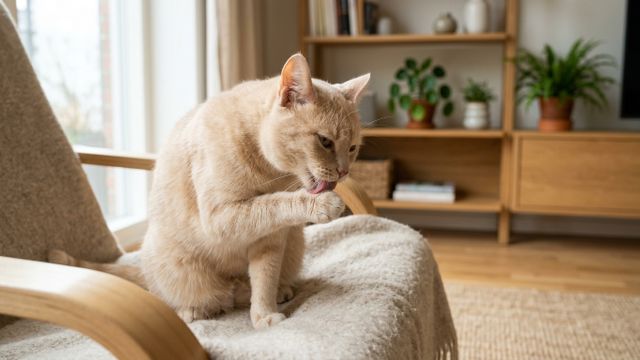
Is it Normal for Cats to Lick Their Paws, and Why Do They Lick Their Front Legs Constantly? Understanding Grooming, Anxiety, and Skin Conditions
Cats licking their paws is usually normal grooming behavior. However, if a cat constantly licks the same front paw, leading to hair loss, redness, or swelling, or if accompanied by behavioral changes, it could signal anxiety, pain, or a skin condition.
Cat Has Bloody Stool But Seems Fine: Is It Normal? Understanding Stool Color, Frequency, and When to Seek Veterinary Care
Your cat has bloody stool but seems energetic, which often indicates minor bleeding in the lower digestive tract. However, you shouldn't be completely at ease. The key lies in the blood's color, frequency, and whether other symptoms are present. This article will guide you on when to observe and when to seek immediate veterinary attention.
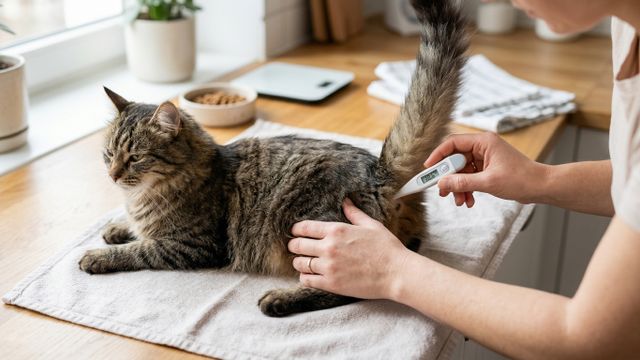
What Temperature is Considered a Fever in Cats? How to Tell if Their Paws or Ears Are Hot, with Home Temperature Measurement Steps
A cat's normal body temperature ranges from 38-39.2°C (100.4-102.6°F). Anything above 39.4°C (102.9°F) is considered a fever. While touching their paw pads or ears can offer clues, the most accurate way to determine temperature is via rectal measurement. This article provides complete home measurement steps.