
Blog
What Temperature is Considered a Fever in Cats? How to Tell if Their Paws or Ears Are Hot, with Home Temperature Measurement Steps
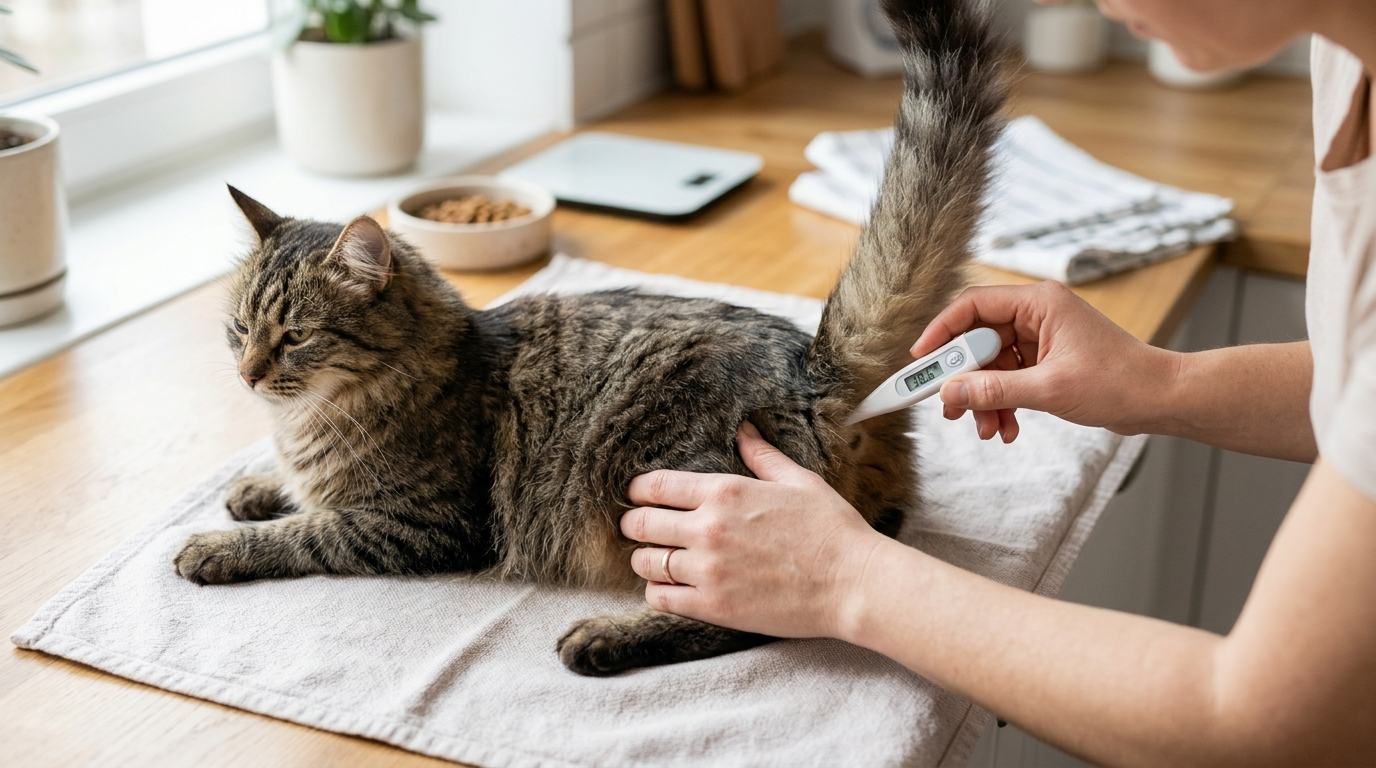
A cat's normal body temperature ranges from 38-39.2°C (100.4-102.6°F), which is higher than humans. As long as it doesn't exceed 39.4°C (102.9°F), it's usually within the normal range. If the temperature reaches 39.4°C (102.9°F) or above, it's considered a fever. Temperatures over 41°C (105.8°F) are dangerously high and require immediate veterinary attention. Touching their paw pads or ears and feeling that they are "hot" can only be used as a reference and not as a diagnostic basis. A cat's ears and paw pads naturally change temperature with the environment and activity level. To truly confirm body temperature, a thermometer is needed to measure rectal temperature.
Key Takeaways
- A cat's normal body temperature is 38-39.2°C (100.4-102.6°F). Kittens and temperatures slightly higher after activity are normal.
- A temperature of 39.4°C (102.9°F) or above is a fever. Over 41°C (105.8°F) is high-risk and requires immediate veterinary care.
- Temperatures below 37.5°C (99.5°F) (hypothermia) are also dangerous, often seen in severely ill, shocky, or hypothermic cats.
- Touching ears or paw pads and feeling "hot" cannot determine a fever; it only reflects local blood flow and ambient temperature.
- The most accurate home measurement method is rectal temperature. Ear thermometers require a pet-specific model and can have significant errors.
Why is a Cat's Body Temperature Higher Than a Human's?
Cats are warm-blooded animals, but their basal metabolic rate is faster than humans, so their normal body temperature is naturally 1-2 degrees Celsius higher than ours. When humans touch a cat at 38.5°C (101.3°F), they might think "Wow, that's so hot," but this is actually normal for a healthy cat.
When we record daily health logs for boarding cats at our facility, we consider "alertness, appetite, and elimination" along with body temperature, as a single number can be misleading. Cats that have just finished playing vigorously, have just sunbathed, or are nervously trembling in a carrier might show a higher reading. In such cases, it's best to let them rest quietly for 10-15 minutes before re-measuring.
"Cat Temperature" Searches in Different Languages All Ask the Same Thing
Whether it's Chinese "貓咪體溫" (cat body temperature) or "貓咪體溫幾度正常" (what temperature is normal for a cat), Japanese "猫体温" (cat body temperature), or Korean "고양이 체온" (cat body temperature), owners are essentially looking for the same numbers: Normal 38-39.2°C (100.4-102.6°F), Fever 39.4°C (102.9°F) and above. Remembering this range is more practical than memorizing a list of symptoms.
Touching Paws or Ears and Feeling "Hot"—Can It Really Indicate a Fever?
Let's get straight to the point: You cannot rely solely on touch to determine a fever.
A cat's ears and paw pads are important heat dissipation areas with dense blood vessel networks. Therefore, they will noticeably change with ambient temperature, recent activity, or sun exposure. A cat lying in a sunny spot by the window in summer will have very hot-feeling ears, but their body temperature will be completely normal. Conversely, a cat with a high fever might sometimes have cold paw pads (due to poor peripheral blood flow).
This is why the "hot ears" phenomenon is often misunderstood. If you want a more comprehensive understanding of the limitations of touch-based assessment, you can refer to our other article, Are Hot Cat Ears a Sign of Fever? Understanding Ear Temperature, Environment, and Danger Signals. It breaks down environmental factors in detail.
Touch Can Be a "Preliminary Alert," But It Needs to Be Combined with Other Signals
If your cat feels unusually hot to the touch and simultaneously exhibits any of the following symptoms, you should be on high alert and take their temperature:
- Decreased alertness, lethargy all day, hiding
- Noticeable decrease in appetite or complete refusal to eat
- Dry and hot nose (you can also refer to Is a Wet Cat Nose Normal?)
- Rapid breathing, panting with mouth open (normal cats rarely pant with their mouths open; if this occurs, be alert. See Is Panting with Mouth Open or Tongue Out Normal for Cats?)
- Consistently maintaining a hunched posture, too lethargic to even change into a cat loaf position
Complete SOP for Measuring Cat Body Temperature at Home
The most accurate method is to measure rectal temperature. It might sound daunting, but if done quickly and with proper preparation, most cats can tolerate it for about 30 seconds.
Tools Needed
- Digital thermometer (a human one is fine; it's recommended to dedicate one specifically for your cat)
- Vaseline or water-based lubricant
- A towel (for restraint)
- A second person willing to help (one person holds, one measures is most efficient)
Steps
1. Restraint: Wrap the cat in a towel like a "sushi roll," exposing only the hindquarters. This minimizes struggling and the risk of scratches.
2. Lubrication: Apply Vaseline to the tip of the thermometer.
3. Insertion: Gently lift the tail and slowly insert the thermometer about 1-2 cm into the anus, following the direction of the rectum. Do not force it.
4. Wait: The digital thermometer will beep in about 10-30 seconds. Read the number.
5. Record: Note the time and temperature. This is helpful for reporting to the vet if abnormalities are found.
6. Disinfection: Thoroughly disinfect with alcohol after use and designate it for your cat's exclusive use.
> Quick Tip: If your cat is extremely resistant or you are afraid of injuring them, don't force it. The stress and potential injury caused by forcing the procedure can be more problematic than a trip to the vet.
Can I Use an Ear Thermometer?
Yes, but you must use a pet-specific ear thermometer. Human ear thermometers have angles and probes that don't fit a cat's ear canal well, leading to significant errors. Even with pet-specific models, earwax and the curvature of the ear canal can affect readings. Typically, ear temperatures will be 0.3-0.5°C (0.5-0.9°F) lower than rectal temperatures. Ear thermometers are suitable for "tracking daily trends," but for confirming a fever, rectal temperature is the standard.
Interpreting Your Readings
| Temperature Range | Interpretation | Recommendation |
|---|---|---|
| Below 37.5°C (99.5°F) | Hypothermia, Danger | Keep warm and seek immediate veterinary care. |
| 38-39.2°C (100.4-102.6°F) | Normal | Observe. |
| 39.3-39.4°C (102.7-102.9°F) | Slightly High | Re-measure after rest. |
| 39.4-41°C (102.9-105.8°F) | Fever | Monitor alertness and appetite. Seek veterinary care if persistent. |
| Above 41°C (105.8°F) | High Risk | Seek immediate veterinary care. |
A fever doesn't always mean an emergency room visit is necessary. However, if the fever persists for more than 24 hours, or is accompanied by lack of appetite, vomiting, diarrhea, rapid breathing, or extreme lethargy, don't wait. For a more systematic approach to managing fever and treatment, we recommend reading our main article What to Do if Your Cat Has a Fever: Normal Temperature, Measurement Methods, and Danger Signs.
Common Causes of Cat Fever
- Infection: Viruses, bacteria, and fungi can all cause fever (cats are rarely infected by human colds; see Can Humans Give Cats Colds? for details).
- Heatstroke or Environmental Overheating: This is "high temperature" but not an infectious fever. It's particularly important to be aware of in summer. Refer to Do Cats Feel Hot? Heat Tolerance and Signs of Heatstroke.
- Inflammation or Abscess: Common after fight wounds.
- Short-term Reaction to Vaccination: Usually resolves within 1-2 days.
The treatment for heatstroke-induced high temperature is completely different from infectious fever. Heatstroke requires cooling measures (shade, ventilation, damp cloths to cool the body), while infection requires veterinary diagnosis and treatment. The key to distinguishing them is whether "the current environment is very hot" and if there are "signs of panting or hypothermia."
How to Help Your Cat Maintain Stable Body Temperature and Health
Maintaining a stable body temperature fundamentally relies on controlling environmental temperature and ensuring adequate hydration. In summer, room temperature is recommended to be kept between 26-28°C (78.8-82.4°F), and ensure your cat always has access to a cool place and fresh water. Many cats don't drink enough water; consider using a water fountain to encourage intake (see Cat Water Fountain Recommendations for selection tips), which also benefits kidney health.
If you need to travel and are concerned about your cat being unsupervised at home, entrusting them to a professional facility that provides daily health monitoring can offer peace of mind. At our Banqiao Cat Boarding, we observe each boarding cat's alertness, appetite, and activity levels, notifying owners immediately if any abnormalities are detected. If you need boarding services, you can directly Book Accommodation.
Frequently Asked Questions
What is a normal temperature for a cat, and what is considered a fever?
Normal body temperature is 38-39.2°C (100.4-102.6°F). A temperature of 39.4°C (102.9°F) or above is considered a fever, and over 41°C (105.8°F) is high-risk and requires immediate veterinary attention. Below 37.5°C (99.5°F) indicates hypothermia, which is also dangerous.
If my cat's ears or paws feel hot, does that mean they have a fever?
Not necessarily. Ears and paw pads are heat dissipation areas that change temperature with the environment and activity. Feeling hot doesn't automatically mean a fever. To confirm, you must use a thermometer to measure rectal temperature and consider their alertness and appetite.
Without a thermometer, how can I tell if my cat might have a fever?
Observe for decreased appetite, reduced alertness, hiding, dry and hot nose, or rapid breathing. If these signs appear together, it's recommended to take their temperature or seek veterinary care as soon as possible. Touch can only serve as a preliminary alert.
Will taking my cat's rectal temperature harm them?
If done gently, with lubrication, and with proper restraint, it typically does not cause harm. If the cat is extremely resistant or struggles violently, do not force the procedure. Instead, use a pet ear thermometer or seek veterinary assistance.
Can I give my cat fever medication myself?
Absolutely not. Human fever reducers (like acetaminophen/Tylenol or aspirin) are highly toxic to cats and can be fatal. If your cat has a fever, it must be diagnosed by a veterinarian to determine the cause and prescribe appropriate medication.
---
*This article was written by the CatBackyard Editorial Team. The advice provided herein is for general care reference. If your cat's temperature is abnormal and accompanied by changes in alertness or appetite, please consult a professional veterinarian as soon as possible.*
Keep reading
Are a Cat's Hot Ears a Sign of Fever? Understanding Ear Temperature, Environment, and Danger Signals
A cat's hot ears are usually a normal part of thermoregulation and don't indicate a fever. To confirm a fever, you need to consider the cat's overall condition and take a rectal temperature. This article will guide you on how to differentiate and observe danger signals.
What is a Normal Cat Temperature? Is a Warm Ear, Nose, or Paw Pad a Fever? Understand Everything from Touching to Danger Signs
A cat's normal body temperature is between 38-39.2°C, which is higher than humans. You cannot determine if a cat has a fever just by touching its ears or nose; the only accurate method is to take its rectal temperature.

What to Do If Your Cat Has a Fever? Normal Temperature, How to Measure It, and Danger Signs All in One Place
A cat's normal body temperature is around 38–39.2°C (100.4–102.6°F); anything over 39.5°C (103.1°F) is considered a fever. This guide teaches you how to correctly measure your cat's temperature at home, distinguish between fever and heatstroke, and lists the critical signs that require immediate veterinary attention.