Why Do Cats Love Cardboard Boxes and Hiding in Them? Understanding Security, Hunting Instincts, and Cooling Needs
The core reason cats love cardboard boxes is "security"—the narrow, enclosed space makes them feel protected. Combined with their ambush hunting instincts and need to regulate body temperature in summer, boxes are almost the perfect hiding spot for cats.
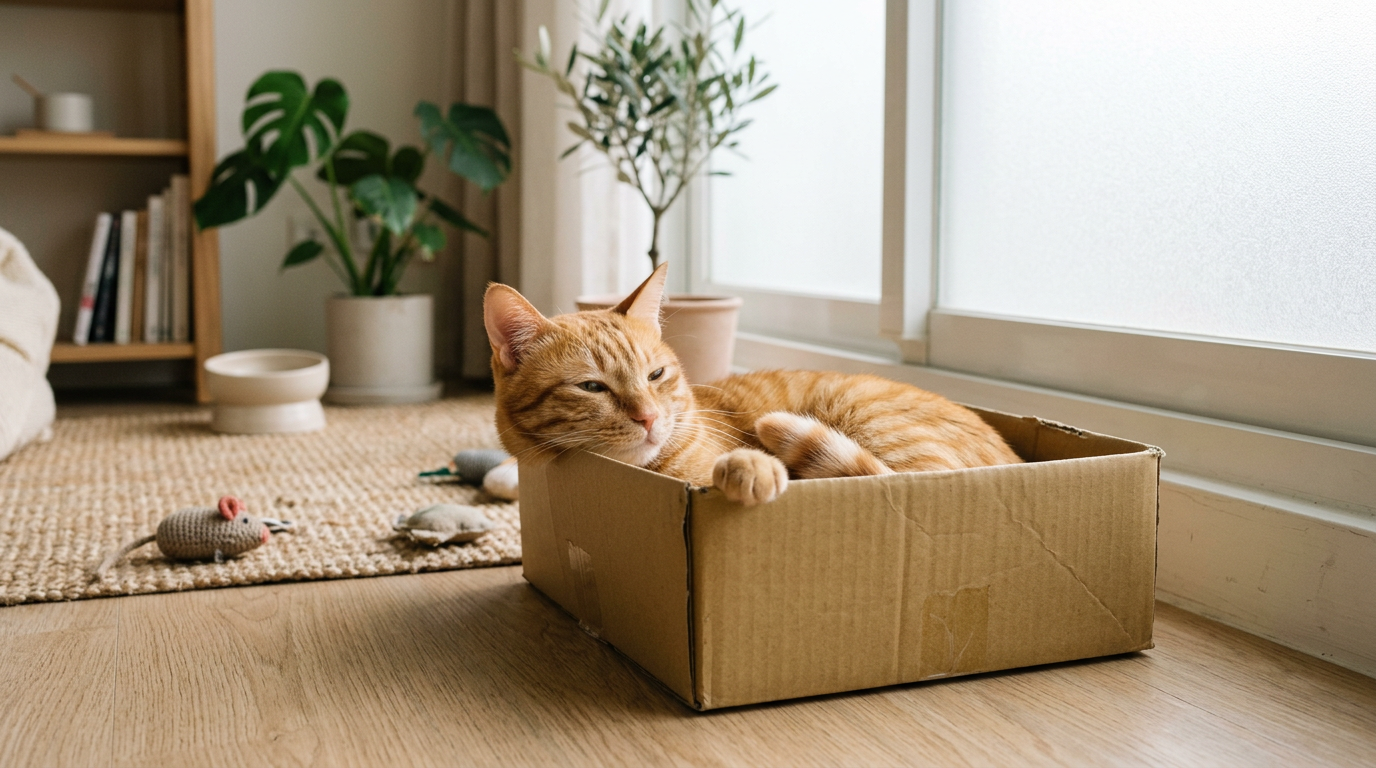
The core reason cats love cardboard boxes is security—the narrow space, enclosed on all sides, allows cats to feel shielded from behind and the sides, naturally relaxing their vigilance. Additionally, boxes satisfy their "ambush hunting" instincts and their need to regulate body temperature in the summer, making it almost irresistible for any cat to ignore a freshly opened empty box.
At CatBackyard's cat hotel, we witness this daily: despite providing soft cat beds, climbing structures, and heated pads, many cats' first action upon entering their room is to jump into the cardboard box we've placed in a corner, and then spend the entire day nestled inside. This article will clearly explain "why cats love cardboard boxes" based on frontline observations.
Key Takeaways
- The primary motivation for cats hiding in boxes is security: a narrow, enclosed space reduces stress and vigilance, lowering heart rate and anxiety.
- Studies show that cats in new environments adapt significantly faster and recover better from stress when provided with boxes to hide in.
- Cats' preference for narrow spaces is also related to their ambush hunting instincts—hiding in cover to observe and strike is a natural feline behavior pattern.
- Sometimes, cats seek out boxes in the summer for cooling: corrugated cardboard offers insulation and ventilation, making it more comfortable than metal or plastic surfaces.
- If a cat suddenly "hides and won't come out," refuses food, or retreats to a corner, it might not be a preference for the box but a sign of discomfort or illness, requiring attention.
Reason 1: Security—Feeling Safe When Enclosed
In the wild, cats are both predators and prey to larger animals. This dual role makes cats naturally uneasy in open, exposed spaces, preferring areas with walls behind them and cover on the sides. A cardboard box perfectly fulfills this need—enclosed on all sides and the bottom, with only one opening. This allows the cat to clearly monitor "who is approaching me" while knowing they won't be ambushed from behind.
Why Narrow Spaces Soothe Emotions
A well-known phenomenon in cat behavior studies is that introducing boxes into shelter environments for newly arrived cats significantly speeds up their stress recovery compared to cats without boxes. The reason lies in "predictability"—when cats feel they can control their environment and retreat at any time, their anxiety decreases.
We intentionally leverage this at our hotel: for easily stressed cats, we always place a cardboard box or a semi-enclosed hiding spot with an opening facing inwards in their room. Many cats that were trembling and hissing upon arrival will cautiously peek out to eat after half an hour inside the box. This is also why some cats at home can suddenly become irritable—when they lack a space to retreat to and are overly disturbed, their emotions can become unstable. This is further explained in Why Do Cats Suddenly Attack Their Owners? Understanding and Soothing Reasons for Sudden Aggression.
Cats' Innate Preference for Narrow Spaces
It's not just cardboard boxes; laundry baskets, suitcases, drawers, paper bags, and even a square you draw on the floor can attract many cats. This preference for "being surrounded by boundaries" is essentially the same as hiding in a box: cats need a clearly defined, personal safe zone.
Reason 2: Hunting Instincts—Better to Strike from Hiding
Cats are not endurance hunters; they are ambush predators. Their strategy is to hide in cover, quietly observe, and then suddenly pounce when prey enters their attack range. A box, with its controlled exit and limited field of vision, perfectly matches the "ideal ambush spot" setting in a cat's brain.
This is why many cats, when hiding in a box, adopt a posture with their front paws tucked in, ready to spring. When they see passing feet or a feather wand, they dart out. They aren't greeting you; they are "hunting."
Understanding a Cat's Hunting Language Through Boxes
If your cat often hides in a box waiting for you to pass by before pouncing, this is actually a healthy behavior indicating a need for an outlet. Instead of stopping it, turn it into a game: dangle a feather wand near the box opening and let them indulge in their ambush and pouncing, expending their hunting energy. Adding a bit of Premium Catnip near the box can make many cats even more engaged. This "observe—ambush—satisfy" cycle is also linked to their behavior as kittens, much like Why Do Cats Knead and Tread? Understanding the Meaning Behind "Making Biscuits", both are instincts written into their genes.
Reason 3: Summer Cooling in Cardboard Boxes—A Cat's Thermoregulation Trick
Many people assume cats hide in boxes solely for psychological reasons, but temperature is also a key factor, especially in the summer.
Corrugated cardboard boxes offer several cooling advantages:
- Insulation: The corrugated structure has an air layer in the middle, insulating against uneven temperatures from the floor or air conditioning.
- Ventilation: Paper is breathable and doesn't retain heat like plastic or metal, which can feel stuffy and clingy.
- Moisture Absorption: Paper can absorb a small amount of moisture from the cat's body, preventing a sticky feeling upon contact.
How Cats Regulate Their Temperature in Summer
Cats' sweat glands are primarily concentrated in their paw pads, limiting their ability to dissipate heat. Therefore, they resort to "finding the right place to stay" to cool down—hiding in ventilated boxes in summer, lying on tile floors, or stretching out their bodies to increase surface area for heat dissipation; in winter, they do the opposite, curling into a ball for warmth. You'll notice the same cat might sprawl out on the bottom of a box in summer but curl up in a corner of a box in winter; this is their self-regulation.
We've compiled information on how cats perceive temperature and when it becomes a danger sign in Do Cats Feel Hot? Cat Heat Tolerance, Cooling Methods, and Essential Heatstroke Warnings for Summer. It's highly recommended to read this before owning a cat in the summer. It's important to note: cooling in boxes is supplementary and cannot replace environmental temperature control. If a cat starts panting with its mouth open or breathing rapidly, it's not cooling off; it might be suffering from heatstroke. Please refer to Is It Normal for Cats to Pant with Their Mouth Open and Tongue Out? and address it immediately.
How to Prepare a "Good Box" for Your Cat
Since cats love boxes so much, we've accumulated some practical principles from our hotel setup:
- Opening slightly smaller than the box: Cats enjoy the snug fit of "just fitting in"; a larger opening can reduce their sense of security.
- Place in a quiet, wall-adjacent corner: This provides support from behind and avoids placing it in the middle of a high-traffic area.
- Line the bottom with a thin cloth or their familiar old clothes: Leaving the owner's scent can increase security; in summer, just the cardboard itself can maintain better ventilation.
- Provide multiple boxes for multi-cat households: This prevents conflict over a single box.
- Keep clean and replace regularly: Discard damp or moldy boxes.
Observing Your Cat's Posture in the Box Can Reveal Their Mood
A cat's sitting posture in a box can actually reveal its mood. A "loaf" position, with all four paws tucked underneath like a bread loaf, usually indicates relaxation but still maintaining alertness. You can refer to What is the Cat Loaf Position? Understanding Cat Health and Emotions from the Loaf Pose. For a more comprehensive understanding of how cats communicate through posture and location, we also recommend reading our in-depth article What Does Your Cat's Sleeping Position Mean? Interpreting Sleeping Postures, Locations, and Their Affection to understand "why they choose to be there."
When "Hiding in a Box" is a Warning Sign
Liking boxes is normal, but it's crucial to distinguish between "enjoyment" and "hiding for survival." Be vigilant in the following situations:
- A normally active cat suddenly hides for extended periods, refusing even to eat or use the litter box.
- While hiding in a corner, the cat is curled up tightly, pupils dilated, and unresponsive to calls.
- Accompanied by loss of appetite, vomiting, diarrhea, or lethargy.
Cats naturally hide discomfort, and "hiding away" is often their first reaction when they feel unwell. If this hiding behavior persists for more than a day or is accompanied by other symptoms, please take your cat to the veterinarian for an examination as soon as possible. Do not dismiss it as simply liking boxes.
Frequently Asked Questions
Is it normal for my cat to hide in a box all the time and not come out?
Occasionally spending extended periods resting in a box is normal. However, if a normally active cat suddenly hides, refuses to eat or drink, and is unresponsive to calls, it might be due to illness or stress. If this continues for more than a day, seek veterinary attention.
Why do cats try to squeeze into boxes that are clearly too small for them?
Cats seek the "enclosed" feeling of a snug fit rather than ample space. Narrow spaces provide them with both security and warmth, making them feel safe even when they have to squeeze in; this is instinctual and should not be discouraged.
Will letting my cat stay in a cardboard box in the summer be too hot?
Corrugated cardboard is actually breathable and insulating, so it usually doesn't get stuffy and is often more comfortable than plastic carriers. However, this assumes the overall indoor temperature is well-controlled. If your cat starts panting with its mouth open inside the box, it indicates the environment is too hot, and immediate cooling measures should be taken.
Do I really need to buy a cat bed? Are cardboard boxes enough?
Many cats indeed prefer cardboard boxes over expensive cat beds. Boxes are free, align with their instincts, and can serve as their primary hiding spot, as long as they are kept clean and replaced regularly. If you wish to supplement, you can browse our shop for suitable cat litter and treats.
How many boxes should I prepare for a multi-cat household?
It's recommended to have at least "number of cats +1" boxes, placed in different locations to avoid conflicts over a single hiding spot. When each cat has its own safe space, the household atmosphere will be much more stable.
This article was written by the CatBackyard editorial team, based on extensive frontline care experience at our cat hotel. The health advice provided herein cannot replace veterinary diagnosis. If your cat's symptoms persist or worsen, please seek veterinary care promptly.
CatGarden offers curated supplies, cat boarding, and grooming
Book services or shop online.