Cat Water Fountain Buying Guide: Prioritize Easy Cleaning, Water Flow, and Your Cat's Acceptance
When choosing a cat water fountain, the top priority is "Can you actually clean it, and are you willing to do so weekly?" followed by water flow and material. This guide covers cleaning, flow rate, and cat acceptance to help you avoid common pitfalls.
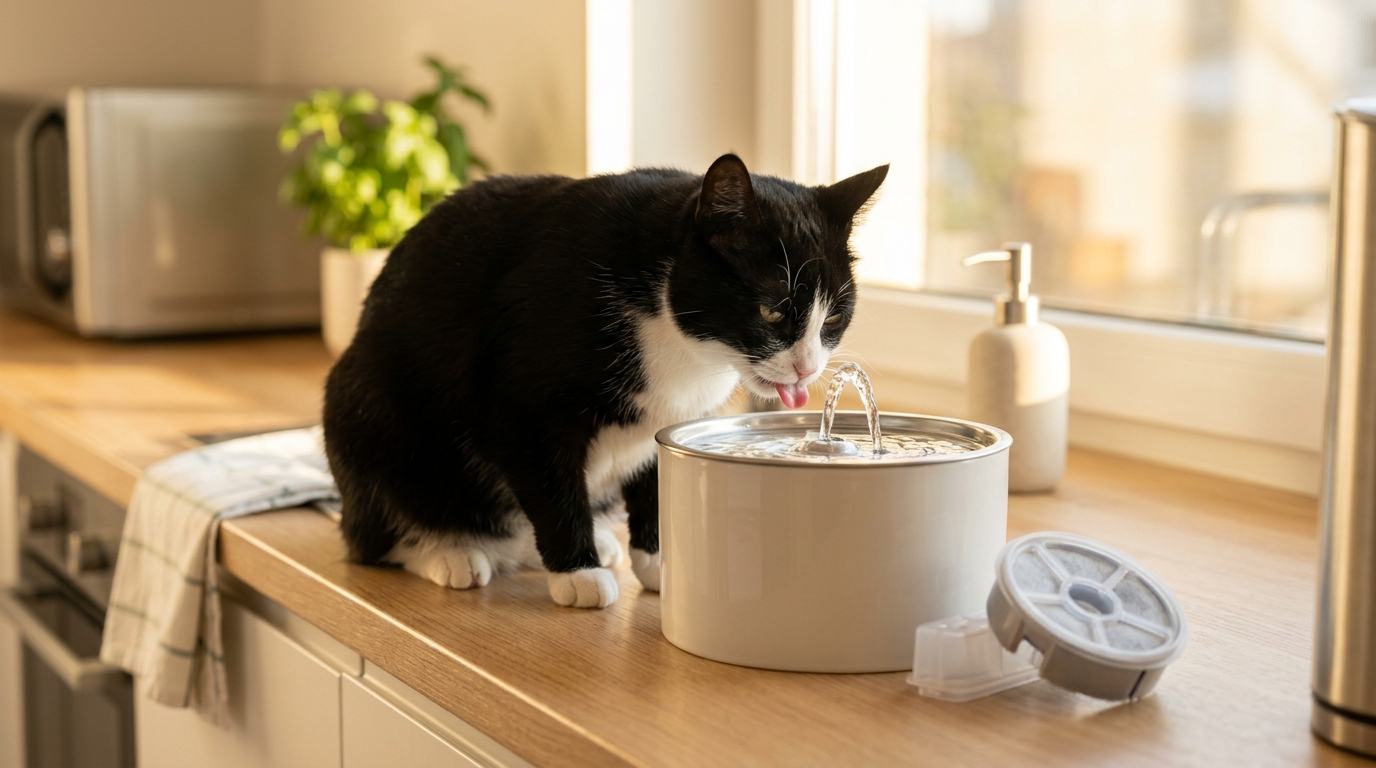
When choosing a cat water fountain, the first thing to look at isn't fancy water flow or attractive design, but rather "Can you clean it, and are you willing to disassemble and clean it weekly?" — an unclean fountain is worse than not using one at all. Next come the water flow style and whether your cat will actually drink from it. This guide will clearly explain the logic for choosing a cat water fountain, covering ease of cleaning, flow rate, material, and cat acceptance, so you don't waste your money.
Key Takeaways
- The top priority when choosing a water fountain is ease of cleaning: it should be fully disassembled, have fewer than 5 parts, and allow a brush to reach the water channels to prevent slimy biofilm buildup.
- It's recommended to change the water every 3-4 days and thoroughly disassemble and clean the fountain weekly. Replace the filter every 2-4 weeks depending on water quality.
- Prioritize ceramic or food-grade stainless steel materials, which are less prone to scratches and bacterial growth than plastic and are less likely to cause chin acne.
- Adult cats need approximately 40-60 ml of water per kilogram of body weight daily. This need is higher in summer and for cats on dry food diets. Insufficient water intake is highly correlated with urinary stones and lower urinary tract diseases.
- When introducing a new water fountain, place it alongside the old water bowl for 1-2 weeks to allow for a gradual transition. Don't remove the old water bowl abruptly, as this might cause your cat to drink less overall due to rejection.
Why Summer Demands Extra Attention to Your Cat's Water Intake
Cats are descendants of desert animals and have a weaker thirst drive than dogs, leading many to habitually drink insufficient amounts. This is particularly dangerous during Taiwan's hot summers. High temperatures cause increased water loss through panting. When water intake drops, urine becomes concentrated, easily leading to lower urinary tract problems, cystitis, and even stones.
In our cat hotel at CatBackyard, we most frequently encounter situations where cats become stressed in unfamiliar environments and barely drink any water. In such cases, a fountain that a cat is willing to drink from proactively is often more effective than placing three separate water bowls. If you notice your cat is not only drinking less but also hiding or exhibiting behavioral changes, it might be an early sign of pain or illness [link to /blog/cat-pain-signs-behavior-change-early-warning-guide/], not just a reaction to the heat.
How to Determine if Your Cat is Drinking Enough
- Calculate daily needs: Adult cats need about 40-60 ml of water per kilogram of body weight daily (including water from food). Cats on wet food already consume a high amount of water; those on dry food rely almost entirely on drinking water.
- Observe the litter box: The size and frequency of urine clumps are the most practical indicators. A sudden decrease in size or frequency, or frequent trips to the litter box with little urine output, should be a cause for concern. If you suspect abnormal urination, you can refer to the observation methods in [link to /blog/cat-constipation-litter-box-warning-signs/], as both urine and stool should be monitored.
- Check the gums: Gently pressing the gums and observing how slowly the color returns, or pinching the skin and noting how slowly it snaps back, are signs of dehydration.
> Reminder: If your cat is continuously unable to urinate, frequently squats in the litter box without producing urine, or vocalizes in pain, this is an emergency. Seek veterinary care immediately and do not wait.
How to Choose a Cat Water Fountain: Start with Cleaning
This is where most people make mistakes. Many aesthetically pleasing fountains on the market have narrow, winding water channels and motor bases with hard-to-reach crevices. Once a slimy biofilm forms on the inner walls, bacteria proliferate, and cats may be repelled by the smell, drinking even less. You might think you've bought a device to help your cat drink more, but it ends up making them more resistant.
Specific Checks for Ease of Cleaning
1. Number of parts: Ideally, the entire disassembled unit should have 5 parts or fewer. The more and smaller the parts, the less likely you are to clean it.
2. Water channel structure: The channels through which water flows should allow a brush or cotton swab to reach. Avoid designs that are molded as one piece with internal, inaccessible channels.
3. Motor disassembly and cleaning: Can the motor (pump) be removed for separate cleaning? Many musty odors originate from dirt trapped in the motor impeller.
4. Seamless flat surfaces: The spout and the bottom of the reservoir should have as few crevices as possible.
Our practice at the hotel is: change the water every 3-4 days, thoroughly disassemble and clean the entire unit weekly, and clean the motor while you're at it. The filter is replaced every 2-4 weeks, depending on Taiwan's water quality. If you know you won't be able to commit to weekly cleaning, choose a fountain with the simplest possible structure. Even a well-designed, easy-to-clean water bowl with regular water changes might be healthier than a complex fountain you're too lazy to clean.
Choosing the Right Material
- Ceramic: Heavy, stable, chew-resistant, less prone to scratches and bacterial buildup, and easy to clean. It's our top recommendation. The downsides are its weight and the risk of breakage if dropped.
- Food-grade stainless steel: Durable, antibacterial, and resistant to retaining odors. Suitable for cats that rub their faces against water bowls.
- Plastic: The cheapest and most common option, but it's easily scratched, harbors bacteria, and may contribute to chin acne/cat acne in the long run. If you choose plastic, opt for easy-to-clean models and replace them frequently.
Water Flow Style: Not Necessarily the More Elaborate, the Better
Many people assume that the stronger the water flow or the more like a waterfall the fountain is, the more cats will drink. In reality, cat preferences vary greatly. The key is movement and quietness.
Common Water Flow Types
- Fountain/Small Spout Style: Water emerges from the center and flows down. Cats can lick the flowing water surface. Most cats accept this well, but an overly strong stream can cause splashing and noise.
- Gentle Stream/Cascading Style: Water flows down a slope, forming a thin sheet of water. It's quiet, and many cats enjoy licking it. This is a favorite for many cats.
- Still Water with Circulation/Filtration: Looks like a water bowl but has a circulation and filtration system underneath. Suitable for cats sensitive to water sounds or startled by fountains.
Practical Tips for Choosing Water Flow
- Adjustable flow rate is essential: Being able to adjust the flow is the safest option. Start with a low setting to let your cat adapt.
- Motor noise: Put your ear close to it. The operating sound should be almost inaudible. Loud noise is the biggest hidden killer of fountain adoption, especially for timid or insecure cats. Consider addressing this alongside methods to improve routine and security.
- Will it run dry and overheat if the water level is low?: Choose models with dry-run protection. The motor can burn out quickly if run dry, and the burnt smell can scare your cat.
What If My Cat Doesn't Drink Water? Start with Acceptance
Even the best water fountain is useless if your cat doesn't use it. This is often the most overlooked aspect.
Transitioning Your Cat to Use the Fountain
1. Don't remove the old water bowl all at once: Place the new water fountain alongside the old water bowl for 1-2 weeks. Let your cat choose. You'll find some cats switch within days, while others need more time.
2. Location is crucial: The water source should be away from the litter box and food bowls (cats don't like drinking near their food). Place it on a path your cat frequently uses and in a location where they feel secure. For multi-cat households, consider multiple locations rather than crowding them together.
3. Keep it turned off initially so your cat can get used to the shape and smell, then turn it on with the lowest flow setting. Avoid scaring them away with the water sound on the first try.
4. Water must be truly fresh: A water fountain isn't a "set it and forget it" device. An expired filter or a slimy inner wall will still deter your cat.
Increasing Hydration Through Diet
Relying solely on a water fountain isn't enough; feeding strategies can also increase overall water intake:
- Increase the proportion of wet food. Canned food contains about 70-80% water and is the most effective way to rehydrate. Consider high-moisture, complete wet foods like Luxury Functional Cans.
- Soften dry kibble by adding warm water or mixing it with water.
- Do not add human food or milk to encourage your cat to drink more water. Many human foods are toxic to cats. Always check What Cats Cannot Eat? Common Household Dangers and Poisoning Signs before feeding.
If, after adjusting the water fountain, location, and diet, your cat's water intake remains significantly low, or if it's accompanied by weight changes or decreased activity, don't guess. Abnormal water intake can sometimes be a symptom of internal medical issues. It's recommended to consult a veterinarian and refer to the logic for further examination even with normal blood test results [link to /blog/cat-blood-test-normal-ultrasound-needed-guide/].
What an Unproblematic Water Fountain Looks Like
Here's a quick checklist to review before buying:
- ✅ Fully disassemblable for cleaning, few parts, accessible water channels
- ✅ Removable motor, almost silent operation, dry-run protection
- ✅ Ceramic or stainless steel material preferred
- ✅ Adjustable flow rate, stable water flow without splashing
- ✅ Sufficient water capacity for a full day away (but still requires regular changes)
- ✅ Replacement filters/consumables are available and reasonably priced
If you're a new cat owner still gathering basic supplies, you can plan your water fountain purchase alongside other essentials to avoid buying the wrong thing twice. Consider reviewing New Cat Owner's 10 Essential Checklist as well.
When leaving your cat in a boarding facility, remember to inform the staff about your cat's usual water source and drinking habits. We always ask for this information during check-in at Cat Boarding because environmental changes can already cause cats to drink less. Maintaining their familiar drinking routine can reduce urinary risks.
Frequently Asked Questions
Is a cat water fountain always better than a water bowl?
Not necessarily. The advantage of a fountain is that moving water can encourage some cats to drink more. However, if you cannot commit to regular cleaning, a dirty fountain is worse than a clean water bowl with daily fresh water changes. The key is the cleaning frequency, not the machine itself.
How often should the water in a fountain be changed, and how often should it be cleaned?
It's recommended to change the water every 3-4 days and thoroughly disassemble and clean the entire unit (including the motor) weekly. Replace the filter every 2-4 weeks depending on water quality. In summer, bacterial growth is faster; clean immediately if you notice a slippery film or odor on the water surface.
What if my cat doesn't use the new water fountain?
Place the new fountain alongside the old water bowl for 1-2 weeks. Start with the lowest water flow setting and place it in a secure location away from the litter box. Most cats need time to adapt; don't rush to remove the old bowl and force them to switch.
Are plastic water fountains really bad?
Plastic isn't unusable, but it's easily scratched, harbors bacteria, and may be linked to chin acne in the long run. If you choose a plastic model, opt for one with a simple, easy-to-clean structure and be diligent about scrubbing and replacing it. If your budget allows, ceramic or stainless steel options are more hassle-free.
Is a decrease in a cat's water intake always a sign of illness?
Not always. It could be due to weather changes, environmental shifts, or dislike of the water source. However, if water intake significantly decreases and is accompanied by changes in urine output, frequent litter box visits, lethargy, or decreased appetite, seek veterinary care promptly. Male cats unable to urinate are a medical emergency and should not be delayed.
This article was written by the CatBackyard editorial team. The content is a general care experience sharing and cannot replace veterinary diagnosis. If your cat exhibits persistent or severe symptoms, please seek veterinary attention immediately.
CatGarden offers curated supplies, cat boarding, and grooming
Book services or shop online.