Are Your Cat's Ears Cold? Normal Circulation, Cold Weather, and Warning Signs of Weakness
Cold cat ears are usually a normal response of peripheral circulation, but if accompanied by lethargy, pale gums, or overall coldness, it could signal hypothermia. This article guides you step-by-step in assessing the situation.
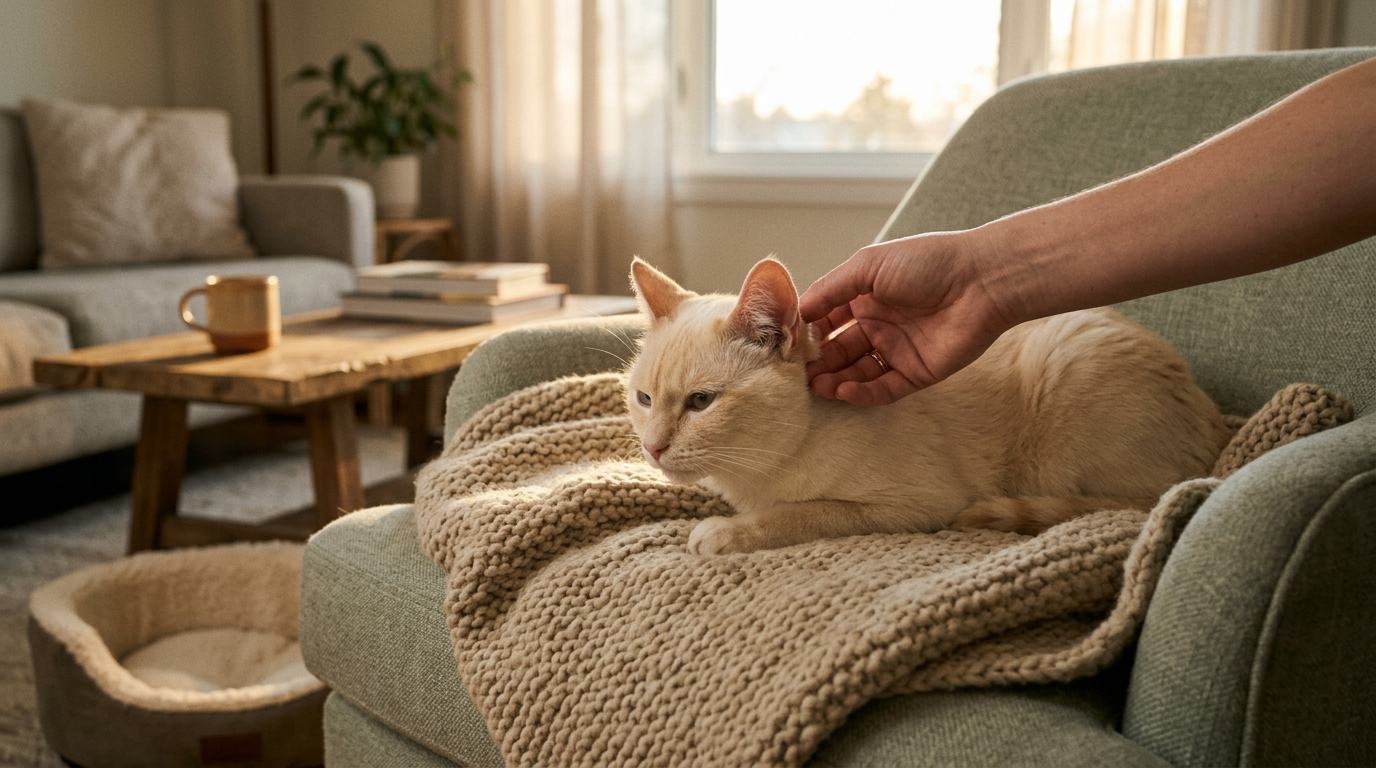
When your cat's ears feel cold to the touch, in most cases, it's normal. Ears are extremities, with less blood flow, thinness, and minimal fat, making them sensitive to ambient temperature. They cool down quickly when it gets cold. The real concern arises when cold ears are accompanied by lethargy, pale gums, a generally cold body, or shivering curled up in a ball – these could be warning signs of poor circulation or hypothermia.
Here at CatGarden, we provide boarding and grooming for numerous cats daily, and we've touched thousands of ears. It's rare that the "ear temperature" alone can determine a cat's health status. The key is always to look at "cold ears plus any other abnormalities."
Key Takeaways
- Cat ears are extremities with low blood flow and little subcutaneous fat. Cold ears in cold weather or after waking up are normal and usually don't require veterinary attention.
- A cat's normal body temperature is around 38–39.2°C (100.4–102.5°F). Rectal temperatures below 37.5°C (99.5°F) indicate low body temperature, and below 37°C (98.6°F) require immediate veterinary care.
- The critical factor is not just ear temperature but assessing "cold ears plus gum color plus mental activity plus core body temperature" together.
- If gums change from a healthy pink to pale, grayish-white, or purplish, it indicates a problem with circulation or oxygen supply and is an emergency.
- Kittens, senior cats, sick cats, or those recovering from anesthesia are most susceptible to hypothermia. Their environment should be maintained at 25–28°C (77–82°F) with warm hiding spots.
Why Are Cat Ears Particularly Prone to Feeling Cold?
Understanding the anatomy of a cat's ears can help alleviate unnecessary worry about them feeling cold.
The ears (pinnae) are "extremities" of the body, similar to paw pads and tail tips. They are farthest from the heart, have narrow blood vessels, and are thin in terms of subcutaneous fat. When the environment cools, the body prioritizes concentrating blood flow to core organs (heart, lungs, brain, abdominal organs) and reduces blood flow to the extremities to conserve heat. This is a normal thermoregulatory response, not a sign of illness.
Therefore, you'll notice:
- In winter or air-conditioned rooms: Ears and paw pads cooling down first is normal.
- After waking up or getting up from a cool floor: Ears may feel cool.
- During stress or after a vet visit: Due to sympathetic nervous system activation causing peripheral vasoconstriction, ears might temporarily feel cold.
If your cat's ears are cold in these situations but they are otherwise alert, eating, and playing, there's usually no cause for concern.
Distinguishing Normal "Coolness" from Dangerous "Coldness"
While touch can be subjective, here are some relative indicators:
- Only the tips of the ears are cool, while the base is still warm: Usually normal.
- The entire ear is cold, and the paw pads and body also feel cool: Raise your level of concern.
- The cat actively seeks warm places to rest and maintains a normal posture: Generally okay.
- Curled up tightly, body stiff, unresponsive to calls: These are warning signs.
What we use for this
CatGarden’s own products, shipped from Taiwan Quick-Dry Pet TowelFrom RM49.85 per pieceFree shipping on multi-packs
When Cold Ears Indicate Hypothermia
Cold ears themselves aren't alarming; it's when they appear alongside other symptoms. The more of the following combinations you observe, the more seriously you should consider the situation:
1. Abnormal Gum Color
Check your cat's gums by lifting their lips. Healthy gums are pink and should return to their normal color within 1–2 seconds after being pressed. If the gums turn pale, grayish-white, or even purplish, it signifies a problem with circulation or oxygen supply and is considered an emergency. The principle for assessing gum color and ear temperature is the same as we discussed for early signs of heatstroke in cats – just in reverse. One indicates overheating, the other indicates coldness or poor circulation.
2. Significant Decrease in Energy and Activity
Lethargy is often the first sign of illness in cats: they become unresponsive, stop grooming, hide, and react slowly to stimuli. If your normally active cat suddenly becomes very "lazy" and withdrawn, don't just assume they are sleepy. Such behavioral changes can sometimes be early indicators of pain or internal discomfort. Refer to Early Warning Signs of Pain in Cats: Behavioral Changes for more information.
3. Overall Coldness and Shivering
Place your hand on your cat's belly, inner thighs, or armpits – these are "core areas." If even these normally warm areas feel cool, it's not just a peripheral issue; it could be a general drop in body temperature. Shivering is the body's attempt to generate heat. Shivering after a bath is often due to cold or stress (see Why Is My Cat Shivering After a Bath? Cold, Stress, and Warning Signs). However, unexplained shivering combined with cold ears and lethargy warrants concern.
4. Changes in Breathing and Posture
When cats are unwell, they often adopt a "hen-like" posture, tucking their limbs underneath them. This differs from a relaxed sitting posture (see this article for differences). If they also exhibit shallow, rapid, or labored breathing along with cold ears, don't delay – seek veterinary attention immediately.
What is a Cat's Normal Body Temperature? How to Measure It Accurately
While touching the ears can provide a general idea, it's not objective. The most accurate way to confirm is by taking their temperature.
A cat's normal rectal temperature is approximately 38–39.2°C (100.4–102.5°F), which is higher than humans'. Interpretation guidelines:
- Below 37.5°C (99.5°F): Low body temperature; monitor closely and provide warmth.
- Below 37°C (98.6°F): Significant hypothermia; seek immediate veterinary care.
- Above 39.5°C (103.1°F): Elevated temperature, possibly a fever.
It's recommended to use a pet-specific digital rectal thermometer. Apply a small amount of lubricant to the tip and gently insert it about 1–2 cm (0.5–0.75 inches). Read the temperature after 10–20 seconds. Have someone gently restrain the cat during the process, be gentle, and offer a treat afterward. Forehead and ear thermometers are less accurate in cats and should only be used for a rough estimate. For a comprehensive understanding of temperature interpretation, measurement methods, and danger signs, please refer to our foundational article What to Do If Your Cat Has a Fever: Normal Temperature, How to Measure, and Danger Signs. This will provide a complete picture of both fever and hypothermia.
Which Cats Are Most Susceptible to Hypothermia?
Be extra cautious if your cat falls into any of these categories, as their thermoregulation may be compromised:
- Kittens (especially under one month old): Their thermoregulation system is immature and they can lose body heat quickly if separated from their mother.
- Senior cats: Slower metabolism, less muscle mass, and reduced activity levels make them more sensitive to cold in winter.
- Sick or chronically ill cats: Conditions like thyroid issues, heart disease, or kidney disease can affect circulation. Cats with heart problems may have poorer peripheral circulation (refer to Home Monitoring for Heart Disease in Cats: Warning Signs).
- Cats recovering from anesthesia or surgery, or those who have just been bathed and not thoroughly dried: Their body temperature can drop easily.
This is why we meticulously control the temperature and drying time during grooming sessions at our facility – wet fur combined with air circulation can rapidly dissipate body heat. We discuss considerations for temperature and noise when choosing drying equipment in How to Choose a Pet Dryer.
How to Keep Your Cat Warm at Home
If your cat's ears are cold and their body feels cool but they are otherwise alert, start with basic warming measures and observe:
Room Temperature
Maintain room temperature between 25–28°C (77–82°F) for most cats' comfort. Avoid directing air conditioning directly at your cat. If the floor is cold, lay down thick blankets or elevate their cat bed. In our facility, we pay special attention to ensuring that the corners where cats often rest are elevated and protected from drafts during winter.
Provide Warm Beds and Hiding Spots
Offer a partially enclosed bed with a roof, allowing the cat to retain body heat inside. Many cats will naturally seek out warmer, secluded spots when it's cold, which doesn't necessarily mean they dislike you (read more: Does My Cat Sleeping Farther Away Mean They Dislike Me?).
Use Warming Tools Safely
Use pet-specific electric blankets (on low settings, with protective covers). Avoid direct skin contact and ensure the cat can move away from the heat source if they become too warm. Wrap hot water bottles in towels. Low-temperature burns are not uncommon in cats; they may endure the heat until their skin is injured before showing signs of discomfort.
Thoroughly Dry After Bathing
This is a point we emphasize strongly. Releasing a cat before they are completely dry, combined with residual moisture and poor circulation, can easily lead to shivering from cold. For daily drying, use a Quick-Dry Pet Towel to absorb as much water as possible, followed by thorough drying with a suitable temperature dryer, ensuring the fur is dry down to the skin. If you're unsure about your ability to dry and warm your cat effectively, you can book a grooming appointment with us, and we'll manage the temperature control throughout the process.
When to Seek Immediate Veterinary Care
Do not delay seeking veterinary attention if any of the following occur:
- Rectal temperature below 37°C (98.6°F).
- Pale, grayish-white, or purplish gums.
- Overall coldness, minimal response to stimuli, or unsteady gait.
- Labored breathing, open-mouth breathing, or extremely slow breathing.
- Kittens become cold, refuse to nurse, or appear limp.
- Persistent shivering or inability to regain normal temperature after 30–60 minutes of warming efforts.
Severe hypothermia can suppress heart rate, breathing, and consciousness, and can be fatal. During transport to the vet, keep the cat wrapped in blankets for warmth; avoid using high-heat sources for rapid rewarming.
> Disclaimer: This article provides guidance for home assessment and cannot replace veterinary diagnosis. If your cat's temperature is abnormal or they exhibit emergency signs, seek veterinary care promptly.
Frequently Asked Questions
Are cold cat ears always a sign of illness?
Not necessarily. Most often, they are a normal response to cold weather or peripheral circulation. If your cat is alert, eating, playing, and has pink gums, it's usually fine. Concern arises when cold ears are accompanied by lethargy, pale gums, or overall body coldness.
Can touching a cat's ears determine if they have a fever or hypothermia?
Ear temperature is only a rough indicator and not very accurate. To confirm, measure their rectal temperature. A normal range is 38–39.2°C (100.4–102.5°F). Temperatures below 37.5°C (99.5°F) are low, and above 39.5°C (103.1°F) are high, both warranting further observation or veterinary consultation.
What should I do if my cat's ears are cold and they are shivering constantly?
First, determine if it's simply due to cold or insufficient drying after a bath. Provide warmth and move them to a comfortable environment. If shivering persists after 30–60 minutes of warming, their core body temperature is also low, or they seem lethargic, seek veterinary attention.
Is it dangerous if a kitten's ears and body feel cold?
Yes, kittens have weak thermoregulation and can lose body heat rapidly. If a kitten's body feels cold, they refuse to nurse, or appear limp, it is an emergency. Immediately wrap them in a blanket for warmth and seek veterinary care promptly.
Should I supplement my senior cat if their ears are particularly cold in winter?
The focus should be on providing warmth and regular health check-ups, not random supplements. Senior cats have weaker peripheral circulation and metabolism. If accompanied by decreased appetite or activity, consult a veterinarian to assess their heart, thyroid, and kidney function.
This article was written by the CatGarden editorial team and is intended for owner reference. It cannot replace a veterinarian's clinical diagnosis. If your cat's temperature is abnormal or they exhibit emergency signs, please seek veterinary care promptly.
CatGarden offers curated supplies, cat boarding, and grooming
Book services or shop online.